Derval O'Rourke: Let's talk about food fats
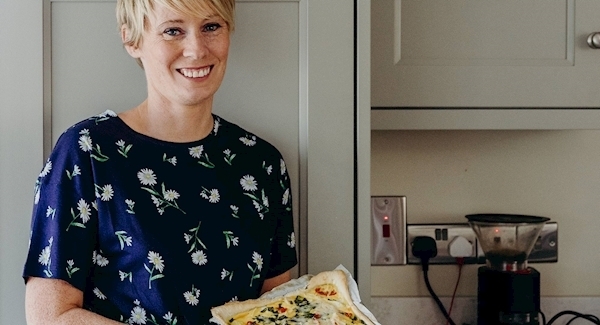
This week I’m chatting about food fats, basically what you need to know about fats. Then for my recipe, it’s chicken, basil and tomato quiche and some easy eggs in jacket potatoes.

Derval O'Rourke: Let's talk about food fats

This week I’m chatting about food fats, basically what you need to know about fats. Then for my recipe, it’s chicken, basil and tomato quiche and some easy eggs in jacket potatoes.

The fear of fats we have experienced over the last few decades has its roots in a famous study published in the 1950s. The results of this study suggested that fat was responsible for heart disease. Almost immediately fat became public health enemy number one and low fat versions of our favourite foods flooded supermarket shelves.


However, despite this shift in eating habits people didn’t get any healthier plus heart disease or obesity levels didn’t fall. In fact, what happened was that people ended up eating more processed food higher in salt, sugar and additives, felt less satisfied by these foods and ended up eating more food overall.

By honing in on this one single nutrient people weren’t considering their whole diet in a broader sense. Fat is a really

important part of our diet and a great one for us to understand.

What does fat do to help us?

- As a source of energy.

- To make and balance hormones, including our sex hormones.

- Forming our cell membrane, brain and nervous system.

- Absorption of fat-soluble vitamins A, D, E and K.

- It keeps us feeling fuller for longer.

There are three main types of fat which differ and there are certainly some types of fats that are better for your health than others.

Which fats do what?

- Trans fats:

These industrially-produced fats are not ideal for consumption and were designed by manufactures to extend the shelf life of their products. We know they have negative effects on health and the food industry is making efforts to remove them from their products. Be wary of products with hydrogenated vegetable oil or fat.

- Saturated fats:

These come mainly from animal foods like pork, lamb, beef and full fat dairy but can also be found in coconut oil. We should eat saturated fat in moderation. The expert guidelines recommend 10% to 15% of energy intake. I eat red meat and consume dairy but I do it in a moderate way as part of my overall diet.

- Unsaturated fats:

These are the fats that are great and are found in two forms.

Mono-unsaturated fats are found in foods like olive oil, avocado, nuts and seeds. They are associated with a decreased incidence of cardiovascular disease, stroke and reduce cholesterol plus blood pressure.

Poly-unsaturated fats include omega-3 fatty acids found in chia seeds, flax seeds, walnuts and oily fish. They are anti inflammatory, cardio-protective and important for the immune and nervous system. We should aim to get most of our fats from unsaturated fats to optimise health.

I aim to include a serving at each meal, a thumb-sized measure is good as a guide. It’s important to consider portion sizes as fats are quite energy-dense and it’s easy to overeat foods like nut butter and oils.

Common questions about fats

- Is coconut oil healthy?

I use different oils when cooking and find coconut oil useful for stirfries because of its high smoke point. From a nutrition perspective it is high in saturated fat and the evidence still supports the use of olive oil for heart health.

- Is a ketogenic diet better because its high fat?

This is a very low carbohydrate diet which essentially pushes your body into a ‘starvation’ state forcing it to use fats for energy instead of its preferred source of carbohydrates. It’s quite an extreme approach as it cuts out whole food groups. With regards to weight loss claims, the reason people loose weight on this diet is not because they are in a state of ‘ketosis’. It’s because by cutting out these food groups they’ve managed to put themselves into a calorie deficit.

Ketogenic diet is not for me.

Will eating fat make me fat?

Fats are a calorie-dense and highly palatable food meaning it’s easy to over eat them. Eating fat will only make you gain weight if it pushes you into a calorie surplus and you end up consuming more calories than you burn off.

Fat is really important in the diet and knowing your basics will help you stay on the right track.

Fitspiration:

@brian_keane_fitness

Brian Keane is an online fitness trainer and owner of Brian Keane Fitness. I’ve heard really positive things about his new book The Fitness Mindset and it is definitely on my list to read.

Brian also has a number-one rated health and fitness podcast.

Chicken, Tomato and Basil Quiche

This quiche is great as a lunch box filler and pairs well with a simple green salad. It’s packed with protein from the eggs and chicken to help keep you feeling fuller for longer.

Prep time: 10 minutes

Cook time: 15 minutes

Serves: 6

Nutritional information (per slice) :

Protein – 21.5g

Fat – 24.3g

Carbohydrate –25.8g

Calories - 396

Ingredients:

1 sheet of shop bought short crust pastry

4 eggs

75ml milk

2 cooked chicken breasts, roughly chopped

Handful of cherry tomatoes, quartered

Large bunch of fresh basil, roughly chopped

50g white mature cheddar cheese, grated

Method:

Line an oven proof dish with parchment paper. Preheat the oven to 180 degrees.

Carefully put the short crust pastry into the dish, making sure to push the pastry in around the edges.

Layer the chicken breast, tomato and basil over the pastry in the dish. In a small bowl, whisk together the eggs and milk. Pour the egg mixture over the contents of the dish. Top with the grated cheese and bake in the oven for 15 minutes, until cooked through and slightly golden on top. Remove from the oven, allow to cool and cut into even portions.

Serve immediately with sides of your choice or store in an airtight container in the fridge.

Easy Eggs in Jackets

This is an easy and nutritious after-school dinner option. It has simple ingredients to create a balanced meal. I love to bake a bag of potatoes on a Sunday evening and keep them in the fridge for hassle-free midweek dinners.

Prep time: 10 minutes

Cook time: 10-15 minutes

Serves: 4

Nutritional information (per potato):

Protein – 19.5g

Fat –14.3g

Carbohydrates – 39g

Calories-356

Ingredients:

4 large potatoes, baked and allowed to cool

8 free range eggs

50g cheddar cheese, grated

Method:

Heat the oven to 160C.

Line an oven-proof tray with parchment paper.

Cut the baked potatoes in half and scoop out enough of the flesh to

create a medium-sized well. Crack an egg into each of the potato halves.

Place in the oven for 8-10 minutes. Remove from the oven, sprinkle over the cheddar cheese and then return to the oven for a further two minutes or until the cheese starts to melt slightly.

Remove from the oven and eat.

More in this section

ieFood

Newsletter

Feast on delicious recipes and eat your way across the island with the best reviews from our award-winning food writers.

Cookie Policy Privacy Policy Brand Safety FAQ Help Contact Us Terms and Conditions

© Examiner Echo Group Limited