Joe McNamee: I dream of the good ol' days of the local farming co-op
It is time to revive Horace Plunkett’s vision
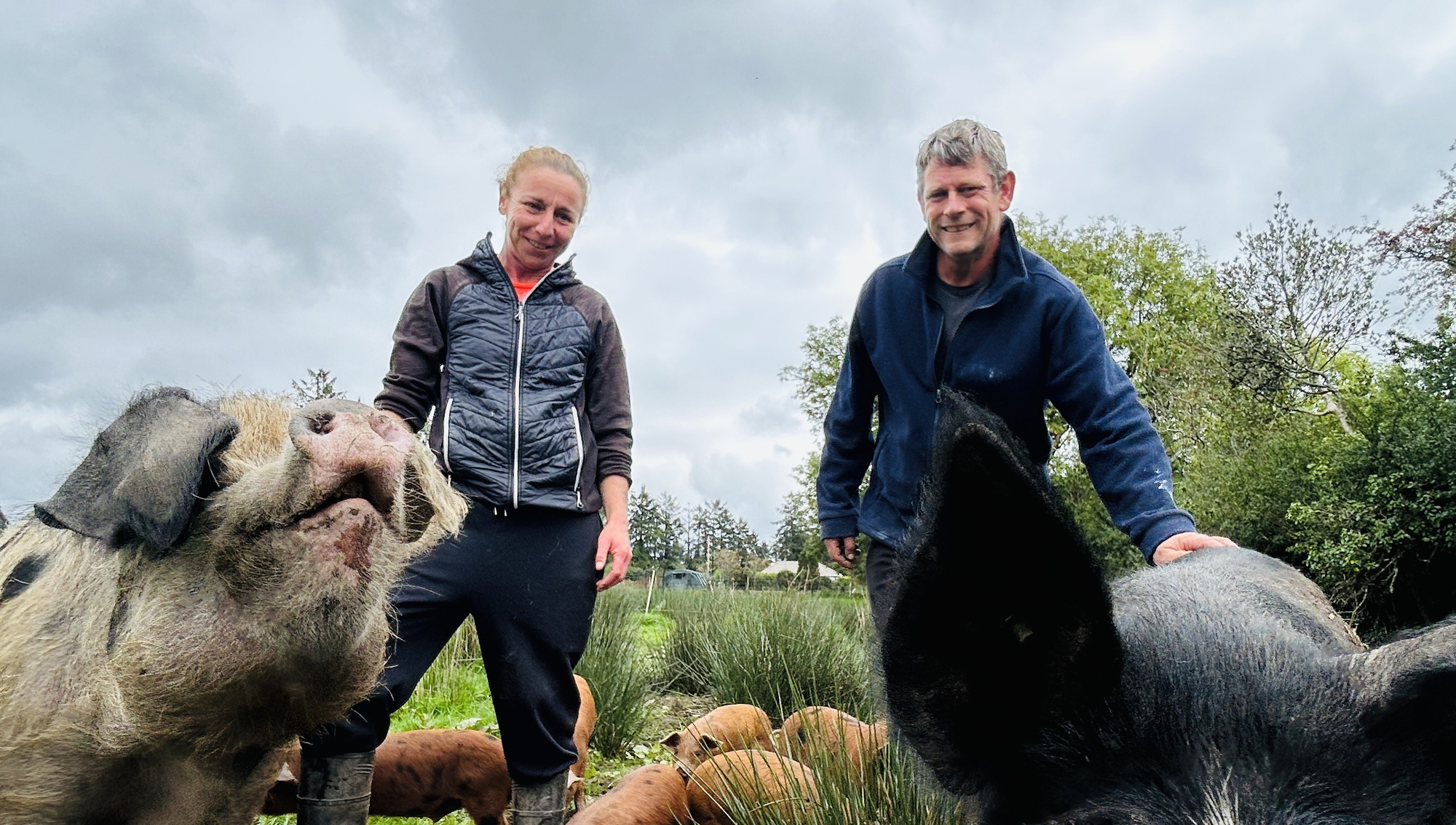
Siobhan and Ross Hubbard Newbard Farm

Siobhan and Ross Hubbard Newbard Farm

When it comes to honouring the great pantheon of Irish heroes, where does Horace Plunkett fit in? Horace who, says you? Well, only the man who founded the Irish agricultural co-operative movement, about as food-adjacent as it gets.

While Charles Stewart Parnell and Michael Davitt were up to their necks in the land war of the late 1800s, Plunkett was more pragmatically engaged in helping former tenants survive as newly-fledged farmers.

These new farmers, without education, machinery or capital, were entering a market heavily undercut by cheap agricultural imports.

At home, the ‘Gombeen men’, Irish shopkeepers and traders, sold them necessary provisions on tick at exorbitant prices, charging outrageous interest.

Not only did Plunkett travel the country persuading dairy farmers to form co-ops, he also urged co-ops to invest in machinery and infrastructure.

Instead of producing sometimes sub-standard butter at home, modern steam-powered creamery separators raised both quality and prices of Irish dairy produce.

In 1894, he founded the Irish Agricultural Organisation Society. By 1900, it comprised 370 cooperative societies and 36,000 members and established local co-op banks lending at low rates to smallholders, eliminating the Gombeen Men and offering financial independence.

When I lived on a small dairy farm in West Kerry for eight months of my childhood, the daily trip to the co-op was almost as sacrosanct as Sunday Mass. Depositing milk took mere moments — the chat afterwards, much longer, even though all were busy men. I could even then see the value in sharing knowledge and information; it was years later that I registered the equal importance of its impact on mental wellbeing and the social cohesion of the community.

However, those were the dying days of the small co-ops. Our new EU membership forced a dramatic modernisation and scaling up of Irish agriculture.

Local co-ops were subsumed into larger organisations, eventually becoming the Irish agri-biz giants of today with commercial reach straddling the globe. They dictate prices to farmers, not the other way around.

In recent years, the price paid per litre of milk to dairy farmers has even slipped below the cost of production and almost 40% of Irish dairy farms carry an average debt of €136,000. That sounds suspiciously like the Gombeen Men of yore, aided and abetted by the Department of Agriculture, a sector which would shed no more than crocodile tears were farmers to be entirely replaced by farm managers.

Should that happen, the elemental glue of rural Irish communities would vanish entirely.

To farm outside the current system is a lonely and vulnerable place, which is why a brand new farming organisation, Slí na Feirme (SnF; The Farmer’s Way), is one of the most important initiatives since Horace first revolutionised Irish agriculture.

I recently visited Newbard Farm, near Lismore, Co Waterford, a wonderful little organic smallholding where Siobhan and Ross Hubbard raise superlative and delicious free range pigs and chickens. Siobhan is the driving force behind SnF, which has just launched its manifesto.

Founded in 2025, SnF is a farmer-led, multi-species processing and food enterprise designed to support local farmers, communities, nature, animal welfare, and financially sustainable food futures. This involves creating viable networks of small independent farms as opposed to the vast monocultural ranches of our current agriculture model, building national food resilience and sovereignty, and with rich biodiversity at the very heart of all actions.

SnF is a support network offering accessible, small-scale, multi-species meat processing and stronger local routes to market, and members include farmers, butchers, food professionals, community developers, and nature-restoration practitioners. SnF’s first initiative will soon launch, a new independent abattoir in Tramore to be used by small livestock farmers squeezed entirely out of the industrialised system, producing superlative meat — yet struggling to get it slaughtered and processed.

A shared brand will promote a collective superior food offering and, though currently centred in a region around West Waterford, the aim is become a national organisation. Connecting with consumers can be very challenging from the heart of the country but that shared SnF brand will offer a premium brand, and also allow farmers to collectively bring product to market nationwide.

In a few years, I envisage much of my weekly shopping basket made up of SnF produce. The bould Horace would be very proud.

Table Talk

Always one of the year’s finest food fairs, the annual Sheridan’s shindig, in Kells, Co Meath, has now become part of the wider Samhain Festival of Food & Culture (November 5-8). A huge programme of events includes demos from JP McMahon (Aniar), Lily Ramirez Folan (Picado Mexican) and cocktail king Oisin Davis, along with talks, farm walks, demos, and all manner of eating opportunities.

The closing food fair offers artisan food produce, tastings and delicacies along with a Cooks n Books Stage, show- casing demos and talks from leading Irish chefs and food writers. Family-friendly and free to under 16s, it also features food trucks, kids’ workshops, live music and fairground rides, with the overall Samhain Festival pass providing free admission.

foodcultureireland.ie/samhain Chef Rory O’Connell is the star attraction at this year’s Listowel Food Fair (November 5-9), now in its 31st year, where he will host a cooking demo.

The festival’s annual awards include the 2026 Listowel Food Fair Food Book of the Year, Local Food Hero Award, Best Emerging Artisan Food Producer Award, and the Listowel Food Fair Lifetime Achievement Award. And make sure to bring a big shopping bag and a well-stocked wallet for the Food Fair Food & Craft Hall with a huge selection of local craft, design and gourmet food on offer, including cakes, craft beers, mulled wine, chocolate, jams, chutneys and breads.
Today's Special

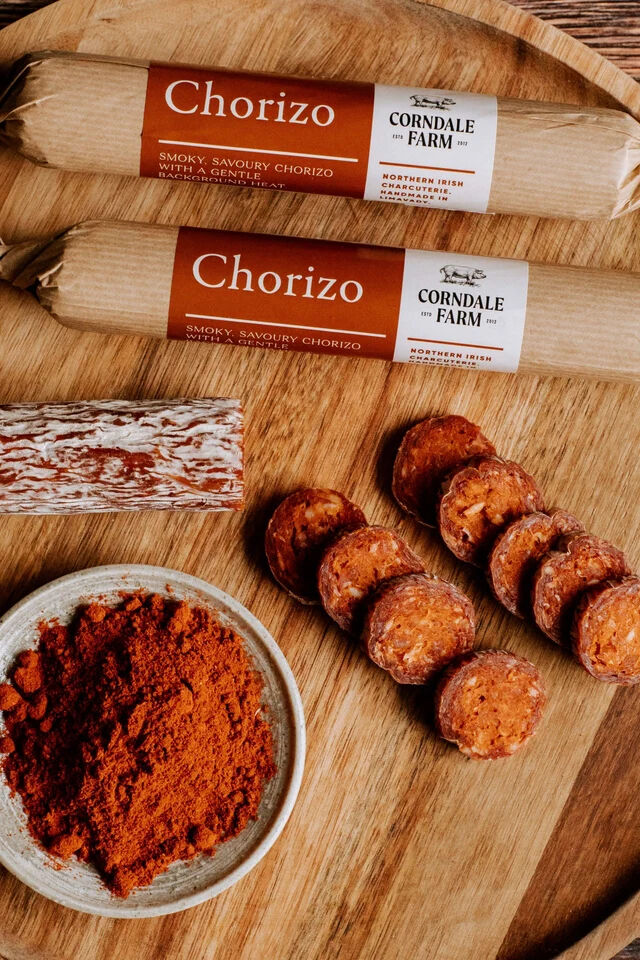
Corndale farm Chorizo

Corndale Farm’s chorizo (€7.87) was another recent Blás na hÉireann Gold winner and deservedly so, for it is quite possibly the finest of all the Irish-produced chorizos, fine enough to bring tears of joy to a Spaniard’s eye.

Combining their own excellent free-range pork with premium Pimenton de La Vera (paprika) and other herbs and spices, the sausage has a smoky, sweet- savoury bite and is one of those rare chorizos good enough to enjoy raw rather than cooked.
More in this section

Cookie Policy Privacy Policy Brand Safety FAQ Help Contact Us Terms and Conditions

© Examiner Echo Group Limited