Aishling Moore: Red mullet is one of my favourite fish — here's how to cook it
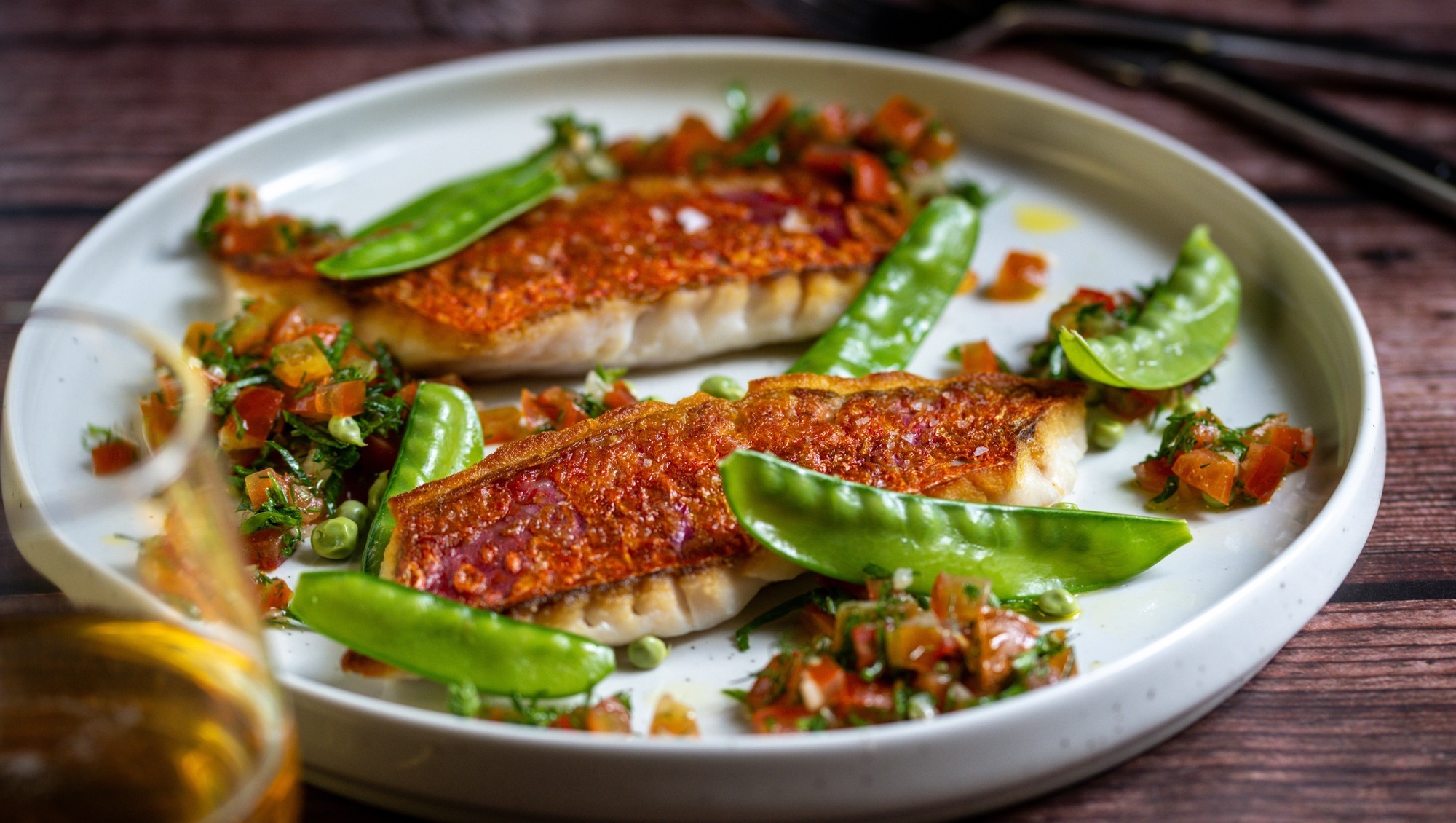
Aishling Moore's Red mullet sauce verge: Picture: Chani Anderson

It’s always a joy when I see Red mullet on a fishmonger’s counter or they arrive in a fish delivery at the restaurant.
Red Mullet with Sauce Vierge
Red mullet is one of my favourite fish to prepare and cook.
Servings
4Course
MainIngredients
For the fish
8x fillets of red mullet (pin boned)
2 tbsp rapeseed oil
Fine sea salt
For the sauce vierge
100g tomatoes
1 shallot
1 lemon juice and zest
1 bunch flat leaf parsley
2 sprigs of dill
2 sprigs of chervil
Sea salt
2 tbsp golden rapeseed oil
Method
For the sauce
Peel and finely dice the shallot and place in a bowl.
Add the zest and juice of the lemon, season with sea salt and set aside while preparing thetomatoes. Quarter the tomatoes, remove the watery seeds and dice the tomato flesh into uniform cubes. Set the seeds aside foranother use.
Add the tomatoes to the bowl with the shallots and mix well.
Finely chop the flat leaf parsley, chervil and dill and add to the tomatoes.
Finish with sea salt flakes and golden rapeseed oil, taste to correct seasoning.
You may want to add a little more lemon juice at this stage.
Leave at room temperature while preparing the red mullet.
For the red mullet
Remove the fish from the fridge 10 minutes before you intend on cooking and check the fillets for any bones.
Preheat oven to 200°C.
Pat the fillets of fish dry with some kitchen paper to remove any excess water. Season with fine sea salt.
Preheat a carbon steel or non-stick frying pan on medium-high heat for two minutes. Add the oil and warm.
Working in batches place the red mullet in the pan, laying the fillets skin side-down and away from you, to avoid oil splatters. Do not disturb the fillet or move the pan.
Once the skin has turned a deeper shade of orange and has crisped up, confidently lift thefillet from the pan and place on a lightly greased tray using a fish slice.
Once all the fillets are seared on one side, place the tray in the oven for 2-3 minutes to finish cooking, depending on the size of the fish.
Serve on warm plates with the sauce vierge and some seasonal vegetables.
Use firm fleshed tomatoes for the sauce vierge; over-ripe tomatoes will prove difficult to dice.
Marinating the shallots in lemon juice and salt is key to remove the harshness from this allium.
You can swap shallot for some finely sliced scallion.
Keep and serve the sauce vierge at room
temperature for the best results, refrigerating tomatoes dulls their flavour.
Swap dill and chervil for chives or substitute with extra flat leaf parsley, you can also use basil or coriander.
Good quality oil really makes the difference with sauces like these so use the best golden rapeseed or extra virgin olive oil you have in the press.
Don’t throw out the seeds of the tomatoes, freeze and use in soups or sauces.