Generational renewal will become an 'existential crisis', says MEP Billy Kelleher
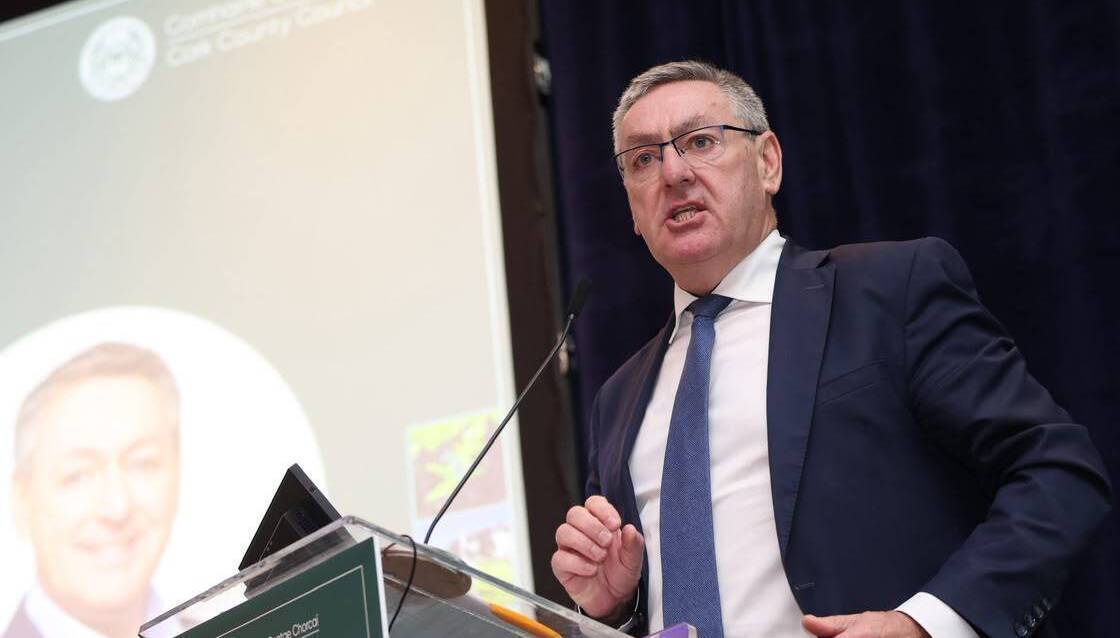
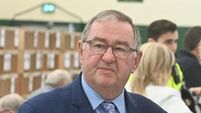
MEP Billy Kelleher speaking to attendees of the Cork County Council's Agricultural and Rural Futures Conference. File picture
A warning that the ageing farming population will become an “existential crisis” across Europe if not addressed came from MEP Billy Kelleher at an agricultural futures event.
Speaking at the Cork County Council Agriculture and Rural Futures Conference on November 27, at the Charleville Park Hotel, Mr Kelleher cautioned the crowd about the growing threat of an ageing farming population.
“The age profile of farming and of farmers across Europe is rising dramatically… We now have single-digit figures for the number of farmers under the age of 40 in Ireland,” he warned.
He highlighted that the mean average age of farmers across Europe has already passed 60 years of age and that generational renewal, or the lack thereof, will become a crisis “if not addressed in the next number of years.”
He went on to say that a major challenge in farming today is trying to attract and hold onto young people interested in the sector.
Read More
He cautioned that rural Ireland has already seen rural populations decline as young people move to urban areas or abroad.
“That's why the negotiations that are happening at the moment are of huge importance, not just for the immediate income of farmers themselves, but for the long-term viability of agriculture, rural communities and the agri-food sector,” Mr Kelleher said.
Looking towards that future in agriculture, Mr Kelleher said current budget discussions in Brussels around the multi-annual financial framework and the conclusions of those discussions will “indicate whether or not there is a deep commitment across Europe to sustain agriculture and rural communities into the future.”
Mr Kelleher explained that many EU members are saying their priorities lie with security and defence.
“But equally, we have to convince those that will be deciding on the budgets that rural communities in Ireland and right across Europe need to be supported as well.” Continuing, he said: “Not just from an emotional perspective, but from a strategic perspective.
He went on to highlight that current negotiations aren’t just looking at immediate incomes for farmers but also the long-term viability of agriculture, rural communities, and the agri-food sector that is dependent on the quality of produce being produced.
Discussing the protection of commercial and environmental schemes, Mr Kelleher warned that if a smaller Common Agricultural Policy (CAP) budget is to be finalised, these would be schemes and areas that would suffer as a result.
“And if we have a situation where we have a very narrow budget, then one or both of those will have to give… And in my view, that will be detrimental to our ambition to have high quality production of high quality foods that underpins our food security.”
Discussing policy, Mr Kelleher highlighted “the highest profile issue” of the nitrates derogation.
He warned that the nitrates uncertainty threatens confidence across the agri-food sector and discourages investment by farmers, creating wider concerns for the sector.
“So it is a key issue that has to be addressed, bringing certainty in terms of underpinning the future with policies that don't change by the changes and whims of elections in one member state or finding that the policies that were pursued were not assessed in a way that is understood into the future,” he concluded.

BLACK FRIDAY
Already a subscriber? Sign in