VAT anomaly driving farmers away from marts, committee hears
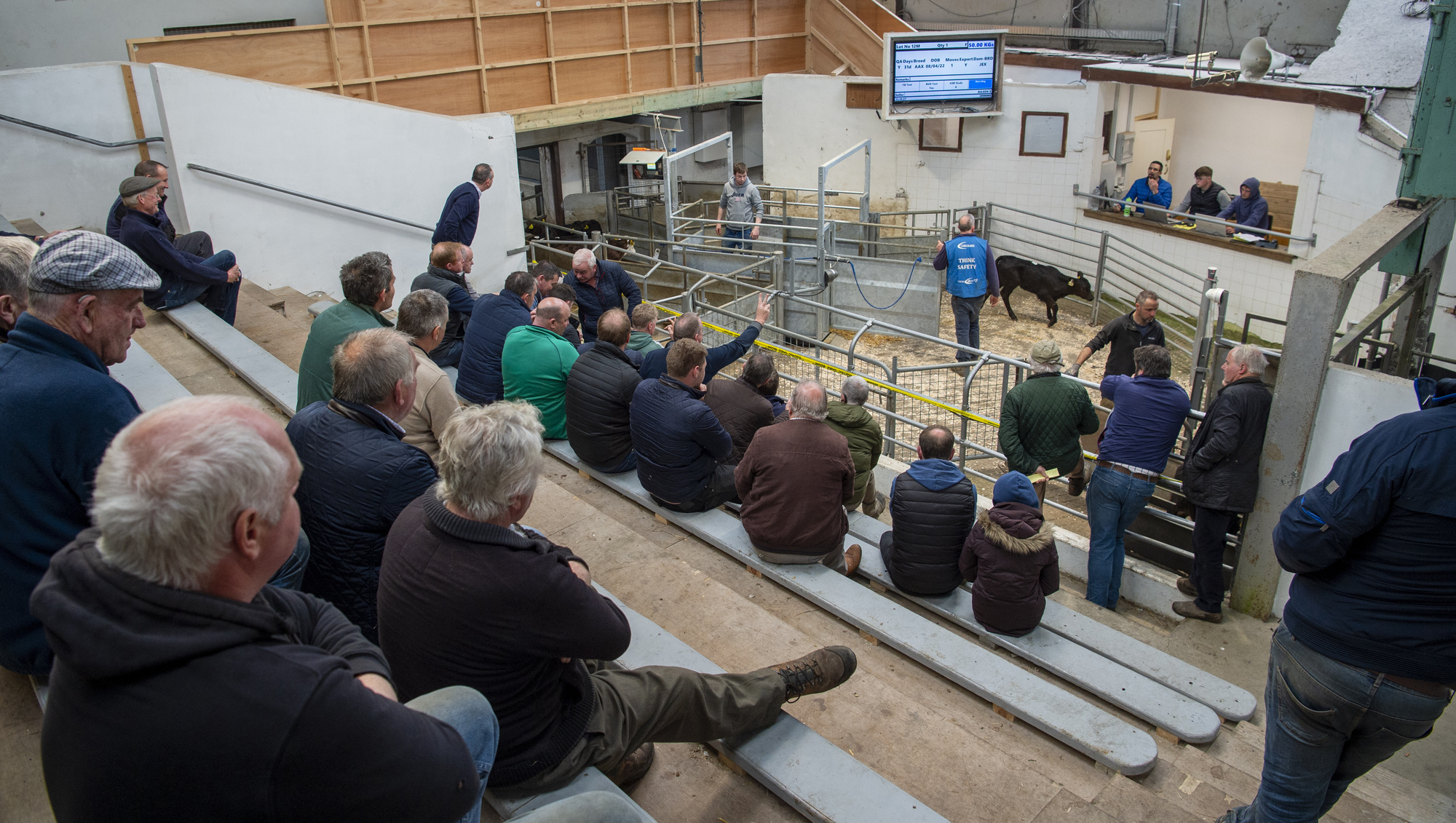
The Agricultural Committee heard from both farming organisations and Department and Revenue officials surrounding the matter of the Flat-rate addition issued to farmers. Picture Dan Linehan
The flat-rate VAT reduction is encouraging farmers to bypass marts, while officials confirm the livestock VAT rate could be reduced at a cost of about €2m to the Exchequer, the Oireachtas Agricultural Committee heard.
A reduction in the farmer flat-rate addition from 5.1% to 4.5% has created a VAT anomaly that farming groups claim costs non-VAT-registered farmers money when selling livestock through a mart.
The issue was debated at an Oireachtas committee hearing where Department of Finance and Revenue officials defended the scheme.
The flat-rate scheme is designed to compensate farmers for VAT incurred on farming costs by allowing them to receive a 'flat-rate addition' on the sale of agricultural goods and services.
Read More
The rate fell from 5.1% to 4.5% in Budget 2026 following a calculation based on CSO data and EU VAT rules.
Separately, livestock sales remain subject to a 4.8% livestock VAT rate, creating a 0.3 percentage-point gap, with the flat-rate addition now sitting below the livestock VAT rate.
Finance officials confirmed that while the flat-rate addition is determined by EU rules and cannot be altered by ministerial discretion, the 4.8% livestock VAT rate can be changed by the government.
Revenue officials told the committee that every 0.1 percentage-point movement in the farmer flat-rate addition is worth approximately €10m for budgetary purposes.
As a result, the reduction from 5.1% to 4.5% represented an estimated Exchequer gain of €61.5m compared with leaving the rate unchanged.
Reacting to this, Deputy William Airde said that was “€61.5m taken out of farmers' pockets,” which officials disputed, saying the sum was “revenue neutral” as the scheme is designed to ensure full compensation for VAT paid on inputs.
Representing Irish Co-operative Organisation Society (ICOS), Ray Doyle argued that marts have had to deal with the mismatch between the flat-rate and livestock rate, which has created a problem for non-VAT-registered farmers selling livestock through marts.
ICOS argued that non-VAT-registered farmers selling through marts face a 0.3 percentage-point disadvantage that does not arise in private farm-to-farm sales between two unregistered farmers, lending to the decline in animals being sold within rings across the country.
Mr Doyle told the committee that for every €1,000 traded through the mart, roughly €2.80 is now deducted due to this year's differential.
He stressed that the flat-rate deducted through marts is causing unnecessary tension between them and their farmers, despite the deduction being ultimately collected by Revenue and not the marts.
“Many farmers wrongly think that the mart has deducted this amount for themselves, and some farmers are now trading privately rather than through the local mart as a direct result of this government policy… This is putting marts at a competitive disadvantage because the seller can sell farm to farm to a non-registered VAT farmer without having to pay the VAT penalty,” Mr Doyle explained.
Revenue representative, Chad Egan, explained that livestock marts are seen as auctioneers and as a result must adhere to EU and Irish VAT law.
"There's a deeming provision in EU VAT law, Irish VAT law, where someone acts for another selling their goods; essentially, they treat the sale between the seller farmer and the market as a deemed sale… Marts are subject to these rules that generally apply to auctioneers," Mr Egan told the Committee.
Revenue said this "deemed sale" mechanism creates two VAT transactions, which is why marts are treated differently from private sales.
Department of Finance, Niall O'Sullivan, said: "For the purpose of VAT law, there's two distinct transactions taking place."
The Committee pushed back against this, arguing that two transactions taking place was not the reality of the situation, with Deputy Michael Fitzmaurice arguing: "They're basically a facilitator of this all… They don't own the animal at any stage."
ICOS proposed that the VAT rate addition should not be set higher than the livestock rate for any individual year.
Despite two hours of debate, there was broad agreement that the current mismatch between the 4.5% flat-rate addition and the 4.8% livestock VAT rate has created an unintended consequence for livestock marts. Finance officials confirmed the rates could be aligned, subject to Government approval, which could result in a cost of €2m to the Exchequer.
Whether the Government chooses to eliminate that gap in the forthcoming Budget now remains the central question for farmers, marts and farming organisations.