Farm ponds could reduce flood peaks by up to 38%
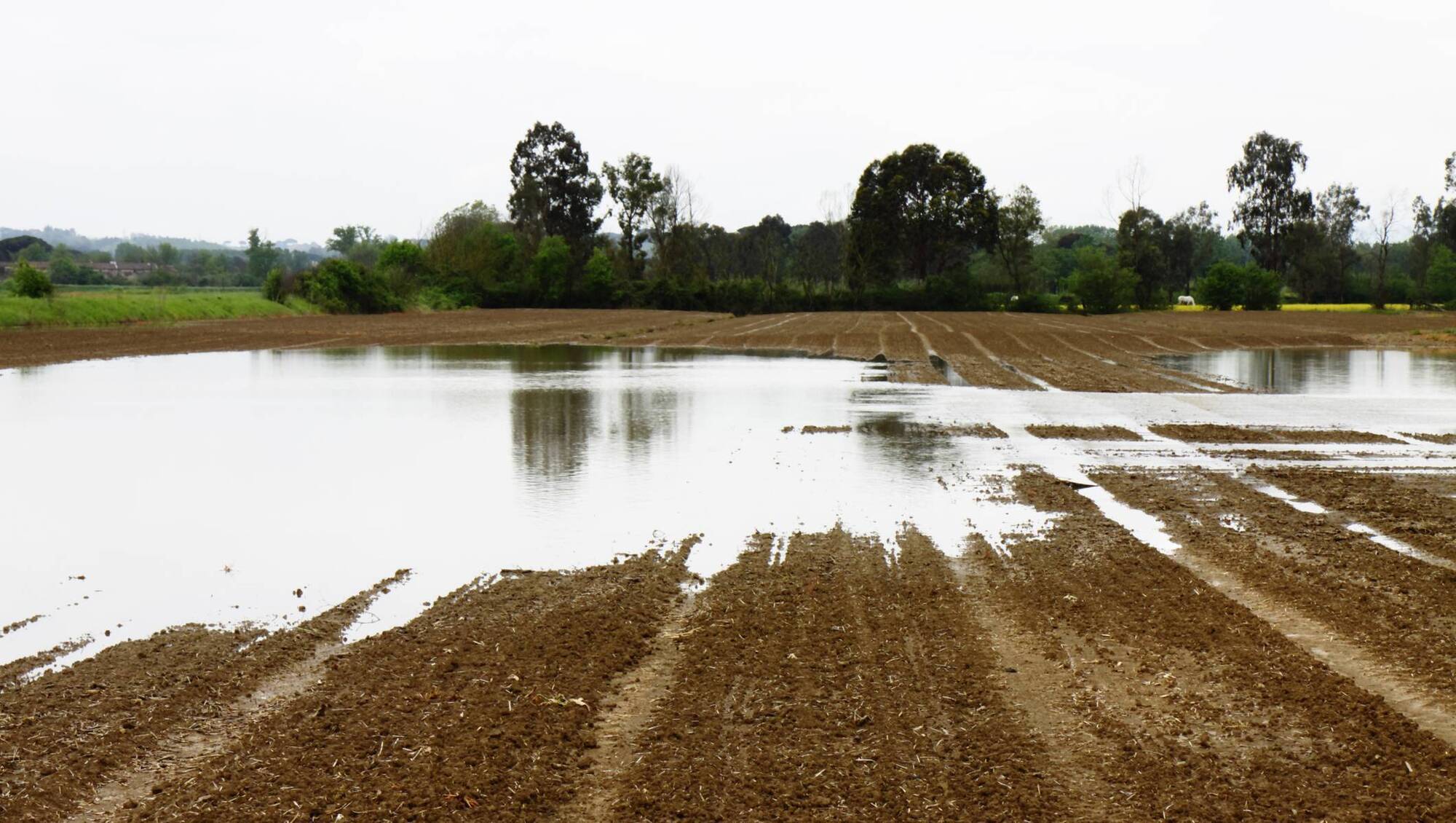
Experimental rural flood mitigation sites were constructed in counties Cork and Wexford.
Irish researchers have recommended paying farmers and other private landowners to temporarily store floodwater as part of efforts to protect at-risk communities.
Landowners would need to be compensated for the disruption and construction costs associated with nature-based solutions, as well as for the ecosystem services they provide.
In the agriculture sector, this could be aligned with existing payment schemes such as the Agri-Climate Rural Environment Scheme, suggested the research team led by Trinity College Dublin experts and funded by the Environmental Protection Agency and the Office of Public Works.
They found one of the best nature-based solutions is what they call an offline storage area, which is a temporary pond in a waterway’s floodplain.
Their research indicated the temporary flooding of this area has minimal negative impact overall on grassland productivity. In summer, grass growth and productivity were higher in the ponding zone, which made up for flooding reducing growth in the winter.
Called the SloWaters project, it was the first in Ireland to construct rural demonstration sites specifically to test nature-based solutions. Experimental rural flood mitigation sites were constructed in counties Cork and Wexford.
The field studies helped to show nature-based solutions could be highly effective in small Irish agricultural catchments.
However, the research was limited to small catchments and lower-magnitude floods, and further work is needed to assess the performance of nature-based solutions during extreme events.
The findings provide a framework for mainstreaming nature-based solutions (NbS) into Irish flood risk management, according to the research report.
The report stated: “A critical next step is the explicit integration of NbS into national policy, alongside traditional engineering, moving beyond recognition to mandatory feasibility in all flood relief schemes.
Read More
“Future implementation requires establishing a dedicated, long-term funding stream to encourage uptake by private landowners for the provision of these ecosystem services. Farmers must be centred in any discussions of NbS governance, implementation and payment schemes.
“Future research should focus on the performance of NbS during extreme events, and the social and liability concerns of private landowners.”
The researchers thanked the farmers who permitted them to construct rural flood mitigation sites on the property of Patrick Gleeson and Caroline Bourke in Co Wexford, and at Leades House, near Carrigadrohid in Co Cork.
Temporary ponding in waterway floodplains and leaky dams were used at both locations. At the Co Cork site, a woodland swale and low-head boulder weirs were also investigated.
The boulder weirs manage river levels, slow flow and aid river restoration. They can create pools and help fish move upstream.
Swales are shallow, wide and gently sloped depressions which slow, collect and filter surface water, allowing it to soak into the soil.
These nature-based solutions offer sustainable, lower-cost measures which can complement existing flood mitigation and improve water quality by enhancing water-retention capacity.
Temporary ponding in waterway floodplains reduced flood peaks by up to 38% during the study and increased the duration of lower flood peaks by two and a half times.
A woodland swale was found to increase dissolved oxygen concentrations and significantly reduce nitrate concentrations. However, dissolved phosphorus, organic matter and ammonium were released during critical periods, suggesting nutrient uptake was temporary.
Bunds were found to trap sediment and facilitate nitrate removal. However, they may also act as a source of phosphorus.