Why every grazing system needs a plan B
As the year goes on, maintaining milk yield is of the utmost importance as we head into late lactation, writes Adam Hanratty from Alltech Ireland.
The last number of seasons have highlighted one important lesson for Irish dairy farmers: every grazing system needs flexibility.
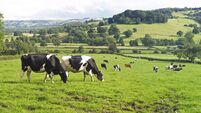
While grass remains the cheapest and most valuable feed on Irish farms, increasingly unpredictable weather means there will be periods when cows simply cannot get enough grass, whether it’s due to saturated ground conditions in early spring or prolonged drought during the summer.
After a challenging summer marked by prolonged drought and declining grass growth, the KEENAN feeding system has once again proven its value on farms across the country.
As grass supplies tightened, many farmers turned to the KEENAN machine to incorporate greater levels of silage, straw and targeted energy sources like Irish grains into the diet, providing the flexibility needed to adapt to changing conditions.
This balanced approach has helped maintain milk yield while extending grass rotation lengths, allowing farmers to make the most of limited grazing without compromising herd performance.
As the year goes on, maintaining milk yield is of the utmost importance as we head into late lactation.
Work carried out in UCD Lyons Estate has shown that cows that are supplemented in late lactation, versus pasture only, had better milk production and body condition and were more feed-efficient.
It’s equally important to begin planning for the dry-cow period.
Developing a feed budget early allows farmers to assess silage stocks, identify potential shortfalls and put a practical feeding strategy in place, ensuring dry cows are managed efficiently while preserving valuable forage for the milking herd.
With this year’s challenging growing conditions, silage stocks may come under pressure. Stretching forage during the dry-cow period has become more important than ever.
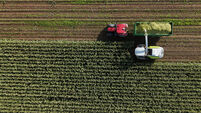
Incorporating straw into a balanced mixed ration is an effective way to conserve valuable high-quality silage for the milking herd, while still meeting the nutritional requirements of dry cows.
First-time KEENAN customer Damien Moore, from Co Kildare, praised the flexibility of KEENAN in his first year of using it: “Meeting our cows’ needs allowed us to stretch our silage stocks for an additional six weeks.”
The mechanics of the KEENAN have allowed the incorporation of high quantities of straw or long material into the mix in a consistent manner.
Earlier research of these diets on up to 25,000 cows in several countries has shown major health benefits in the avoidance of metabolic issues by as much as 50-80%, resulting in an average benefit per cow of €51.
The results speak for themselves. Analysis of KEENAN/InTouch grass-based customers during 2025 showed an average production of 548kg of milk solids per cow.
In comparison, national ICBF figures averaged 443kg of milk solids per cow between 2022 and 2024, a difference of 105kg of milk solids per cow.
Based on an average milk value of €5.33 per kilogram of milk solids in today’s market, that equates to an additional €560 per cow every year.
These figures compare a specific group of KEENAN/InTouch customers with national averages and do not, by themselves, prove cause and effect; they demonstrate the level of performance being achieved on many well-managed farms using the system, while also maintaining low levels of concentrates.
A significant proportion of this advantage is created during the first weeks of lactation.
Freshly-calved cows experience a rapid increase in nutrient demand, and their ability to achieve high dry-matter intakes early has a major influence on peak milk yield.
A consistent, highly-palatable mixed ration helps cows reach target intakes more quickly, supporting rumen function during this critical transition period.
By reaching peak production sooner and maintaining that peak for longer, cows produce more milk solids across the entire lactation, rather than simply chasing production later in the season.
This early-lactation advantage becomes even more valuable in Irish grass-based systems, where weather often dictates management decisions.
During wet springs, grazing opportunities can be limited and grass intakes reduced. Rather than allowing cows to lose momentum, a KEENAN mixed ration bridges the nutritional gap, helping maintain intakes until grazing conditions improve.
If you’re attending this year’s National Ploughing Championships, be sure to visit the KEENAN stand where the team will be showcasing the latest KEENAN MechFiber Plus range and the new InTouch fourth-generation controller, demonstrating how precision-feeding technology continues to help farmers improve efficiency, consistency and herd performance.
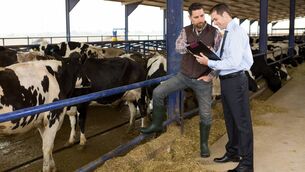
The KEENAN and Alltech team are always available to work with farmers to assess forage stocks, discuss feeding options and develop a strategy that delivers the best performance from the feeds available.
Whether you’re looking to invest in a new machine or expand your feeding capacity, KEENAN has a range of both new and quality used feeders available to suit every farming system and budget.
Before winter feeding begins, it’s also important to ensure your KEENAN is ready for the season ahead.
A pre-winter service helps maximise reliability during the busiest feeding period of the year, reducing the risk of costly breakdowns when the machine is needed most.
Checking wear items such as paddle rubbers and blades is equally important, as these components play a vital role in producing the correct MechFiber mix.
As weather patterns become increasingly unpredictable, successful dairy farms will be those that can adapt rather than react.
Having the flexibility to adjust diets quickly, utilise home-grown forage efficiently and maintain production through challenging periods provides peace of mind and protects profitability.
A KEENAN feeder isn’t just another machine on the farm; it’s an investment in resilience, giving farmers confidence that, whatever the weather brings, they always have a plan B.
- Adam Hanratty is the KEENAN Irish sales manager at Alltech Ireland.