Dawn Meats lowers Scope 1 and 2 emissions by 77%
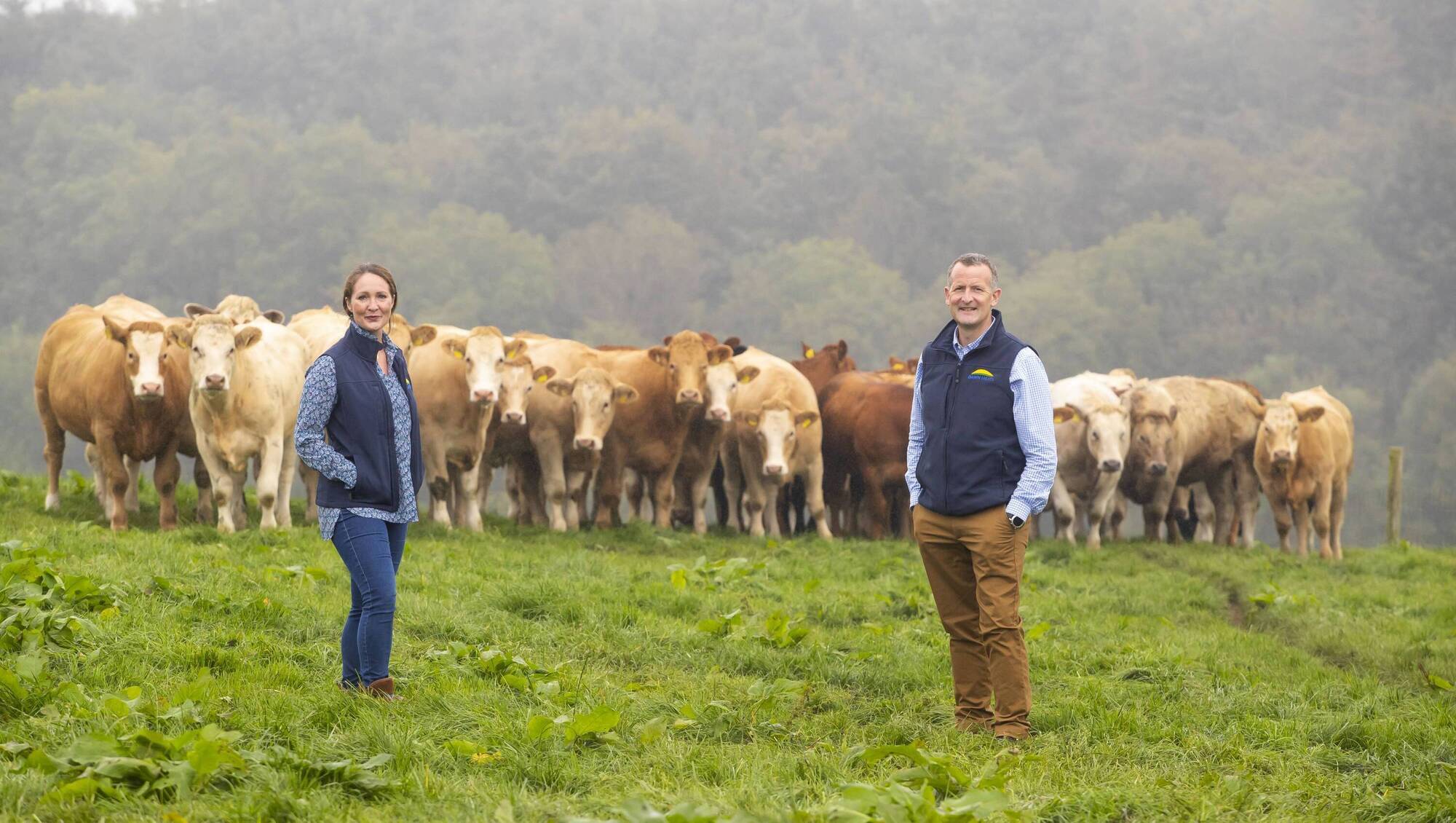
(Left to right): Sustainability director at Dawn Meats, Gill Higgins and chief executive of Dawn Meats, Niall Browne.
Across Ireland and the UK, Dawn Meats has reported a drop of 77% in Scope 1 and 2 emissions within its operations.
This figure is a development on last year's figures, which saw a 63% drop in 2024 and has been achieved over a seven-year period from 2018 to 2025 as part of the company’s €100m-plus Plan Four Zero sustainability strategy, which includes a target of reaching operational Net Zero by 2050.
Scope 1 emissions are emissions from sources a company owns or controls, such as burning fossil fuels to power business activity. Scope 2 emissions are as a result of indirect and external third-party sources, such as electricity taken from the grid to power offices.
The company reports that all electricity requirements across the UK and Ireland have been procured from renewable sources since 2020, and the company aims to continue progressing on-site renewable energy regeneration across its production sites following the first installation of solar PV panels at its headquarters in Waterford.
Read More
Other initiatives to lower Scope 1 and 2 emissions include upgrading refrigeration systems and boilers, switching to renewable sources of thermal energy generation to heat water and using renewable sources of heat recovery such as heat pumps.
Scope 3 emissions, also indirect emissions which are associated with a company’s value chain such as raw material extraction and emissions occurring from product use and disposal, dropped by 8.8%. This was driven primarily by a reduction in farm carbon footprints and an increase in product yield from the finished cattle.
The report shows that the weighted average footprint of beef from Irish farms supplying Dawn Meats decreased by 3.1%, and the footprint for beef and lamb from UK farms supplying Dunbia decreased by 7.5% and 3.3% respectively.
Carbon footprints for farms are undertaken every 18-24 months, and farmers receive the report alongside suggested actions and practice changes to help further reduce emissions.
Dawn Meats reported that its top 20% of supplying farms with the lowest carbon footprints used more protected urea, less CAN-based fertiliser and finished animals at an average of 24.45 months.
Currently, 240 farms now participate in Dawn Meats’ ‘Active Ireland’ sustainability programme and 631 farms have signed up for the UK equivalent. Currently, 58% of cattle suppliers are covered by emissions monitoring programmes.
These findings do not include the Alliance Group emissions, the New Zealand-based company in which Dawn Meats acquired a 65% shareholding in late 2025. Dawn Meats has reported that Alliance’s operations are currently being integrated into Dawn Meats’ Plan Four Zero programme to align the group’s entire business strategy.
Chief executive of Dawn Meats, Niall Browne, said: “At Dawn Meats and Dunbia, we recognise that our future relies on the resilience of our natural resources, the wellbeing of our communities and the stability of our economies and markets.
"As part of our €100 million Plan Four Zero programme and as our business presence and influence expands, we continue to collaborate with industry and supply chain partners to reduce emissions and achieve new sustainability goals. I am pleased that we are again reporting material progress in our latest update and we look forward to reporting on the enlarged group performance in 2027.”
Sustainability director at Dawn Meats, Gill Higgins, said: “We are pleased to release another positive update on our Plan Four Zero sustainability programme. The reduction in emissions, energy and water savings we have achieved show the extent to which individual initiatives and capital expenditure projects are contributing to our overall goals.
"We are constantly challenging ourselves to continuously improve across key areas such as waste and water management, packaging and energy use, while our staff are committed to implementing new ways of working and systems upgrades. We continue to support our farmer suppliers, who work incredibly hard to maintain a resilient and sustainable supply chain.”