Drought conditions could have dire repercussions on feed reserves and financials
Farmers across the country are struggling with drought conditions, with worries turning to the longevity of winter feed supplies and suitable grass cover for spring 2027
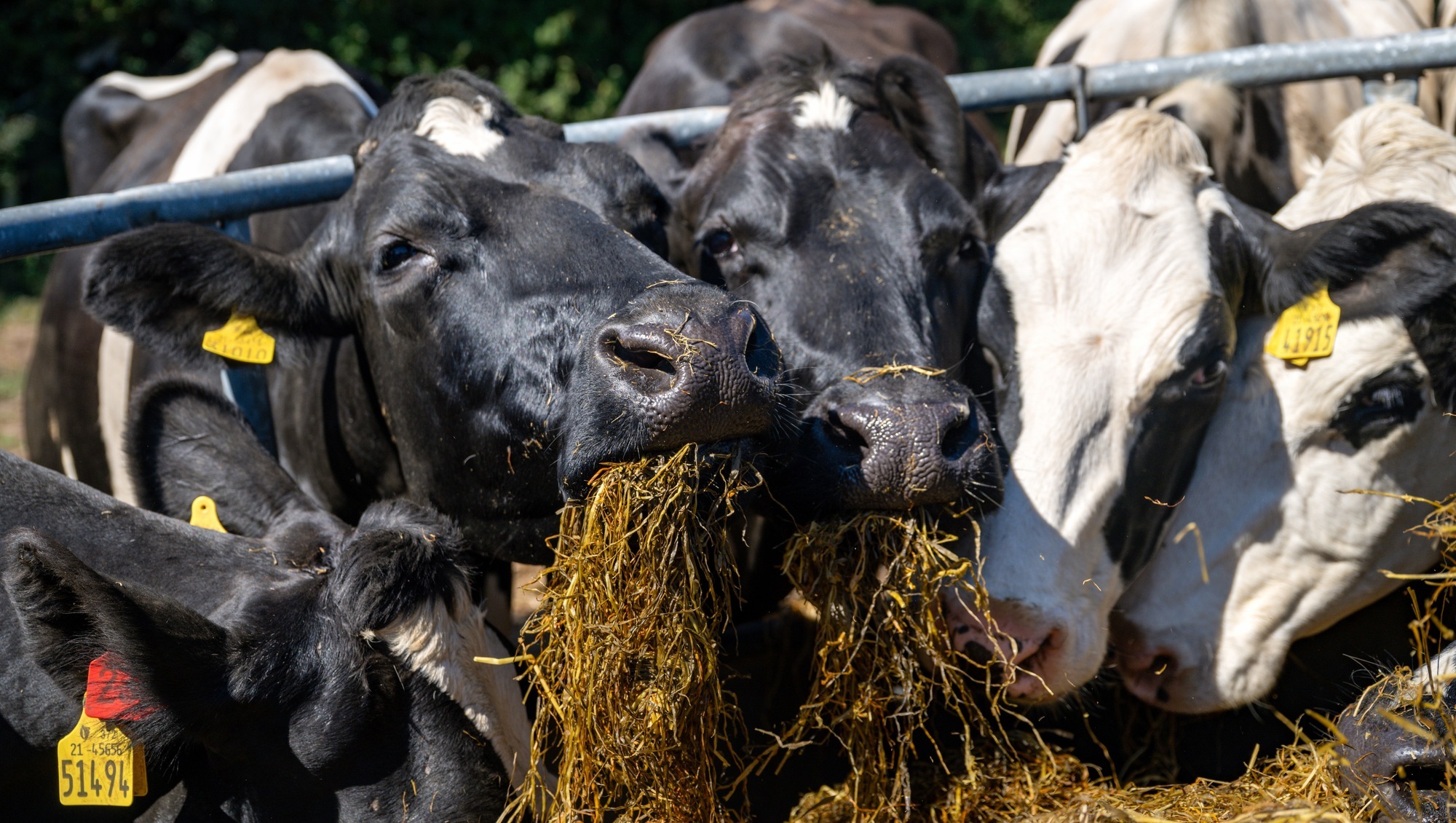
Dairy herd feeds on silage in fields where drought has left the grass scorched and pasture severely depleted. Pictures: Chani Anderson

Dairy herd feeds on silage in fields where drought has left the grass scorched and pasture severely depleted. Pictures: Chani Anderson

Despite a good month for grass in June, the ongoing dry conditions have left many farmers with little choice but to begin feeding winter reserves.

August is a key growth period for farmers to begin building grass covers for autumn. The target average farm cover by September 1 is about 1,000kg DM/ha.


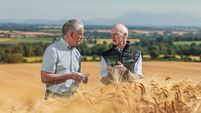
Tim Casey, founder and chief executive of Cork Grassland Services, in a feeding barn in East Cork as drought conditions continue to put pressure on farmers. 

Tim Casey, chief executive and founder of Cork Grassland Services, told the Irish Examiner the reported average growth rate is about 22kg DM/ha/day, but what he is seeing with his clients is that many are only growing 10-12kg DM/ha/day, with some recording single-digit growth rates.

“For comparison, we would normally expect growth of around 50-60 kg DM/ha/day during August,” he said.

“If average growth for August were to finish at around 15kg DM/ha/day compared with 60kg last August, that would represent a 75% reduction in grass growth. Over the course of August, that equates to approximately 1.4 tonnes less grass dry matter grown per hectare.

"On a 40-hectare grazing platform, that’s almost 56 tonnes of grass dry matter that simply hasn’t been produced during the month and has to be replaced, to some extent, with silage and purchased feed.” 

Mr Casey said many of his clients were derogation farmers and would be aiming for the 1,000kg DM/ha cover, but are currently struggling to get 500-600kg DM/ha for the beginning of September.

Mr Casey highlighted that the lack of rainfall through July was particularly severe around Cork.

Tim Casey checks the condition of the grass on a farm in East Cork following weeks of drought.

Cork Airport recorded no rainfall at all between July 13 and July 19, with average temperatures reaching 19.7°C. This was followed by just 0.5 mm of rain between July 20 and July 26, “around 3% of the normal rainfall for that week”. 

Mr Casey said soil temperatures averaged 22.5C, almost 7C above normal. That, combined with very little rainfall, high temperatures, and warm soils, has put major pressure on grass growth.

Some showers around Cork helped “green up” some farms, but rainfall was extremely localised. Due to the heavy rain followed by hot, dry weather, rain was not able to fully benefit the grass, and farms still have not seen any major growth.

Dairy farmers to take a hard financial hit 

Discussing the economic hit farmers may experience closing out 2026, Mr Casey said it was conceivable dairy farmers could receive a financial hit of up to €100,000 compared to the figures of 2025.

“Once additional meal and the economic value of the silage being fed are included, I think an additional feed cost of approximately €300-€400 per cow between July and winter housing is a realistic scenario on badly affected farms. For a typical 100-cow dairy herd, that’s €30,000-€40,000 in additional feed costs alone,” he said.

He said the wider consequences of the drought will see reduced milk production and milk solids, poorer body condition, the potential for fertility impacts and embryo losses due to environmental stresses, as well as additional labour, water and the consumption of feed reserves.

He also highlighted that, depending on their milk processor, some dairy farmers had already absorbed losses of up to €38,000 due to lower milk prices compared with August 2025.

I think it is conceivable that the overall deterioration in income on some average-sized Cork dairy farms could approach €100,000 compared with last year, unless we see a rapid and sustained end to the current drought conditions. 

Mr Casey said his biggest concern for farmers was the financial and grassland impact may not be finished when cows are housed.

“What happens over the next six to eight weeks could have a major bearing on grass availability next spring,” he said.

“If farms cannot build sufficient grass this autumn, many will face a very difficult choice. They can house cows earlier and consume even more of their winter silage reserves, or they can continue grazing later into the year and risk closing the farm for the winter at an extremely low average farm cover.” 

Mr Casey warned the consequences could extend well beyond this year. Winter grass growth has typically averaged just two to three kilos of dry matter per hectare per day in recent years, meaning farms that close with very low covers may enter spring with average farm covers below 500kg DM/ha.

For highly stocked dairy farms carrying 3-3.5 cows/ha, that could result in a significant feed deficit at the start of the 2027 grazing season.

Lower autumn covers would mean greater reliance on silage and concentrates, less scope to extend grazing and reduced grass availability when cows return to pasture next spring.

x

Check out the Irish Examiner's WEATHER CENTRE for regularly updated short and long range forecasts wherever you are.

More in this section

Farming

Newsletter

Stay ahead of the season. Sign up for insights, expert advice and stories shaping Irish agriculture.

Cookie Policy Privacy Policy Brand Safety FAQ Help Contact Us Terms and Conditions

© Examiner Echo Group Limited