Paula Hynes: Farming's extreme challenge: drought, wildfires, and policy's unintended consequences
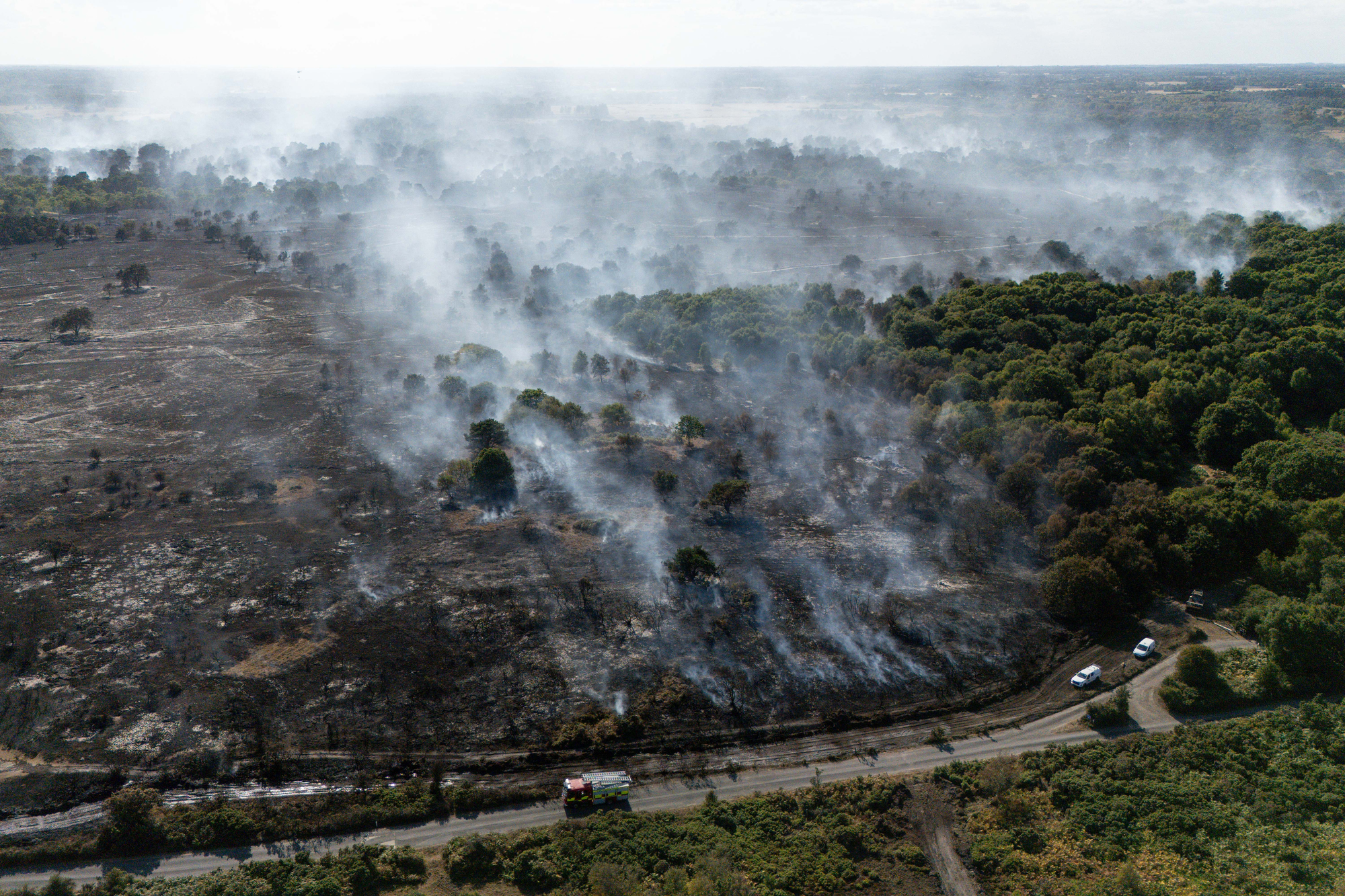
Wildfires on lands across Europe are now commonplace.
I often wonder whether consumers really know how challenging farming can be.
I, like most, thoroughly enjoy the sunshine. The warm summer days and this summer has really been exceptional. August is now upon us; summer holidays are in full flow for most. Many went to France and Spain in July and ended up experiencing extreme heat; both countries have experienced some of the worst wildfires in history, and sadly some of these wildfires were started deliberately, homes destroyed, farms ravaged by fires, thousands of hectares destroyed.
Greece is also battling wildfires right now. Tragically, two helicopter pilots lost their lives when two firefighting helicopters collided. The UK too has seen intense periods of summer heat. Farms right across Wales and the south of England are suffering from drought. Dairy farms in Wales, which are predominantly grass-based, are having to look at alternative ways to keep cows fed in the meantime, all of which is coming at a huge cost.
We have seen here too the recent wildfire in Wicklow, Waterford and also Tipperary where a wildfire burned for over ten days. EU policy changed dramatically over the years. Our mountains have become less intensively grazed, creating more room for biodiversity and wildlife. Roadside verges are cut less in order to allow birds to nest, yet all this proactive approach to nature allows for a lot of land to become highly susceptible to enormous wildfires as our summers become warmer and drier.
Footage from France showed a person getting out of their car and lighting the long dry grass before driving off. With all this space which is created for nature, all that is simply left after a wildfire is thousands of hectares of charred land, years of biodiversity lost. The reality is policy comes up with big ideas yet rarely looks at risk assessment, rarely comes up with contingency plans for what will be done in emergency situations.
Our motorways are a perfect example. Combined with No Mow May, where grass is not cut for a month to allow flowers to flourish, yet what is left afterwards is a huge fire risk, one cigarette thrown out a window could easily create a major blaze on the side of the road. I am all for improving biodiversity, but surely areas where it is heavily being promoted should also have fire breaks, yes those fire breaks would affect a small proportion of wildlife, but better than a fire devastating everything.
Farming is affected quite similarly by policy and the promotion of what the consumer wants in the ideal scenario. Cows out grazing lovely fields of lush grass; it sounds all so idyllic. Add in a little sound of the birds singing the morning chorus as the farmer brings in the cows and the perfect advert is created. But perhaps a truer advert would be the farmer slogging through a cold wet spring, doing everything possible to keep cows content and then faced with a major drought through the summer where fields are scorched, paddocks are bare and brown, cows tucking into silage strewn around the paddock or palm kernel from a huge trough, the meal lorry arriving nearly as often as the milk lorry, and all that wonderful dairy produce sitting on supermarket shelves with a special offer sign stating the farmer would probably earn more per hour stacking shelves in this supermarket.
Policy too seems as fluffy as the nice dairy advert. Lovely little thin lines of low emission slurry down along fields, washed in by a wonderful nights gentle rain, sadly it ground was generally too wet all Spring spread these lovely little lines of slurry, July has been too dry and rather than being washed in by a gentle nights rain, the lines of slurry would dry and sit there for weeks allowing the cows the wonderful opportunity of trying not to eat their own poo when they graze a bare field even tighter. Slurry season will be closing before we know it, and the reality is farmers and contractors will be battling to meet the deadline when wetter conditions do finally arrive.
I wonder how many politicians have already thought of the need to extend the slurry spreading season. In order to comply with policy, dairy cows must be fed lower-protein dairy rations during the summer as grass provides the protein, drought arrives, and then the farmer requires special dispensation to feed a higher-protein feed as grass simply is not growing. Policy would be disappointed if I didn’t mention the wonderful straw chopping scheme where straw is chopped by the combine and ploughed back into the soil so as to improve soil structure and also creating the opportunity for Spanish straw to be trucked all the way to Ireland as we no longer bale enough for Irish requirements. Perhaps reality will kick in someday, and many will realise that rather than there being a method behind the madness, there really is madness within some of these greener methods.
Second cut silage is complete; it could have been worse but certainly could have been better. The dry, wilted fields were near impossible to mow cleanly, and a contractor also said the same to me. The bare silage fields have a horrible hairy stubble left on them, and very heavy rain would be required at the time of even attempting to spread slurry on them. Cows are being fed haylage in paddocks daily to keep them content as grass is scarce. Rain has thankfully arrived, but the rain in our area is very light, and really and truly we would probably require 10mm of rain every day for ten days to get grass growth back to normal.
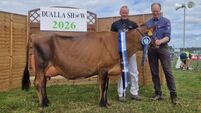
I do apologise to any reader who is holidaying in Ireland as I do not wish their August holiday to be a washout. Tullamore Show is our next stop for the show team; without doubt the best show in Ireland so be sure and call to the dairy section and say hello to any of us or meet some of our show team. Hopefully, we will have a little success in what will be a busy weekend showing.