World is 'sleepwalking' into food crisis, says former EU agriculture commissioner
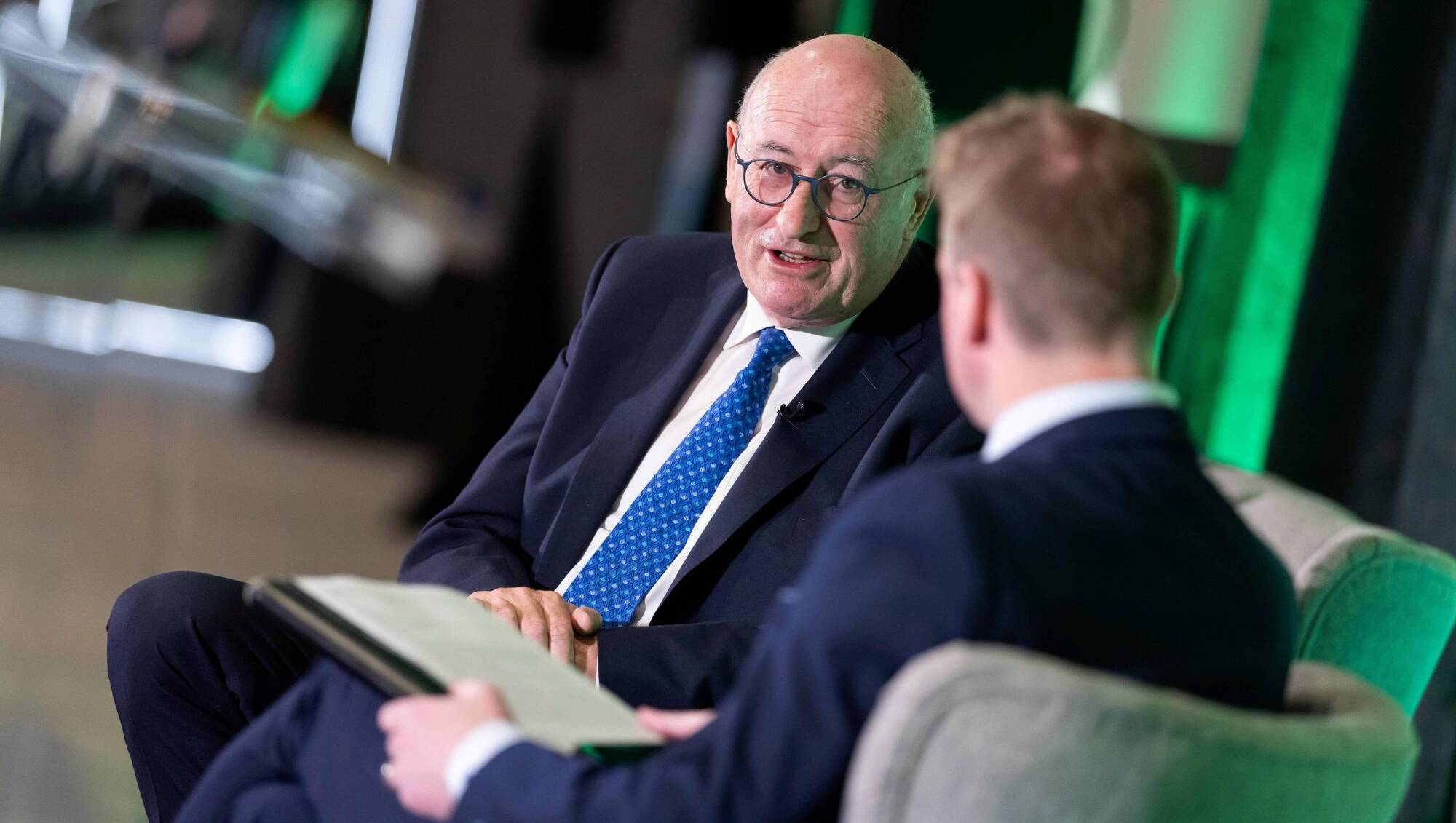
Phil Hogan in conversation with Lorcan Allen. Picture: Finbarr O'Rourke
Former EU agriculture commissioner Phil Hogan has warned political leaders are “sleepwalking” towards a global food security crisis, as he set out his vision for the UN Food and Agriculture Organisation (FAO).
Speaking at the Nuffield International Triennial Agri Summit held this year in Ireland, Mr Hogan said food security needed to move higher up the political agenda amid growing geopolitical instability, climate pressures and supply chain disruption.
“We know now there is going to be a problem. We're now in 2026 and heading into 2027, and what are we going to plan for the threats that's coming down the tracks — this is the challenge for the political leaders,” he said.
“These are the only people, at the end of it, that can decide that food security should go up the food chain politically.
“And if it does, then, at least, we might see some action, but I think we're sleepwalking, and in slow motion relative to the crisis that's emerging.”
Mr Hogan, Ireland’s nominee for FAO director-general, said food security had slipped down the international agenda at a dangerous time for global agriculture.
“Food security [needs to be] high on the political agenda with international leaders,” he said.
“I detect that’s not the case today.”
The Kilkenny native also called for reform of the FAO, arguing the organisation needed to adapt to a rapidly changing geopolitical landscape.
“We need a new FAO for a new world,” he said.
“The geopolitical environment is completely different than it was 10 years ago, five years ago, not to say 80 years ago.”
Mr Hogan said he wanted to see greater coordination within the UN system, with more resources directed to regions on the ground rather than “bureaucracy in Rome”.
During the discussion, chaired by former business journalist and 2017 Nuffield scholar Lorcan Allen, Mr Hogan also warned Europe had a “vested interest” in helping Africa strengthen its own food systems.
He said the EU-Africa taskforce established during his time as agriculture commissioner had been shaped by concerns around migration pressures following conflicts in Syria and Afghanistan.
“We had just come through the migration crisis — Syria and Afghanistan,” he said.
Mr Hogan argued Europe needed to focus not only on humanitarian aid, but on helping African countries develop resilient agricultural systems capable of feeding their own populations.
“The continent that has a vested interest in making sure that Africa is successful is the European Union,” he said.
“We have spent a lot of money in member states bilaterally on overseas development cooperation measures — and now that's good. But we have to have two prongs to it.
“We have to be able to deal with the here and now in emergencies, but equally, to be able to teach the people how to grow the crops and how to be able to farm themselves.
“In other words, we have to develop a resilient agricultural sector in each of the member countries of Africa.”
However, he also criticised what he described as Europe’s tendency to “lecture” African countries, saying future food security partnerships needed to be shaped more collaboratively.