Bluetongue confirmed in various herds in southern and eastern areas
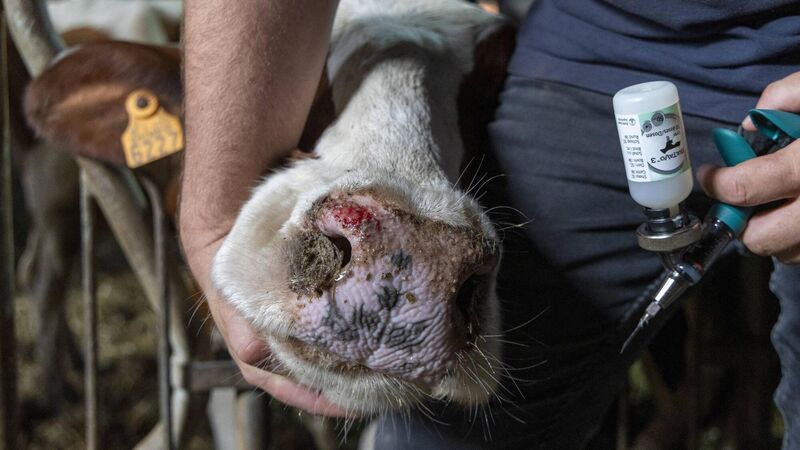
Two cases of BTV-3 located in Wicklow and Louth were the first cases to display clinical signs.
Bluetongue virus serotype-3 (BTV-3) has been confirmed in multiple herds in southern and eastern areas of the country.
The first case of BTV-3 was confirmed in a suckler herd in Co Wexford in January of this year. The disease was identified through routine culled cow surveillance in a slaughterhouse.
To date, a further 10 additional herds have been identified to have BTV-3.
Through tracing and surveillance efforts, these newer cases discovered in the south-east were animals that presented with no clinical signs.
Two of the positive cases were discovered through cattle abortion reports. Abortion reports are a legal requirement, and confirmed BTV-3 on the two farms in the coastal areas of Wicklow and Louth.
These are the first two cases to report clinical signs.
The department is continuing to encourage all farmers and private veterinary practitioners (PVPs) nationwide to submit abortion samples (post-abortion dam bloods and deformed or aborted foetuses) to their local Regional Veterinary Laboratories.
Bluetongue screening has been added to these profiles as part of disease surveillance. Any follow-up investigations will not result in on-farm restrictions.
A further confirmed case of BTV-3 was detected on the abattoir surveillance in a herd close to the index herd in Co Wexford.
The department reports the likely source of the spread of the virus is by infected midges blown across the Irish seas in late Autumn 2025.
BTV is spread by infected biting midges (Culicoides species), which are present in Ireland and are generally most active between April and November.
Replication of the virus can only occur in the midge in temperatures above 12-15°C. The spread of the virus is less likely to occur in winter and early spring months.
Current policy is to identify the geographical extent of cases to assist farmers and PVPs in the decision regarding vaccination before the high-risk season in warmer summer-autumn months. Currently, there are no restriction zones or movement controls in place.
As of March 6, a derogation from certain certification requirements is now in place. This allows cattle and sheep to move with no restrictions from other member states where BTV-3 is the only serotype present, as is the case in Ireland and Northern Ireland.