Paula Hynes: More than a sale ring — the mart is a rural engine
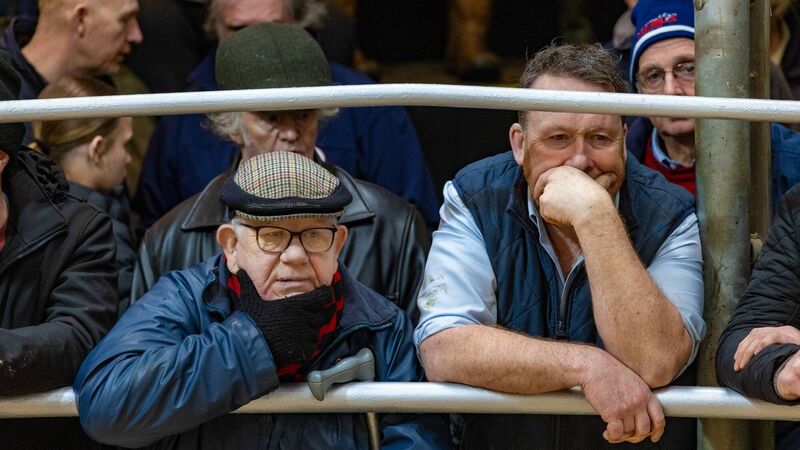
It is wonderful to see marts busy and the beef trade booming. Ringsides were packed with farmers buying and selling. File picture
I hope the old saying is true, as March certainly came in like a lion. Sunday was a wet, miserable, blustery day after what had been a reasonably good week to finish February.
I think we are all hoping and praying at this stage that the month will go out like a lamb, as good weather is badly needed.
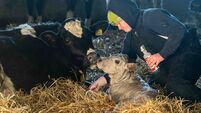
The workload is at its maximum now, with over 90% calved by the end of February. Calf sheds are full, and we have even moved a group of beef calves to the outside farm to ensure sheds are not under too much pressure.
Thankfully, more calves will be leaving the farm for their new homes within a few days, so the pressure should ease quickly from now on.
I took a trip to Bandon Mart with Pete last Monday. We had a few heifers to sell, along with one stronger Charolais calf born at the beginning of January.
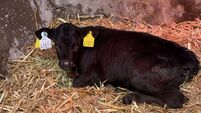
As we dropped off the calf at the intake area, the mart workers, who know me well, quickly asked what the calf was named. Sure enough, he was called Frosty, after the brief cold spell in early January.
Frosty was calmly guided to his pen. With calf sales getting busy at marts, I am not sure the auctioneer would have time to call out calf names, but regardless, he still impressed — weighing a mighty 128kg and topping the calf sale at €1,050.
I always enjoy popping down to Bandon Mart with Pete. The manager, Sean Dennehy, is always floating about, with time for a chat or even just a wave from a distance.
It is a while since Pete and I have been on a date, but the quality of the breakfast in the mart restaurant ensured we were well fed. It genuinely impressed me and reminded me that, even if I was not selling cattle and was simply calling into Stockhealth across the road or TJ Crowleys, the mart restaurant is the best place in town to grab a bite to eat.
It is wonderful to see marts busy and the beef trade booming. Ringsides were packed with farmers buying and selling.
We often forget how crucial the mart is to the rural economy and the survival of rural towns. As the mart enjoys a new lease of life, it feels like Bandon town is busier every Monday, which I imagine is the same in many other rural towns.
Marts are also very much a social club. We are all busy on farms with little time to get out, but a trip to the mart offers a chance to meet a friendly face and have a chat.
Calf facilities have seen major investment by Cork Marts over the last few years across many of their marts, which is fantastic to see. With trade booming, no doubt they will continue to invest.
That is the positive effect of a strong beef trade: it brings life to a town, creates work in construction and generates employment at marts. When agriculture does well, it feeds into every part of the economy.
As sure as I was asked about Frosty’s name in Bandon Mart, we had many more named animals calve this week. Kirby calved with a Belgian Blue bull calf, and he is a bunter.
Kirby is actually a Hereford cow and produces nearly 500kg of milk solids a year, along with a cracking calf. She was kept because she has tiger stripes and is a little unusual.
Her mother is called Fringe for the simple reason that she has a wildly mad fringe for a Holstein cow — the sort that could badly do with a run of a GHD.
Kirby’s calf has been named Titian and has been paired with Rusty, a Charolais bull, as the two will be reared on and sold as weanlings.
Alanna also calved this week. Some of you may remember her as a show heifer. She was a March-born calf that placed second at the YMA National Finals and the RUAS Winter Fair. She also won the in-calf heifer class at Tullamore last year.
Her dam was an EX93 cow that completed 11 lactations. We will see how she progresses — she may well make the show ring again this year.
I was interested to see some of our MEPs read my recent article about Ireland having the world’s best steak. In many ways, they proved the point of the piece.
Rather than highlighting the success of Irish steak, they were more interested in my research into the work they do in raising issues within the EU.
One issue that did not catch their eye was the foot-and-mouth situation in South Africa and the need for the EU to protect its borders. That issue is a little closer to home now, as Cyprus is dealing with a major foot-and-mouth outbreak, believed to have originated from an outbreak in Turkey, with some reports suggesting it stemmed from the illegal importation of meat.
The EU is acting swiftly within Cyprus, as it is a member state.
While free movement of people is a right within the EU, it is still crucial to highlight the risk of disease spread, particularly foot-and-mouth.
This year marks the 25th anniversary of the last outbreak of the disease in the UK, when 2,000 cases were confirmed and 6.5 million animals were slaughtered to contain it.
Here at home, we were on high alert for that year. Authorities in Cyprus believe it will be at least six months before the disease is eradicated.
What I did notice this week was authorities in the UK warning of the threat of the disease, along with calls to create awareness among UK holidaymakers. While I know our hard-working MEPs have many issues to raise, perhaps they could take this one seriously.
It poses a major threat to rural economies and has the potential to shut down beef exports if cases were detected in Ireland.