Study finds on-farm solar can pay for itself in three years
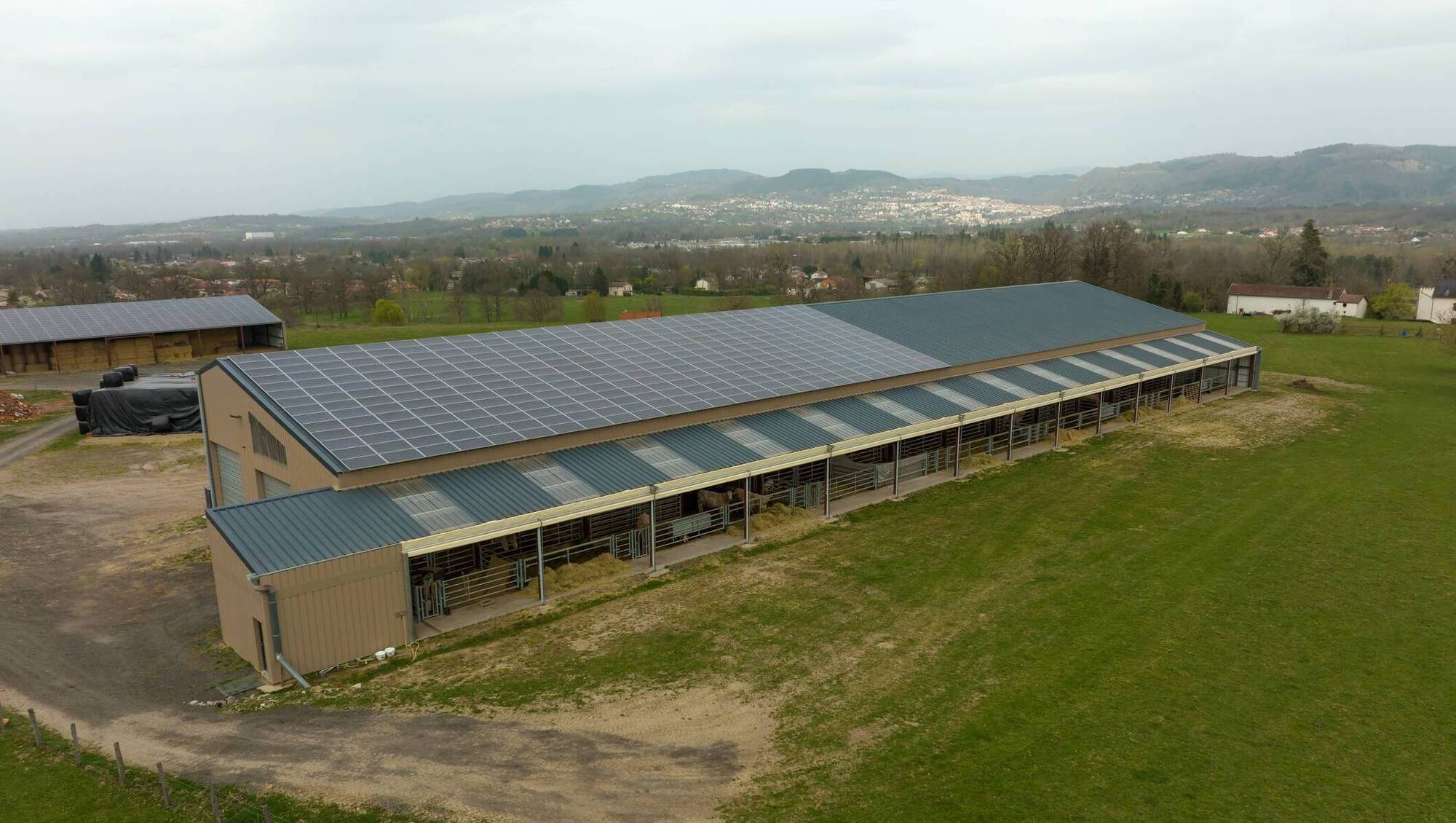
Rooftop solar panels with battery storage and water heating could pay for themselves within three years, after which 65% of the farm's electricity would be generated at no cost.
A recent Teagasc case study indicated rooftop solar panels with battery storage and water heating could pay for themselves within three years, after which 65% of the farm's electricity would be generated at no cost.
In Ireland, non-household electricity prices are currently the highest in the EU, according to the EU statistical agency Eurostat. This is driving a move towards renewable energy.
Teagasc looked at a dairy farm with a €15,925 annual electricity cost, for 45,500 kWh of electricity at an average of 35 cents per kWh, used 70% during the day and 30% at night, with 52% of power needed for the bulk tank, 22% for hot water, 19% for the vacuum pump, and 6% for lighting.
Energy costs are high in the EU and in Ireland since the Ukrainian war started in 2022, with the restriction of Russian gas imports significantly lifting European energy prices. Now, the EU has said it will work harder at reducing energy costs. Although European electricity prices reduced since record highs in 2022, they are still, on average, double those in the USA, and 50% higher than in China.
And with some of the highest prices here in Ireland, investment in a solar system with a 25- to 30-year life looks attractive. There is up to 60% Tams grant aid, which is separate from other Tams funding. Farm-generated solar power is fully tax-deductible in the year of installation.
Farmers can sell surplus energy back to the grid, but optimising self-consumption is key for the best returns. Remote farms might face challenges connecting to the grid.
For rooftop solar, older roofs, especially of asbestos or fibre-cement, may require reinforcement to support the added weight (20–30 kg per solar panel).
The Teagasc case study looked at a 30kW solar PV system, occupying about 180sq m of roof, or just more than three spans of a 8m-wide shed.
The total cost of €64,276, including Vat at 13.5%, is reduced to €22,640 by reclaiming Vat, plus the 60% grant on the balance.
The system generates 17,550 kWh, worth €6,142 annually for on-site usage, plus 9,450 kWh earning about €1,512 per year as exported electricity at 16 cents per kWh.
It's an attractive opportunity for farmers to overcome Ireland's highest non-household electricity price in the EU, at €0.256 per KWh in the first half of 2024, even after the price fell 10% from 2023 to 2024 (for the first half of the year). It compared with the EU average price of €0.1867 (the lowest was in Finland, at €0.0939).
The Temporary Business Energy Support Scheme introduced in the second half of 2022 provided a cash payment to qualifying Irish non-domestic customers. However, electricity costs are hurting, which has resulted in Irish consumers increasingly switching suppliers to obtain more competitive rates.
There was a 51% increase in switching electricity suppliers from July 2023 to July 2024, according to recent advice to Irish industry from Niall Donnelly of the Philip Lee legal firm.
Meanwhile, household electricity prices in the EU showed the sharpest increase in Ireland (37%), to €0.3736. Only Germany had a higher price, at €0.3951. Both were about 35% above the EU average price of €0.2889.
Domestic Irish customers have received €1,500 worth of government credits towards electricity bills, and Vat on gas and electricity bills has been cut from 13.5% to 9% since May, 2022 (recently extended to October 31). There are no plans to continue the energy credits.
EU energy prices increased slowly from 2008 to 2021, and then fell sharply before starting to increase again.
According to Niall Donnelly's advice to Irish industry, continued use of fossil fuels, supply costs, lack of full integration of the European electricity system, and rising network costs and taxes also contribute to high energy costs across the EU, along with the Ukrainian war.
And significant challenges remain in deploying renewable energy.
Renewable output is variable, with a top-up from gas generation often required to meet peak demand (one of the reasons why wholesale prices in Ireland last December were 53.9% higher than in December 2023).
So natural gas has to remain in place to complement renewable deployment. In 2023, 44.3% of Ireland’s electricity supply came from natural gas. Liquified natural gas purchased from international trading markets (where prices can be more volatile) has largely replaced Russian gas.
The European Commission estimates a €584bn investment in the EU grid infrastructure is required by 2030. Grid investment is particularly required in Ireland.