Hazell Mullins: The lack of summer sun hasn't just been bad for us humans
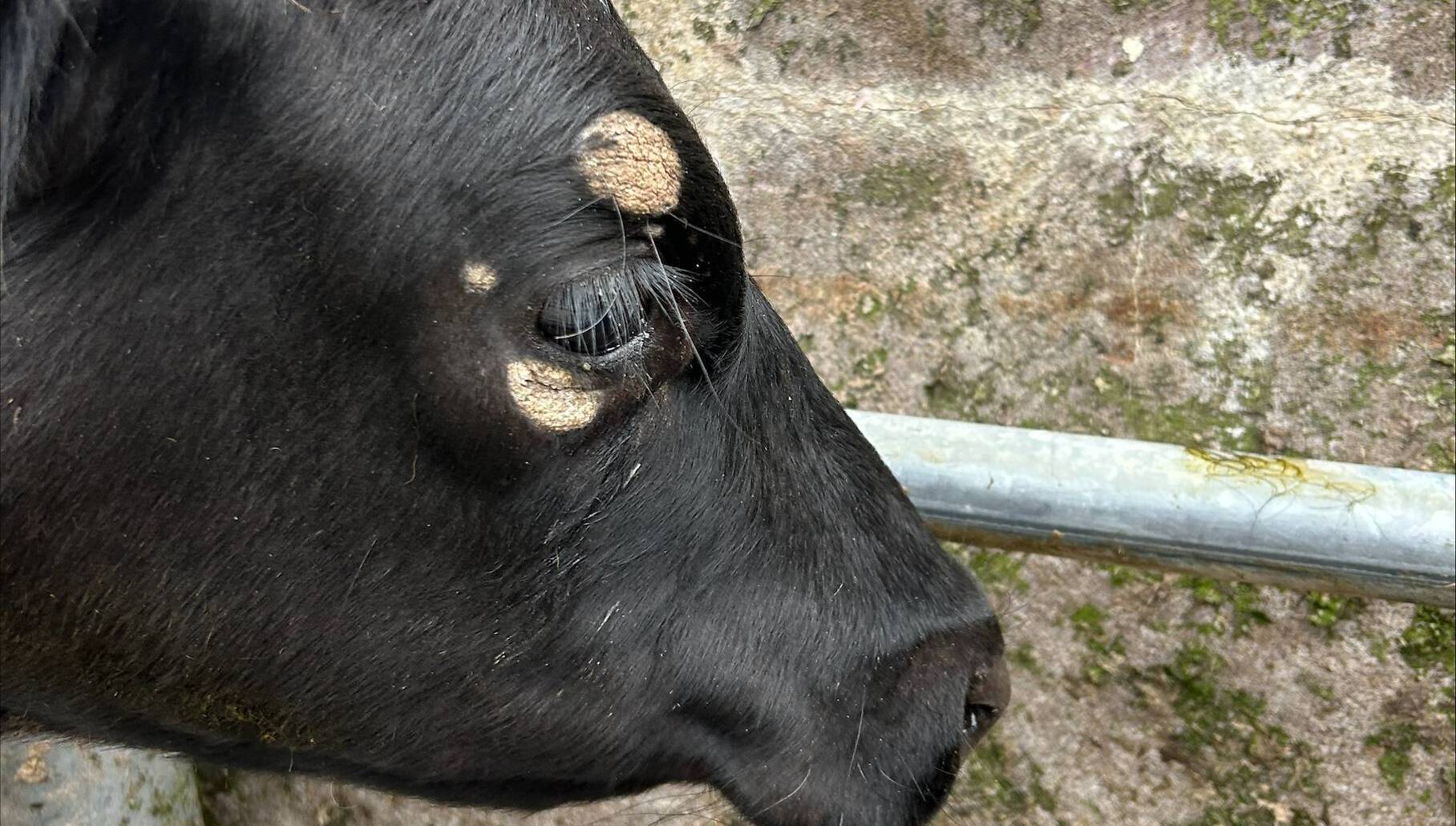
Ringworm. Picture: Hazell Mullins

Last week, Veterinary Ireland held the first new graduate conference in the horse and jockey in Tipperary and it was a great success overall. The future is looking like it will be in good hands with the over 40 recently graduated vets who attended the conference.
We had Eoin Ryan from UCD, who is a European Bovine Health management specialist, so I valued his opinion immensely on what I was noticing lately out testing.
Over the last two weeks, there has been a common element to all the groups of calves I have TB tested, and that is our lovely fungal friend, Ringworm. Perhaps this summer’s weather has been a delight to the fungus and it has thrived amongst our livestock.
The spores can invade the skin membrane and hair follicles, causing the classic round, grey and crusty lesions that appear most commonly on the face, neck and tail head.
It makes sense to have lesions on these parts of the animal when you think about where they like to scratch. Infection can also be spread between animals, which adds to the lesions located in the head and neck area. Once spores infect the skin it can take anywhere from one to three weeks to cause clinical lesions.
Immunocompromised calves, such as those with poor nutrition or concurrent diseases, are the usual suspects for a ringworm infection. However, I feel this year that the weather pattern is so favourable to the spore's survival that very healthy calves are also infected. I have also seen it on maiden heifers this year which can occur if they haven’t had any previous exposure to ringworm.
High humidity is also a ringworm friend who has been no stranger to the Irish climate this summer.
It is important to remember that Ringworm is a zoonotic disease, wear gloves when handling infected animals and seek medical advice if infection is suspected.
As far as I know, I have never had a case of ringworm and perhaps it’s only a matter of time. My dog, Glen, got it last year above his eye; at first, I thought it was a graze from the wall, but it didn’t take long to show its true colours. It is also illuminated under a wood lamp, a beautiful violet glow that confirms a Ringworm infection on any species.
Treating ringworm is far from straight forward and success depends on the severity of the infection. There is one topical licensed treatment that contains an anti-fungal medication called Enilconazole, which needs to be applied three times in a row, with three days between each application. It is a diluted wash that is applied to the lesions; however, the outer crusts need to be removed to allow the medication to kill fungus.
Prevention for Ringworm is easier in the shed than in grass as disinfection is much more possible. Believe it or not, bleach is public enemy number one to ringworm spores, a dilute of 1:10 is an inexpensive way to disinfect a shed before housing.
A vaccine is available in Ireland; it can be used as a treatment and as a preventative. The dose depends on the age of the animal and the severity of the infection. It is a two-dose prevention protocol that doubles in volume when animals go over four months of age and is given two weeks apart. Immunity in animals has been shown at three weeks after the full vaccination course. It is important to discuss with your vet the correct protocol required for your animals when using this vaccine.
Most ringworm lesions clear up spontaneously over time due to the development of immunity to the fungus. It heals from the centre of the lesion and can leave scars. It seems to come as a relief when speaking with farmers this year that they are far from alone with their ringworm saga on their farm.
This week, I am attending the Cell Check Conference 'Drying off a New Era' in Kilkenny, which will be a great refresher on all things drying off. Hard to believe it's nearly that time of year again, where did 2024 disappear to?
- Hazell Mullins BVM BVS, is a large animal vet based in Carrignavar, Co Cork.