Contract rearing to free up additional ground requires careful consideration
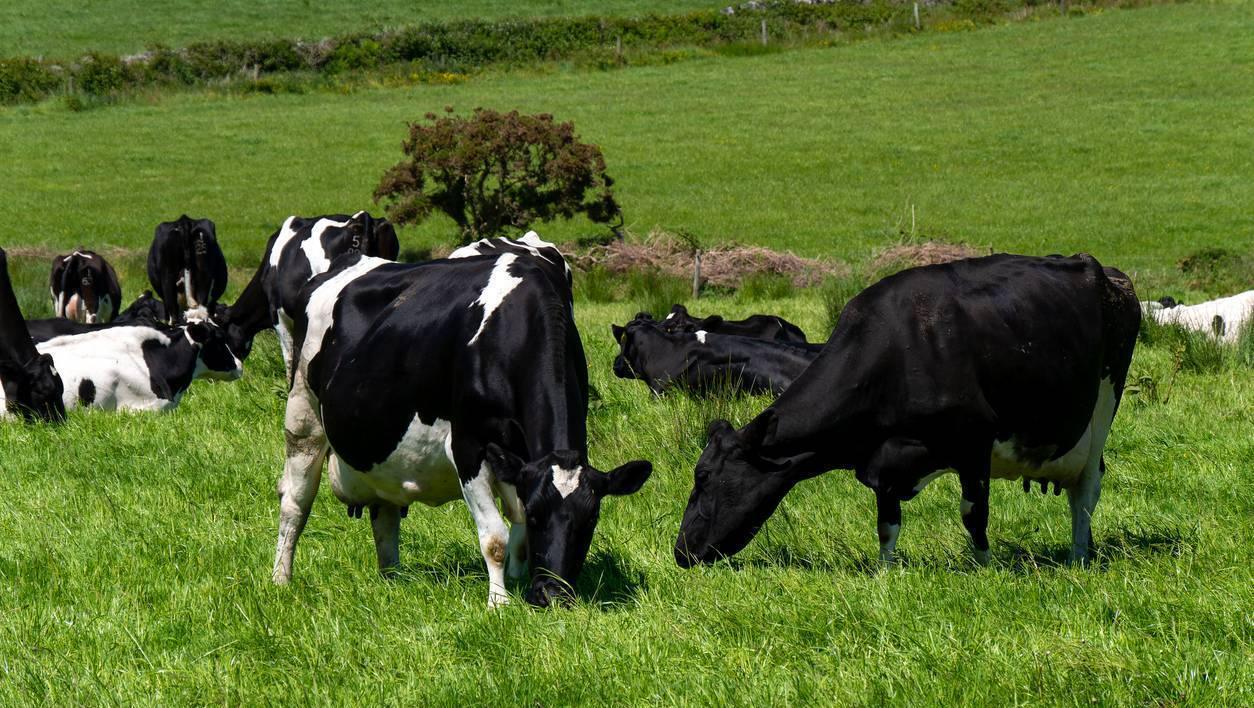
By contracting out the rearing of the heifers from when they are calves to 21 months old, the farmer can drop their overall stocking rate to 217kg of organic N/ha.
Many of the dairy farmers faced with reducing their stocking rate may do better by having heifers contract reared rather than by leasing additional ground.
The details have been spelled out by Teagasc Collaborative Farming Specialist Ruth Fennell with the example of a 100-cow farmer.
Along with the cows (which are Band 2, average milk yield in the 4,501-6,500 kg range) on 44 hectares (110 acres), there are 20 heifers under 10 months and 20 more under 22 months. The whole farm stocking rate is 245kg of organic N per hectare.
By contracting out the rearing of the heifers from when they are calves to 21 months old, the farmer can drop their overall stocking rate to 217kg of organic N/ha. This also frees up ground used by the heifers to be allocated to dairy cows, which should have benefits for cow performance and can reduce costs.
To achieve the equivalent organic nitrogen reduction per hectare by leasing land, the farmer in the example would need to lease an additional 6ha (15 acres).
Cuts to organic nitrogen stocking rates, the increasing difficulties in sourcing land to lease, and ever higher land rental rates, are now adding to labour shortages, as reasons for dairy farmers to consider having their replacement heifers contract reared by another farmer. As for the contract rearer, the pluses include not having to buy stock, a steady income through the year, and the reduced financial risk associated with a turbulent beef market.
What are the overstocked dairy farmer's other alternatives, other than leasing additional land?
- Cut cow numbers;
- Reduce or eliminate any beef production they do; investigate the possibility of the cows dropping into a lower nitrates band;
- Export slurry (at double the volume which was previously adequate, because the assigned nitrogen content of slurry was reduced in 2023 from 5kg to 2.4kg of nitrogen per cubic metre).
There are financial considerations with each alternative. A combination of the options could also be considered.
There are advisors in each Teagasc area assigned to support clients interested in looking at contract rearing. And the Teagasc contract-rearing template is a useful document for starting the conversation as to how the arrangement could work.
In addition, there is a Teagasc Excel-based calculator that can be used to determine costs. This allows for the costs associated with each rearing term to be divided up into six distinct time periods, starting with calf rearing and going right through to the point of calving.
Contract rearing arrangements can be tailor made to take into account things like your own labour availability, and land opportunity costs. Teagasc advisors can guide farmers through the calculations and contract processes.
Both parties to the contract must take time to draw up an agreement that covers all potential scenarios that can arise. The resulting contract must be a “win-win” for both the dairy farmer and the contract rearer, for the arrangement to work long term.
The dairy farmer must be confident that the rearer can manage the stock, achieving good animal performance, reaching the target weight-for-age milestones, and returning the heifers in-calf and ready to join the dairy herd.
The contract rearer must receive healthy calves that have received sufficient colostrum to maximise their well-being and future performance. They must receive a fair price for their labour, and payments must be made on time. There should be regular contact with the dairy farmer to update them on how the stock are performing and to promptly discuss any possible issues.
What to do in the event of a disease outbreak should also be set out in a contract rearing agreement.
There are many different arrangements operating successfully on farms, it is important that time and effort are invested into drawing up an agreement, and that all parties fully understand what is expected of them.
Collaborative Farming Specialist Ruth Fennell recently reported on the contact rearing arrangement over the past six years between two farmers in Co Waterford.
Jimmy Kearney and his son Michael farm 45ha (plus commonage) at Ballysaggart, and have been rearing replacement heifers for dairy farmer Adrian Casey for the last six years. The Kearneys previously had a Friesian calf-to-beef system, purchasing bull calves from Adrian.
When Adrian lost a parcel of leased ground he was using for replacement heifers, he considered contract rearing, and approached the Kearneys, because he knew their set-up and was confident that the stock would be well managed.
The agreement was drawn up for an initial three years, and covered all aspects, including transport, dosing, vaccination, breeding, weight targets, conception rate targets, and what costs were to be borne by each party.
They also agreed maximum mortality rate and infertility rate. If levels were higher, a penalty system would apply. The price was the last topic to be discussed. The fee is discussed at the beginning of the year, and the Kearneys are paid the agreed fee by monthly standing order.
Each spring, the Kearneys collect about 80 calves in batches from Adrian, transferred from 14 days old.
Read More
“I only need approximately 50 replacements per year for the 250-cow dairy herd, and we have agreed that there should be no other bovine stock on the Kearneys’ farm. So I have to provide sufficient numbers to fully stock the farm,” Adrian said.
Following the breeding season, Adrian will pick 50 to 55 of the early-calving heifers and the remainder are then left to the Kearneys to sell when they choose. Adrian’s in-calf heifers return home from October to December at 21 to 23 months of age.
Adrian pays for transporting heifers home, vaccines, and breeding (a combination of synchronisation, AI, and stock bulls to mop up). Jimmy and Michael cover all other costs. Agreed weight targets are based on Teagasc guidelines.
Adrian said it is important that the feed costs are borne by the rearer. “It encourages them to ensure stock meet their weight-for-age targets as economically as possible.” Thankfully, there haven’t been any issues in the relationship. “There is give and take and there must be trust on both sides,” Jimmy said.
The arrangement has ensured Adrian can meet his slurry storage requirements for the retained stock, and it has taken huge pressure off his system at calving time.