Why talk of rewetting peaty soils often meets a hostile reaction
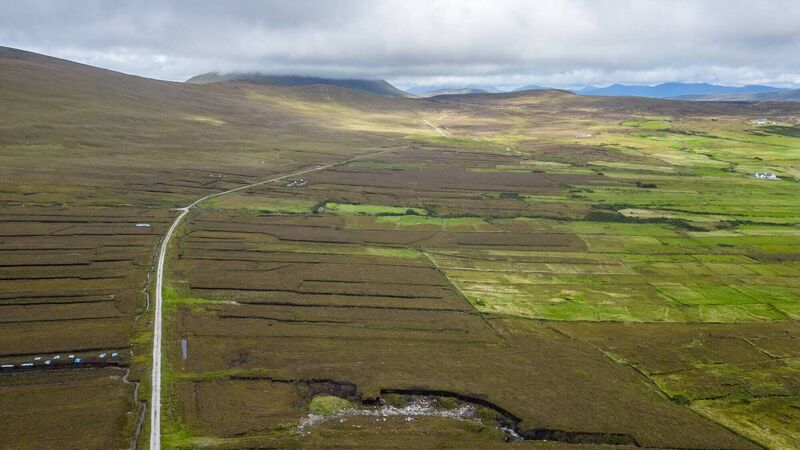
Because of this subsidence, farming peaty soils is not a viable medium-to-long-term use of the soil in many circumstances.
Tree trunks coming to the surface of your pasture, which have to be removed if you want to cut silage, are part of the secret life of farmed peatlands.
They are a sign of the natural process of subsidence, and of the peaty soil wasting away, until the water table will eventually come to within 20 cm of the surface, significantly lowering the productivity of the land for the farmer.
Farming these peaty soils may often be more challenging than on mineral soils, but they grow grass and vegetables, and are therefore important economically for their owners.
Therefore, talk of rewetting these soils as part of climate action often meets a hostile reaction. "I know the importance both economically and psychologically of farmed peaty soils for farmers and rural communities," says independent catchment scientist Donal Daly, who says the discussion on rewetting must include how raising water tables in peaty soils to a level that still allows productive farming can protect these soils into the future for landowners, by preventing the natural process of peat wastage.
He grew up on a farm in Co Offaly, a significant proportion of which was cut-over bog. "Over a number of years in the 1960s and 1970s, my parents, with my assistance at times, drained this land, and converted it to productive pastureland. This was not only vital for the economic wellbeing of the family, but also a source of pride for my parents"
Who better to reveal the secret life of peaty soils?
Peat is an extraordinary geological material, according to Donal's report in the Integrated Catchment Management summer newsletter.
“There are more solids in milk than in peat” (a five-metre depth of undisturbed peat may contain 4.7m of water and as little as 0.3m of solid plant material).
Peat forms in water-logged conditions, which slow the decomposition of the dead plant matter due to the absence of oxygen.
About 28% of peatlands (420,000 hectares) in Ireland are used for farming. One of the difficulties for owners is that the phosphorous fertiliser allowance is restricted to the level for Index 3 soils. But the main, longer-term problem is that lowering the water table causes subsidence because of shrinkage, consolidation, and oxidation.
Because of this subsidence, farming peaty soils is not a viable medium-to-long-term use of the soil in many circumstances. Acccording to Donal, peat can be drained and farmed only at the cost of its inevitable destruction. Subsidence makes the fields uneven, tree trunks come to the surface, and eventually the water table rises to near the surface.
While peaty soils are an asset currently, they are a "wasting" or disappearing asset, says Donal. But that is not why "rewetting" or "water table management" is being talked about now. Instead, estimates of the percentage of national emissions from agricultural grassland on peat range from 5.9% to 14.8%, and raising the water table in substantial areas is therefore seen as an essential means of significantly reducing carbon dioxide and nitrous oxide emissions, and of improving water quality and aquatic and terrestrial biodiversity.
For every 10 cm that the water table is raised in peaty soils, a reduction in greenhouse gas emissions of five tonnes per hectare per year is estimated.
The 20% of Ireland's land surface which is peatlands and organic soils also emits ammonia, dissolved organic carbon, and particulate organic carbon to watercourses.
Higher water tables in peatlands can also mitigate flooding. The environmental benefits of raising the water table in peatlands are so great that a payment scheme to landowners is justifiable. Payments could be based on the water levels achieved, with the highest payments for raising water close to ground level, for minimal or zero carbon losses, with perhaps peat formation occurring.
The landowners themselves could also gain from the higher water level slowing subsidence and peat wastage, which could add many decades of economic benefit and production from the land.
There could be extra economic benefits if the carbon footprint of farm products becomes more relevant.
According to Donal Daly, the emphasis in the short-term may be on "rewetting" cut-over bogs owned by public bodies such as Bord na Mona, but raising the water table in farmed peaty soils could also be prioritised, to achieve rapid environmental benefits.
This can already be seen at work in the FarmPEAT Project (www.farmpeat. ie) results-based approach to pay farmers for raising the water level in drainage ditches, in some of the lands surrounding Ireland’s remaining raised bogs in the midlands.