Comprehensive Vat guidelines on way
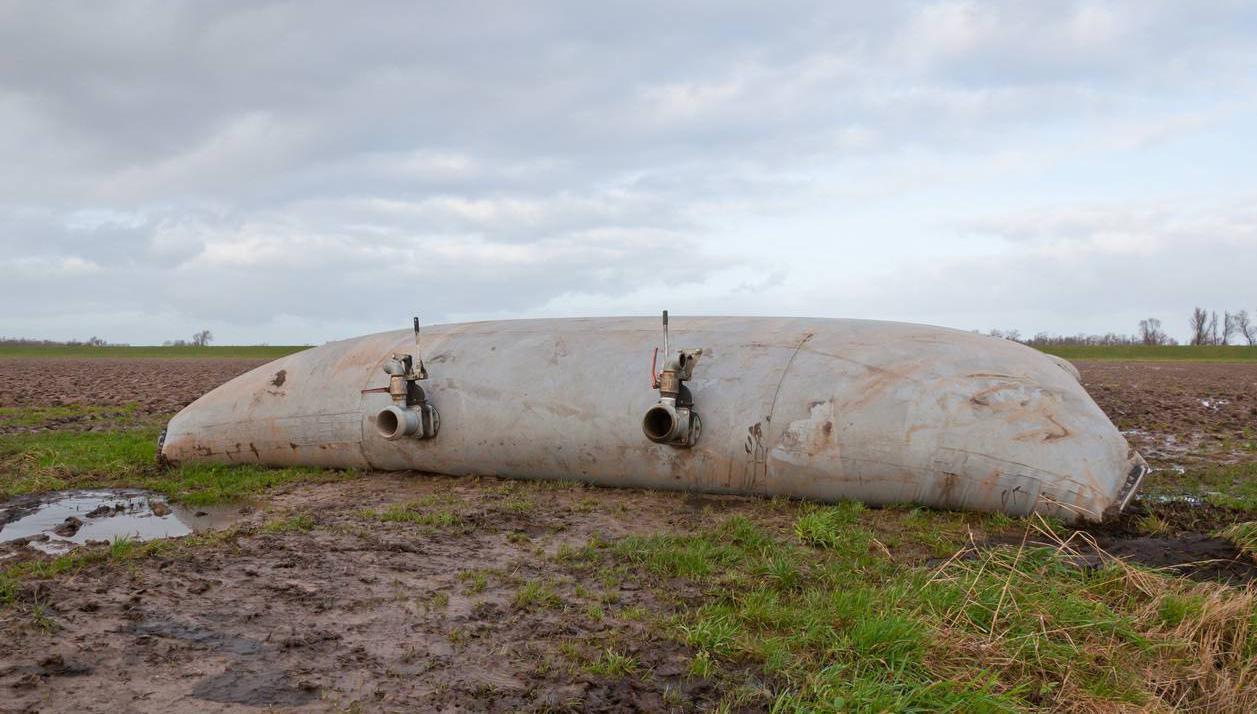
Slurry bags have been at the centre of much of the discussion on Vat rules.
Comprehensive guidelines being prepared by the Revenue Commissioners will clarify the position regarding the VAT 58 scheme, which allows VAT refunds to unregistered farmers for certain farm expenditures.
Farmers say that some items, for which they previously received VAT refunds, are no longer eligible.
The IFA has made a submission to the Revenue Commissioners on why bulk milk tanks, automatic calf feeders, meal bin, and cubicle and slat mats should qualify for a refund, pointing out that they are an integral part of farm building structures. IFA also raised VAT refund issues relating to the installation of water systems and water troughs.
Minister for Finance Michael McGrath has explained that the VAT refunds to farmers unregistered for VAT are only for the construction, extension, alteration or reconstruction of farm buildings or structures; fencing, draining or reclamation of farmland; and construction, erection or installation of qualifying equipment for the micro-generation of electricity for use in the farm business.
Responding to a Dáil question from Tipperary Fianna Fáil TD Jackie Cahill, the Minister said the refund order was originally introduced in 1972, but the agricultural sector, particularly the dairy sector, has evolved significantly since 1972. New products have come onto the market, and there are important differences from a VAT perspective.
"Revenue will continue to monitor refund claims for new and innovative products as they are received, but can only refund expenditure that is within the scope of the legislation."
He said 37,368 claims were processed in 2023, and Revenue only selects claims for manual review on the basis of risk. Where a manually reviewed claim is deemed ineligible, such claims are refused, and Revenue ensures that any similar ineligible claims are also identified and refused. Claimants may appeal decisions to refuse claims within 30 days.
Revenue has met with the ICMSA and IFA several times to discuss the VAT refunds and says that an updated guidance document will be issued this month.
"It is always open to a farmer to elect to register for VAT in respect of their farming business, and claim a full deduction for the VAT they incur on their business costs, subject to rules on deductibility," said the Minister.
The Chairman of the Office of the Revenue Commissioners, Niall Cody, said the VAT 58 refund scheme is based on the typical farm of 1972, when he addressed a recent Joint Oireachtas Committee on Finance, Public Expenditure and Reform debate.
"We have a scheme that is essentially 50 years old. In the intervening period, farming has changed radically. It is not as labour-intensive, and there are no farm labourers. It is highly automated. The area where most of the challenges are, the dairy sector, has gone highly mechanised and highly robotic."
He said the landscape for farming has fundamentally changed.
"The VAT 58 scheme was brought in in 1972 to reflect the fact that farmers at that stage were putting up hay barns or slatted sheds.
"During the period of expansion of dairy farms, which involved the construction of milking parlours and the installation of milking machines and bulk tanks, all the expenditure that was entailed as part of the development of a dairy operation tended to be allowed.
"There is a real challenge about expanding the order. The challenges will be the European Commission, and the possibility of state aid, because the flat-rate scheme provides compensation for unregistered farmers, and the facility exists for all farmers to register.
"We have taken a very liberal view of the regulation, but we are constrained in what we can do."
He cited the example of second-hand, reconditioned bulk tanks for sale.
"This calls into question whether they were ever fixtures in the first place. These are the challenges we have."
Bulk tanks being replaced with new ones do not come under construction or reconstruction, he said.
"The purchase of the new bulk tank is not refundable under the VAT 58 scheme because it is not construction. In fact, some of the stuff we have seen would suggest that the original should never have been allowed.
"I have seen cases where the suppliers of some of this machinery say it will be deductible. They are not in a position to give tax advice.
"There have been submissions from the farming organisations setting out the nature of whatever products, such as slurry bags. Slurry bags became a subject of discussion.
"That day, I simply looked up slurry bags, and found an article in the which talked about how convenient slurry bags were, in that they allow the farmer to move the slurry bag around within his or her farm.
"This is not a fixture. This is not a construction process. Part of the challenge is that modernisation involves huge convenience and flexibility. That does not fit in with the legislation the Revenue has to operate under."
On farmers registering for VAT, he said: "As dairy farming becomes more intensive and capital-intensive, there is a question about whether the flat-rate scheme is the perfect model for them, but that is a decision for themselves.
"For unregistered farmers, there is what is known as a flat-rate scheme, where there is a flat-rate addition on sales by unregistered farmers. The purpose of the flat-rate scheme is to compensate farmers for VAT incurred in the course of their business.
"One of the issues that is surprising when we look at some of the claims for farm expenditure is that some large corporate entities are unregistered farmers for VAT purposes and eligible for VAT 58 and the flat rate scheme."