Biomass and solar to play vital role in Ireland's green energy goals
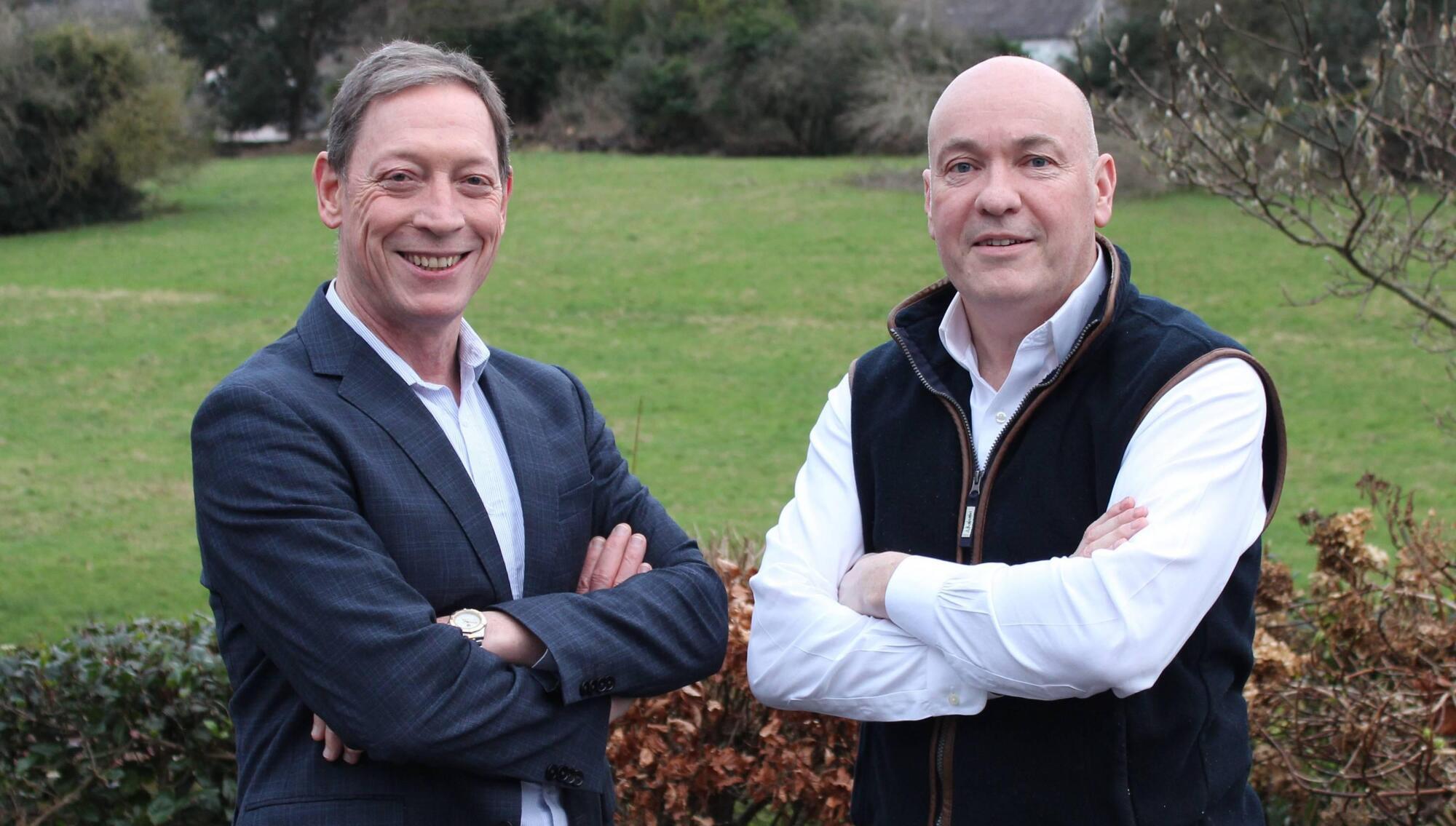
Chris O'Callaghan and Ger Crosse of Woodco Renewable Energy.
Woodco Renewable Energy, based in Tipperary, welcomes a strategic investor to its biomass and energy company. Chris O’Callaghan, formerly of Inver Energy, has joined the innovative team.
Founder of Woodco, Gerard Crosse, says: “As the leading provider of biomass energy solutions in Ireland, this investment will provide Woodco with additional resources and expertise to grow our business in biomass, solar and other renewable energy solutions. This is a very exciting time for the company as we play a role in reducing greenhouse gas emissions in Ireland.”
In the 47 years since Mr Crosse designed Woodco Renewable Energy’s first ‘back’ boiler, the award-winning company has diversified and strengthened its business, becoming a leading manufacturer and supplier of residential and commercial biomass boiler systems. It has supplied over 5,000 boilers worldwide. In recent years, Woodco’s research & development team began to focus on complex waste to energy systems. It also sells and installs commercial solar PV under its Solarco division.
The company, which won the prestigious Green Product Award in 2018, helps its customers to make savings on their heating bills while reducing their carbon footprint.
“Biomass originates from organic material from forestry and agriculture (such as trees and plants), from waste and residues of biological origin as well as the biodegradable fraction of waste,” says Mr Crosse. “In the past, forestry residues like wood brash and sawdust were considered waste streams, but now these are converted into chip and wood pellets providing a renewable energy source.”
He explains that biomass sources like trees and agricultural crops take in carbon dioxide from the atmosphere and convert it into biomass. Whether they are burned or decompose naturally, they release the same amount of carbon dioxide. The released carbon is reabsorbed by other plants in their growth cycle. Biomass derived energy saves about 90% of carbon emissions compared to fossil fuels.
To what extent is biomass being used as an energy solution in Ireland? Mr O’Callaghan says that while biomass for energy (bio-energy) is the main source of renewable energy in the EU, accounting for 59% of the renewable energy consumption in 2021, biomass and renewable waste accounted for only 23% of Ireland’s renewable energy that year. Ireland is close to the bottom of the table in biomass usage in the EU.
“The Irish government and EU policy recognise the importance of biomass energy in reducing carbon emissions,” says Mr Crosse. “These carbon savings count towards our climate goals. As part of this policy in Ireland, the government has introduced the Support Scheme for Renewable Heat (SSRH) which offers a heating energy tariff subsidy for companies that move from fossil fuel to biomass.”
Like other renewable energy sources, biomass must meet sustainability criteria. These criteria ensure that sustainable biomass energy saves large amounts of greenhouse gas emissions when compared to fossil fuel alternatives. It avoids negatively affecting land use, food security, water resources and biodiversity and livelihoods.
There is surplus biomass available in Ireland, resulting in some of these renewable energy resources being exported abroad in the form of wood chip and wood pellets to help other countries reduce their carbon emissions.
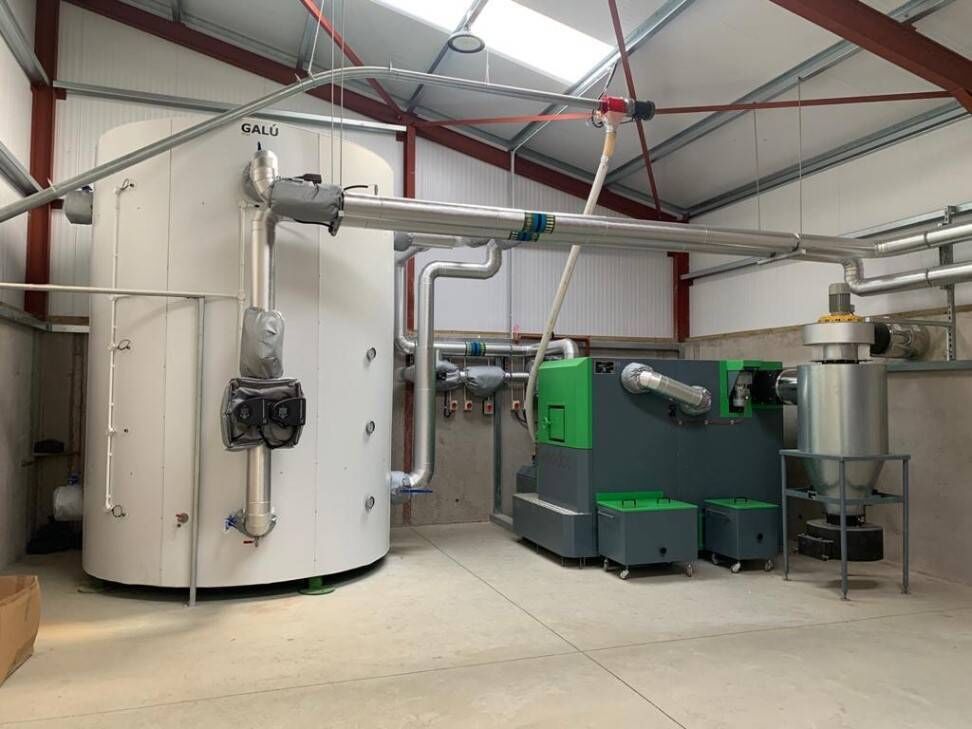
Biomass can be used for heating, electricity generation and the production of transport fuels. In electricity, Bord na Móna has converted its old peat-fired electricity stations to biomass-fired stations. Biomass is particularly suited to decarbonising the heating sector, especially in commercial and industrial sectors. Renewable energy accounted for only 6.2% of heat in Ireland in 2022, the lowest in the EU.
Biomass energy is one of the cheapest forms of energy. The most recent commercial fuel cost comparison published by the Sustainable Energy Authority of Ireland (SEAI) shows the energy cost of biomass in the form of wood chip to be 44% the cost of fossil fuel, and 16% of the cost of electricity. This cost advantage relative to fossil fuels will become greater each year as carbon taxes are increased.
How complicated is it to transition from fossil fuel to biomass and solar energy? Mr Crosse and Mr O’Callaghan point out that boiler technology is very similar for both fossil fuels and biomass “so moving to biomass-fired boilers is not complicated and is similarly convenient. Digital technology facilitates remote monitoring and control of boilers and energy usage.”
Asked what Mr O’Callaghan will bring to Woodco, he says he has been in the energy business for thirty-eight years ranging from big oil to start-ups. “Hopefully, I will bring the benefit of that experience and knowledge to Woodco. I’d really like the company to be recognised by customers as one that provides practical solutions to help them transition from fossil fuels to renewable energy.”
He adds that he would like to become an advocate for biomass in Ireland. “It really is a no-brainer for many energy applications and allows companies to reduce both carbon emissions and costs at the same time.” ‘Biomass’ is not a term that we hear all that much in Ireland. Does it need more of a profile and more understanding?
“Yes, it definitely does. I think the country has missed a trick here. The biomass industry and biomass energy are huge in Europe but seem to have passed Ireland by. We need to increase awareness that biomass is sustainable, low cost and a convenient energy source that is readily available right now.”
Woodco Renewable Energy is committed to playing its part in decarbonising Ireland’s energy system. “We are now doing that through the sale and installation of biomass boilers and solar panels and we hope to add other solutions to help customers on the transition journey,” says Mr Crosse.
Both men don’t ascribe to the pessimistic view that the planet is beyond saving. “We certainly don’t believe that. The energy transition is in full swing. We are confident that the goal of decarbonising the energy system by 2050 can be met, with Woodco playing its small role in that.”
www.woodco-energy.com
www.solarco.ie