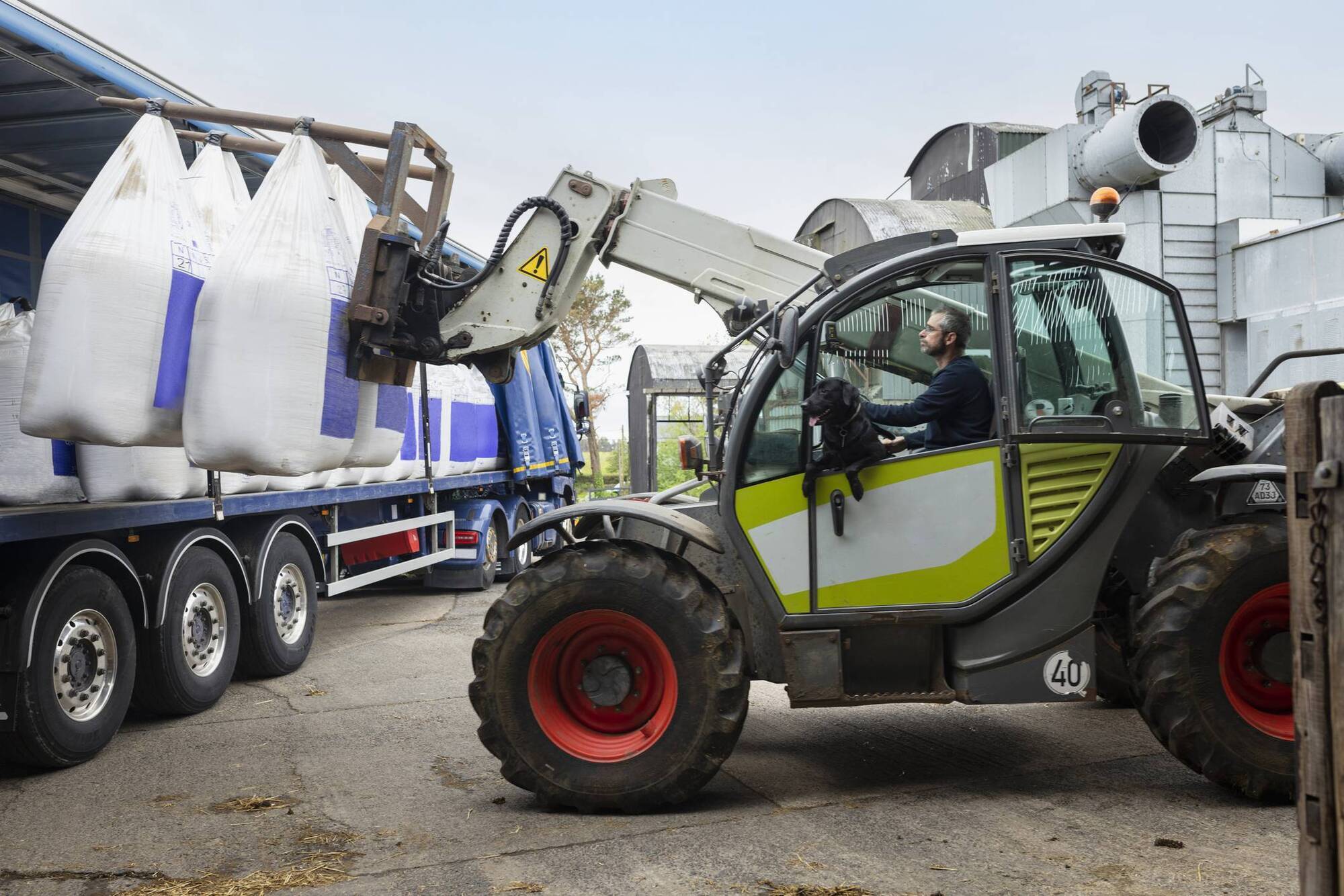
There is no suggestion of fertiliser prices coming down any time soon.
According to Liam Dunphy, managing director of Gouldings, one of Ireland’s leading fertiliser suppliers, the international market remains volatile.
Speaking in Teagasc’s latest Tillage Edge podcast, Mr Dunphy said: “If I was to give a message to the farming community, it looks like prices are set for the spring.
“The fundamentals of the market suggest that the prices are very, very firm to rising, and while you have all the unrest in the Red Sea, etc, there is no suggestion of prices coming down. So, it’s probably time to be now considering getting the first round or two of fertiliser out there, particularly for winter cereal growers or guys looking at sowing of spring barley in mid-March”.
“We’re four to six weeks away, every time you order a boat. Fertiliser delivery, when it hits its peak here in Ireland, could be up to two weeks away. Give the retailers plenty of notice - a minimum of two weeks, I would say. Stocks are very, very low at merchants’ yards.”
Mr Dunphy said: “The main standoff is simply because people’s memories are coloured by last year. It’s hard to blame anybody. It’s a tough time to look at your fertiliser sitting in your yard and falling by a couple of hundred euros a tonne. People are trying to clear bills from last year, maybe still a bit of that going on. And while all that’s going on, you couldn’t blame anybody for not thinking forward”.
International markets
Asked for an overview of the current international market for fertilisers, Mr Dunphy said, “The one word to summarise it is volatile. In Ireland, we’re unique; we have no national fertiliser manufacturing, and we’re also unique from the point of view that it’s hard to access a fertiliser plant, in that we’re an island off the coast of Europe.
“In 2022, we lost 40% of our fertiliser supply when we lost Russia. Today, Russia is still – well, I won’t say it’s prohibited but – the product is fine to bring in, but the owners of the companies that produce the product are on a sanctions list, so payment is the big issue. As such, Ireland no longer has access to that supply line”.
The situation in the Red Sea currently is having a big impact on shipping lines, driving up freight rates. As a result, ammonia and some other fertilisers are being sent via different routes to Europe.
Price of gas
The price of gas (the main raw material for nitrogen fertilisers) has reduced, but not to historically low levels.
“Probably the main driver bringing it down at the moment is lack of use in Europe”, Mr Dunphy said.
“The nitrogen industry is the main user in Europe, and they are not producing to normal levels or anywhere near that at the moment. Some countries further east, their national fertiliser production is almost down to zero at the moment”.
“I’ve never seen a year when anybody didn’t get fertiliser. We won’t say it won’t be there. It will be there.
“Imports have been quiet. It’s probably a fear right down through the chain from importers to retailers and farmers. Everybody got burned last year, and that’s put a fear into everybody from buying this year.
"The danger is we’re going to get to a point where everybody wants it on the one day. We will have fertiliser, but it’s to have it where we need it on that particular day.
"I think logistically we’re working off a lot less trucks available to move fertiliser around the country, compared to where we were two or three years ago”, Mr Dunphy said.
Asked about some farmers directly importing fertiliser last year, Mr Dunphy said: “From the autumn of 2022, all countries at that stage were buying fertiliser at astronomical prices.
Probably the major difference between the UK and Ireland was that at that time, the UK farmers bought the fertiliser, whereas in Ireland the wholesaler brings it in and often holds on to it for two or three months.
“So, it was still in wholesalers’ yards at that time, while the farmers had actually taken it on the farm in the UK countries at that stage. Therefore, coming to the spring of 2023, those countries were buying in newer supply at a lower price, so you had a gap of €100-150 a tonne at times during the spring.
“At the moment, you don’t have a gap. It’s an equilibrium price, I’d say, across Ireland and the UK, at the moment. There are no differences. Hence, it’s unlikely that the phenomenon of direct imports by farmers will happen this year."
Fertiliser register
Michael Hennessy, head of the Crops Knowledge Transfer Department at Teagasc, also asked if the new fertiliser register will cause any obstacles for merchants in 2024.
“All importers have an obligation to report each import of fertiliser within 72 hours. So, if we bring a boat, it has to be notified within 72 hours”, Mr Dunphy said. “Feedback from our own customers, which are the merchants and co-ops, they are finding it difficult to adjust to it. They have to have herd numbers from farmers, they have to ensure that the farmer is registered before selling product.
“Likewise, with ourselves, we have to ensure that all of our customers are registered. We have to have their fertiliser register number. It’s probably going to take the guts of a season for this to bed in and people to become comfortable with it. So, yes, there will be issues in 2024. There’s no doubt about it”.
Market has changed
Mr Dunphy outlined how the fertiliser market has changed in Ireland. “Traditionally, we would have considered the Irish fertiliser market a one and a half million tonne market. In 2023, it came out at somewhere in the region of 1.13 million tonnes, down a lot from the traditional market.
“I think, to be honest, 1.5 million is false. Going forward, it’s not going to happen ever again.
But you’re looking at maybe a 33% drop over the last two years.
“To counterbalance that, I think the models are saying we’re probably looking at a 15-18% increase in 2024 for various reasons, predominantly low stocks in the system.
Mr Dunphy estimated that the drop in consumption was 17-18% in 2023 and 33% over 2022 and 2023 combined, predominantly driven by high prices after the Russian invasion of Ukraine on February 24, 2022.
“From there on, the price of fertiliser almost trebled as the season went on. In July to September 2023, sales in the country were down significantly, nearly 30% in that quarter alone, so stocks aren’t in the system, coming into the new year."
He noted that with reduced use of P and K in recent years, nitrogen efficiency is reduced.