Working smarter, not harder to get through the calving rush

Closeup shot of calf drinking milk from bucket
Mid-February is always the week of love with florists on overdrive, champagne glasses clinking and the postman delivering sack loads of romantic cards, but my true love is jersey cows and true to form, we had two Jerseys calve around Valentine's Day.
One Jersey cow had a lovely heifer calf by Dulet Bowlers, but the truly special one was seeing Rathard Kasey calving for the first time.
Kasey is a two-year-old heifer by FDL Barcelona out of a Guimo Judo cow. She started her show career in July of 2022, winning her class at the Cork YMA qualifier for Georgie.
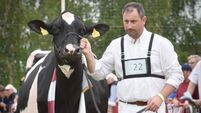
It was our youngest daughter, Georgie's, first year going to the National Championships, and Kasey ended up winning her class and going on to be National Champion, the biggest win that Georgie had with a heifer in 2022 and she gained huge confidence from it.
Kasey went on to win at Tullamore while also placing seco nd at the National Dairy Show and Reserve Junior champion.
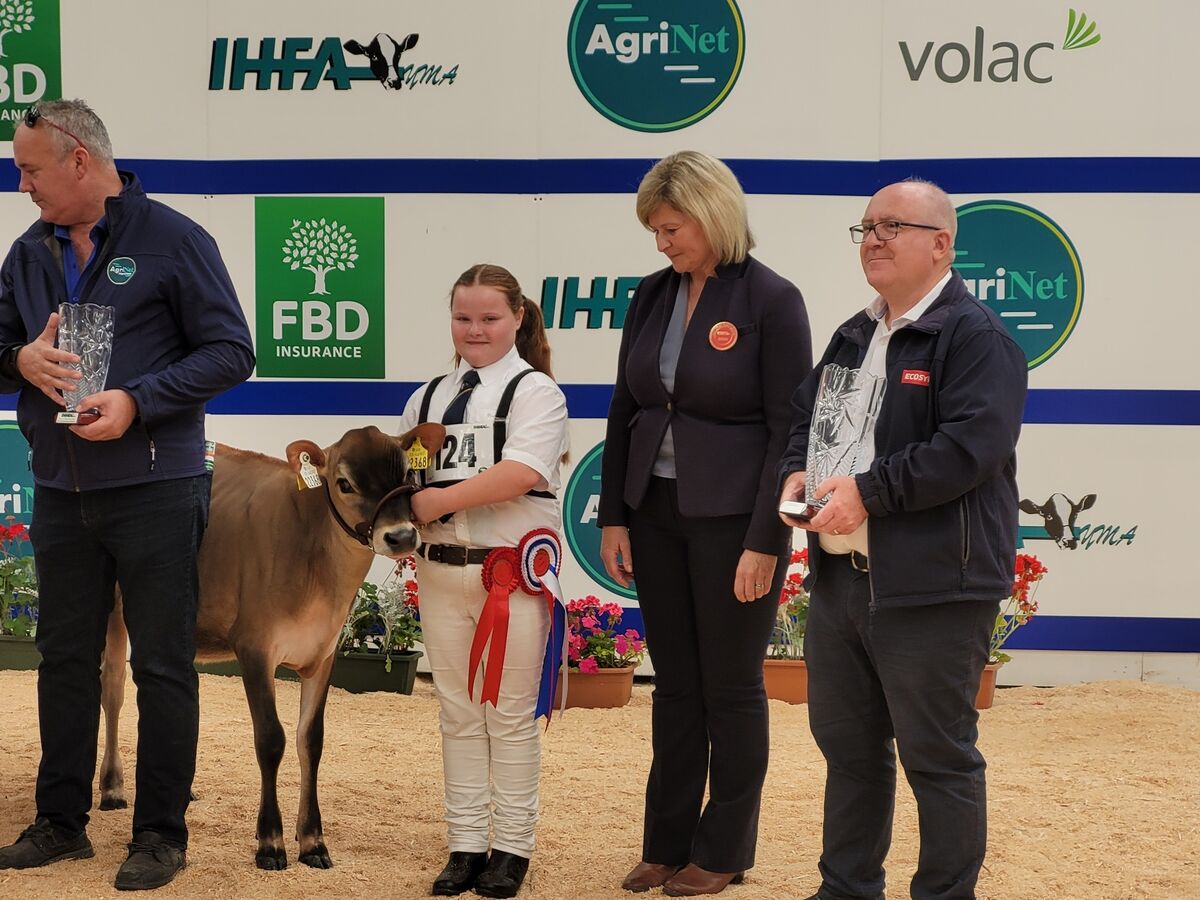
As the show season kicked off in 2023, one of our Holstein heifers got injured, so Becky decided to take Kasey to Emerald Expo, where the pair won the Intermediate Showmanship and Reserve Champion Handler before taking first place in the Jersey class and Junior Champion. She also won her class at the National Championships and Tullamore again in 2023.
All three girls have shown her as Chloe also got to compete with her in the Novice showmanship at Nationals. Seeing her develop since a calf has been wonderful and it really did bring a tear of joy to my eye as I watched her march into the milking parlour for her very first milking.
She has developed superb length and rear height in her udder, so hopefully, she will settle well over the coming weeks and her show ring career as a milker this year. Her heifer calf is by Avonlea Chocochip, who breeds wonderful heifers.
The Jersey heifer calf Georgie showed in Ireland last year was by Chocochip, as was the heifer she won champion Jersey with at the All Britains. Our herd is predominantly Holstein, but I do love the personality the Jerseys bring.
The workload is hectic on the farm at the moment, calving has progressed well with over 50% of the herd calved and calf sheds are filling up.
I can fully understand if someone is milking once a day during calving season for health reasons, but in my opinion, the vast majority need to fully understand the implications.
Teagasc suggests OAD milking can be a great labour saving tool when farms are busy, and research would suggest it may have little impact on the cow's overall lactation. The reality is it does not suit most cows on Irish farms, crossbred cows seem to adapt well to it, but most Irish dairy farmers are milking Holstein cows.
A Holstein cow needs to hit a high peak milk yield, and if that is impacted in early lactation, she will never fulfil her potential over the year.
Before any farm considers OAD milking for a brief period, they first need to look at the genetic potential for milk production on their cows, which is totally different to what a cow actually produces. A lot of cows never reach their potential production due to inadequate feeding or management decisions.
If a cow's genetic potential for production is high, then OAD for six weeks will have a huge negative impact on lactation. Cows start to hit peak at six to eight weeks so if a cow's production is being restricted when she should be cruising on overdrive, she can’t be expected to just change up a few gears when a farmer decides to milk her twice a day.
I do understand OAD may be a useful tool to reduce workload, but firstly, I would suggest having a long, hard look at how it affects the farm financially.
It may make better financial sense to install an automatic calf feeder to reduce workload or even employ a person for an hour or two every afternoon to look after the calves allowing the farmer time to devote to the cows.
We have two automatic calf feeders on our farm, they work 24 hours a day, give us a huge amount of data on how the calves are performing and they save us so much time.
The minimum wage is €12.70/hour, so to put a value on my time, the automatic calf feeder is doing about €2,500 worth of work for me every spring.
I find it a lot easier to get time during the day to walk through calves, check they are all healthy and ensure they have clean bedding, but my mornings and evenings are dedicated to the cows.
Farming is constantly a learning curve. It is always interesting to look at research, but the reality is every herd of cows is different, and with processors paying weak milk prices, it is imperative that farms, especially cows, are efficient.
I firmly believe every dairy farm should employ a top-class nutritionist even for at least one or two visits during the year. A nutritionist will have a good understanding of the potential production of a herd and how to achieve it, they will also have solutions if farms are having issues with retained cleanings, LDA, poor conception rates, grass tetany.
It can always be useful to look at cow dungs with a nutritionist to understand if a cow is digesting her feed correctly or simply pooping it out on a paddock.
Cows are not complicated; they need to eat, sleep and be milked, and if they are not efficient in the milking parlour, then the best place to start looking is if she is eating and sleeping properly.
Brian Reidy writes a very informative weekly piece in the which is always worth a read for management tips, but I don’t ever underestimate getting someone like Brian to throw a fresh pair of eyes on a herd to ensure it is performing - it may well be the best investment a farm makes every year.

BLACK FRIDAY
Already a subscriber? Sign in