5,636 farmers miss out on SCEP scheme
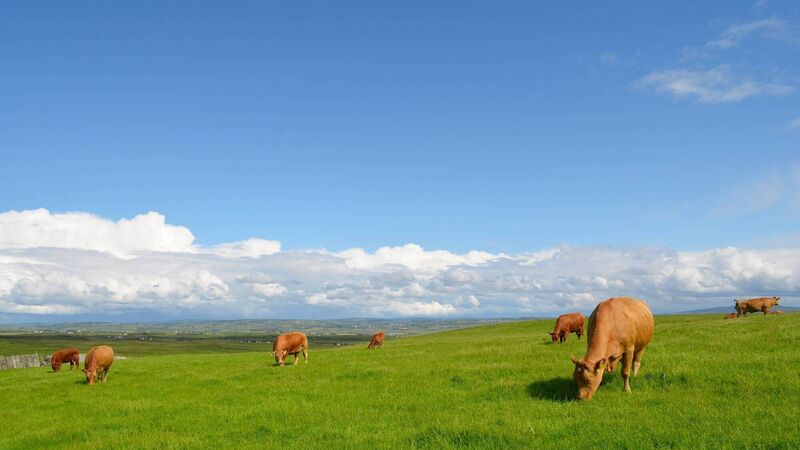
This year, between March 20 and mid-June, there were 20,837 applications to join SCEP.
Nearly 21,000 applied to join the Suckler Carbon Efficiency Programme a few months ago, but only 15,364 farmers have stayed in the scheme.
That's how many received SCEP payments totalling €46m, which started to issue a few days before Christmas.
With a budget of €256m from 2023 to 2027, co-funded by the National Exchequer and the EU, the SCEP is the main scheme for Irish suckler beef farms in the new CAP.
It plays an important role in improving the environmental sustainability of the national beef herd.
Participants must use an eligible bull or eligible AI, and eligible female replacements, carry out genotyping, and submit cattle weights, along with calving details and calving surveys. They must also be Bord Bia approved.
To qualify for SCEP payments, at least 50% of the yearly reference number calved on the holding must be eligible calves in every scheme year. Participants must calve down at least 50% of their yearly reference number annually and must attend a training course.
A compliant participant farmer with 15 suckler cows should potentially get €2,250 per year. However, if the SCEP requirements are not adhered to by the applicant, the DAFM may seek recoupment of all SCEP payments.
The SCEP builds on genetic gains delivered in recent years through the Beef Data and Genomics Programme (BDGP), which also suffered from a high dropout rate.
The BDGP was launched in 2015, injecting up to €52m per annum for six years into the suckler beef sector.
Of the original 29,862 applicants, only 19,084 participants made it all the way through the six-year scheme, and into a transition BDGP in 2021.
There was nearly a 20% BDGP dropout in its first year.
This year, between March 20 and mid-June, there were 20,837 applications to join SCEP. However, by November 1, 858 herdowners had withdrawn from it, and 2,352 applicants were removed from SCEP due to non-compliance with the SCEP eligibility criteria.
That left 17,627 participants in the SCEP in early November. But before Christmas, only 15,364 farmers participating in the SCEP were listed for payment.
In November, 3,000 SCEP participants affected by the delay in genotypes being processed were given a 24-day extension in the deadline for having at least 50% of their yearly reference number in eligible females on October 31.
With some still waiting for the results of genomic samples that they submitted before October 31 , the DAFM has issued a further extension to these farmers until January 22 next.
But there was nevertheless a loss of 2,263 participants in November and December. This may be linked to the recent beef Euro-Star index changes.
The Euro-Star index rating of SCEP herd animals is an important determinant of scheme eligibility each year.
In the SCEP years one and two, 80% of calves must have been sired by an index four or five (star) bull. This increases to 85% in scheme years three and four, and 90% in year five.
By October 31 last, at least 50% of the yearly reference number had to be eligible females genotyped four or five stars on the replacement index. A year on, at least 65% must be four or five stars indexed; and it goes to at least 75% by October 31, 2027.
It has become harder for SCEP participants to reach these targets because in the Euro-Star index changes (the first since 2015), 16% of females lost their four or five star status (but they hold it for the duration of the SCEP, unless sold out of a herd.
That has left only 82% of SCEP herds with enough females for the next SCEP deadline at the end of 2025.
The index changes also re-ranked bulls. Now, if a SCEP participant gets a calf from a formerly four or five rated bull and cow, both reduced to two stars, the resulting heifer calves will be two-star rated, and thus not SCEP-eligible.
The Irish Cattle Breeding Federation (ICBF) has been fiercely criticised by farmers for launching the new indexes on November 21, less than five months after farmers committed to the SCEP terms and conditions