Policy 'must support the level of industry ambition' for biomethane
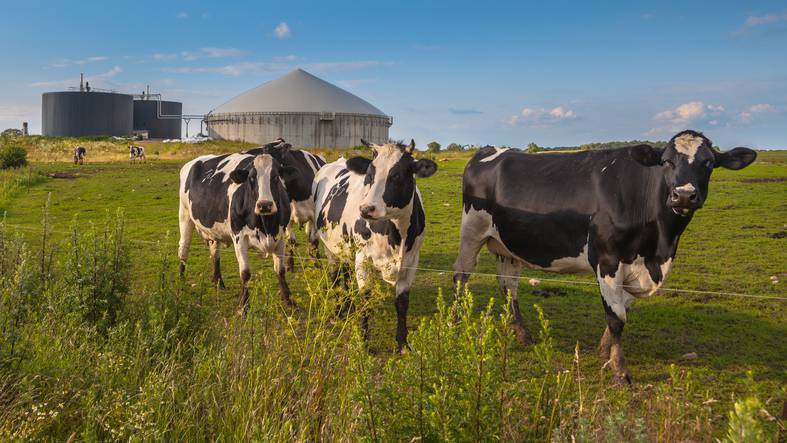
RGFI is proposing a multiplier by a factor of at least two - double the credit - in order to incentivise and reward the agri-food sector.
There is an opportunity for the agri-food sector to seek a multiplier on the credits from indigenous biomethane production from agricultural feedstock, according to Renewable Gas Forum Ireland (RGFI)
RGFI is proposing a multiplier by a factor of at least two - double the credit - in order to incentivise and reward the agri-food sector.
As part of the Renewable Heat Obligation (RHO) scheme public consultation, KPMG addressed the September RGFI members' meeting on the RHO and also provided a high-level outline of the National Biomethane Strategy – the final draft of which is to go to Government at the end of September.
Members heard that the national biomethane target of 5.7TWh is achievable, with comparisons of the UK, France, and Denmark having achieved similar acceleration of biomethane production.
In line with RGFI policy, KPMG emphasised the caveat that the industry must avoid competing with existing land uses and animal feed production.
RGFI said that Government has generally accepted that capital funding is a basic requirement, at a minimum level of 50%, but the forum believes a higher level is necessary.
The EU Commission is open to relaxing the exemption threshold in order to accelerate the biomethane development at member state level, RGFI said.
Dr Anne Marie Henihan, RGFI board member and centre director at the Dairy Processing Technology Centre has called for recognition of the "unique position" of the Irish agri-food sector.
"Policy must now support the level of industry ambition with incentives and funding to assist in achieving the national targets," Dr Henihan said.
"It enables the development of biomethane via the provision of sustainable agri-feedstock, and it benefits not only in terms of energy, but also delivering water quality, sustainable bio-fertiliser, community benefits, and rural sustainable employment."
While other industries will also benefit from biomethane, it is important that the "contribution which is unique to Irish agri-food is recognised and supported by Government", Dr Henihan added.
"We believe this differential value should be acknowledged in the National Biomethane Strategy, through intervention and policy changes supportive of a circular bioeconomy model."
This RHO will incentivise suppliers of fossil fuels used for heat to ensure a proportion of the energy they supply is renewable.
It will be implemented in 2024 and the RGFI view is that the proposed target of 10% is too low, and should be between 15% to 20%, by 2030.
It is also proposing that the term of the RHO be extended to 2045.