Biomethane sector 'barely at a starting point' as industry tells Oireachtas committee that cost is 'main barrier'
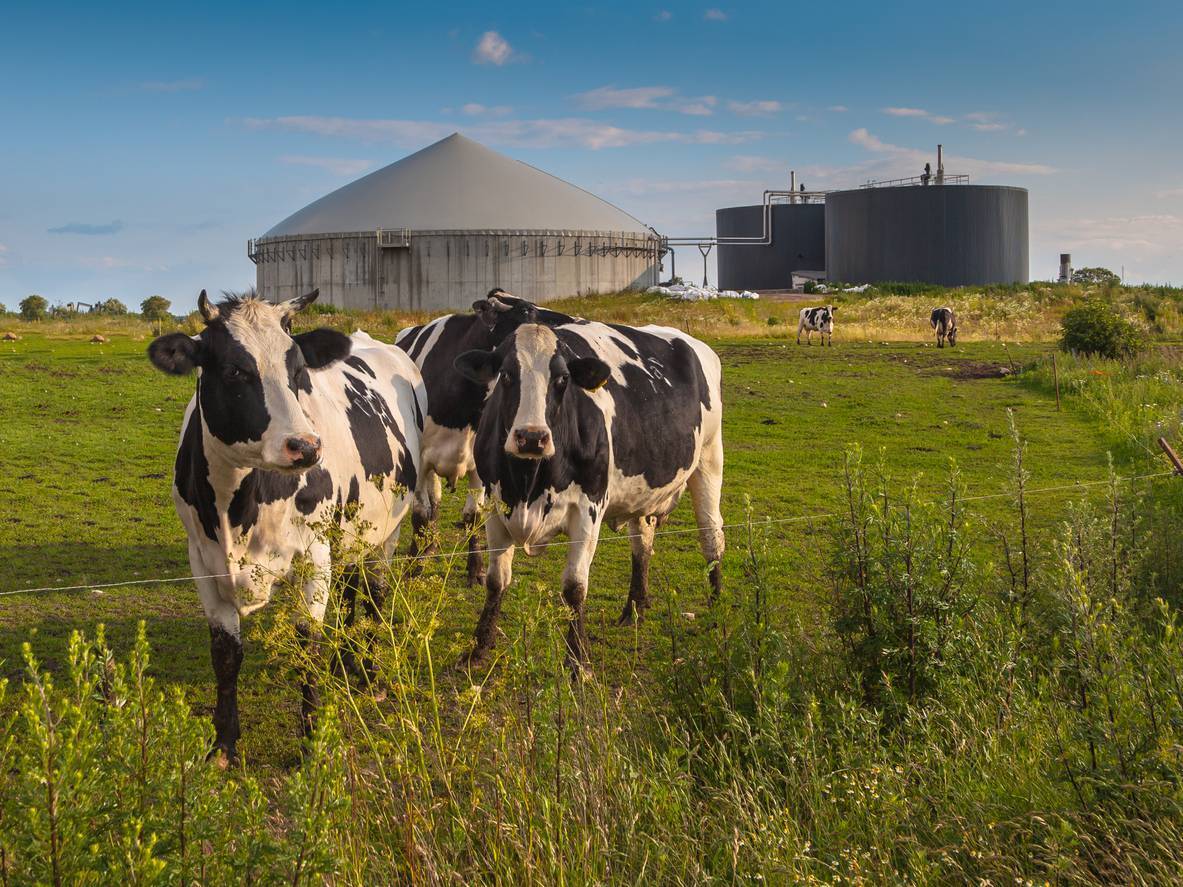
The Department of Agriculture in partnership with the Department of the Environment is currently developing this national strategy, which will set out how the country is to produce and deliver the target of 5.7 TWh of indigenously produced biomethane by 2030.
The biomethane sector is "barely at a starting point" in Ireland, industry has said, as it outlined the main barrier to the development and expansion of sustainable biomethane as being cost.
Sean Finan, chief executive of the Irish Bioenergy Association said this week that the biomethane sector is "booming" across Europe, while Ireland lags behind other countries.
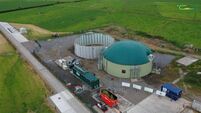
"Ireland is far behind its EU counterparts in policy development terms and using this technology, with currently approximately 20 anaerobic digestion [AD] plants in operation in Ireland," Mr Finan told the Oireachtas joint committee on agriculture, food and the marine.
The reasons identified by industry as to why there has been a slow development in Ireland include a combination of planning and licensing, grid connection costs, prevailing electricity tariffs, financing issues, and uncertainty in waste policy.
Favourable policies and incentives for wind and solar in Ireland are "proof with a supportive policy structure, the projects will be built, the market mobilised, and the sector can develop", Mr Finan stressed.
"Whilst the renewable electricity sector has its challenges, it has a supportive policy environment, is on the road to delivery, and can focus on the regulatory challenges to the roll-out of projects," he said.
"The biomethane sector is barely at a starting point and is waiting for that basic first step."
At the meeting, industry stakeholders called for a fast-tracked development of an Irish biomethane strategy.
The Department of Agriculture in partnership with the Department of the Environment is currently developing this national strategy, which will set out how the country is to produce and deliver the target of 5.7 TWh of indigenously produced biomethane by 2030.
Mr Finan is seeking for the strategy to recognise that a "fair return is required along the supply chain for all stakeholders, from the farmer growing grass silage as a feedstock to the operator who is running the plant and all those involved in between", and for the Government target to be delivered "on a phased basis where lessons can be learned with all phases and amendments made as required".
He added that it must be ensured that the biomethane sector "must be complementary to our agricultural and farming systems rather than compete with them".
Speaking at the meeting, Renewable Gas Forum Ireland chief executive PJ McCarthy said that the "main barrier to the development and expansion of sustainable biomethane is cost and an enduring solution in supporting a robust AD biomethane industry".
"Natural gas prices are currently back to within 10% of pre-Ukraine crisis, meaning that the price of biomethane is higher, which requires the funding gap to be bridged," Mr McCarthy explained.
"The production and utilisation of sustainable biomethane requires access to supportive capital funding, low-cost financing, and incentives to be competitive.
Mr McCarthy said he is actively consulting with stakeholders on both the renewable heat obligation that is to be implemented in 2024, and the national biomethane strategy, and has urged Government to increase its financial commitment to developing a biomethane sector and pursuing circular bioeconomy opportunities.
David Kelly, Gas Networks Ireland's director of customer and business development told the committee that Ireland currently imports almost 75% of its gas from the UK via interconnectors with Scotland, with the remaining 25% being indigenous supplies from the Corrib gas field in Co Mayo.
This dependency on imported natural gas is expected to rise to 90% by 2030 as the Corrib gas field depletes, Mr Kelly said.
"It is vital that Ireland diversifies its energy supplies and developing a biomethane industry can introduce an indigenous, sustainable, and renewable source of energy," he said.
Mr Kelly said that he believes that the 2030 target of biomethane meeting approximately 10% of the country's current gas demand "is not only an achievable ambition, but potentially even a conservative one".
"Today, the national gas network transports 99% natural gas and just under 1% biomethane from our injection facility in Co Kildare. There is no impact for customers when natural gas is replaced with biomethane in our network, it is completely interchangeable, requiring no investment from the end user," Mr Kelly explained.
"We are also progressing several direct connection enquiries from biomethane producers, which will further increase the volume of biomethane in our national network."
He said that Gas Networks Ireland is "actively engaging with large energy users, suppliers, and our customers in Europe to assess the market potential here".
"The industry feedback that we have received directly from biomethane producers shows that approximately 20% of natural gas could be replaced on the national network, double the current target," Mr Kelly added.
It is Teagasc's estimate that a total land area nationally of 120,000 hectares - which is less than 3% of available land - will be needed to produce the silage to feed the AD biomethane plants required to reach the 5.7 TWh 2030 target.
Teagasc said that in addition, winter slurry from 1.3m cattle will be required, which represents approximately 20% of all winter cattle slurry produced in Ireland.
Director of Teagasc research Pat Dillon told the committee this week that the use of grass resources for AD biomethane has a "distinct advantage" from a farm diversification perspective, "in that it is a familiar practice for livestock and crop farmers".
"The willingness to adopt land use change is being assessed by an SEAI-funded FLEET [Farm Level Economic, Environmental and Transport modelling] project led by Teagasc, which is identifying farm scale, landscape level, and national level economic and environmental implications of farm supplied alternative feedstock for AD at a regional level," Mr Dillon said.
"Clearly, the financial returns to the farmer will have an important bearing on the acceptability of producing grass for AD biomethane.
"The traded value for grass silage can be used as a guide for this diversification option; however, an additional premium is likely necessary, the extent of which being influenced by individual farmer’s commitment to their existing enterprise and prevailing attitude to innovation and change."