When I was younger, I was under the illusion that as I progressed through my mid-20s, I would be inundated with invites to housewarmings, engagement parties, weddings, and baby showers.
That the young people of my generation in Ireland would be filled with hope, prosperity, and excitement for their future, with plenty of opportunities to build their lives, in whatever way they wished and worked for.
Instead of the occasions above, recently, it has been one going-away party after another, weekend after weekend: one person gone to Australia hoping for a better lifestyle; the next hoping to spend some time in an exciting city in the US.
For many, the reasons are economic; they seek to get away from Ireland’s cost of living and housing crises and get better pay somewhere else; and overall a better quality of life and an adventure.
But for those who are staying: it might seem like there is nothing and no one else left, especially in rural Ireland. Is this the case?
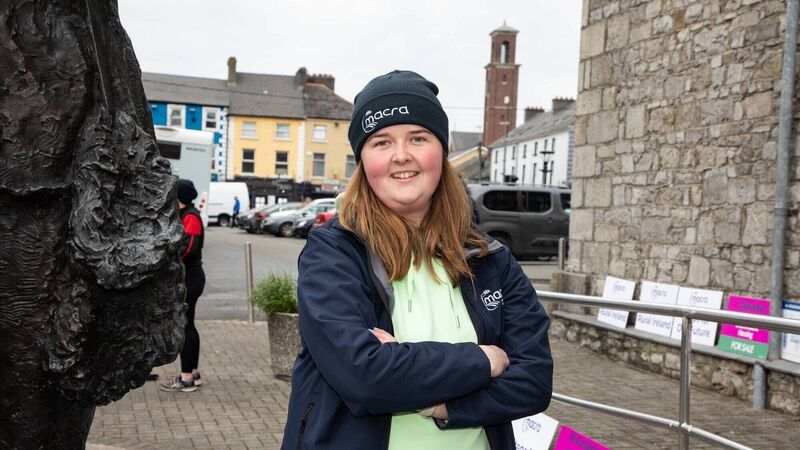
Elaine Houlihan, Macra national president, told the Irish Examiner that the rural youth organisation is seeing young people leave Ireland recently in “high numbers”, but that for many, they “don’t want to get on the plane” — they just feel they “have no choice”.
As Budget 2024 approaches this autumn, Ms Houlihan said it has never been more important that the measures Macra is lobbying for to “keep rural communities alive” are implemented and funded adequately.
“That is the fight we’re putting in, and we hope the Government realises that without rural communities, we won’t have enough food produced in Ireland,” she said.
“They [Government] need to realise that rural communities are the heartbeat of Ireland.
“We need supports; we’re not just saying them, we actually need action.”
Earlier this year, Macra members undertook a mammoth task of a 79km ‘steps for our future’ overnight march from Athy to Government buildings in Dublin City.
The main issues highlighted by Macra included accessing affordable housing and cumbersome housing planning guidelines; disjointed and sparse healthcare services for rural communities; lack of planning for the future of rural communities informed by rural people; and lack of recognition and engagement by Government on a farming succession scheme, among other issues.
Ms Houlihan, who previously lived abroad herself, said that young people leaving a rural community “has a massive impact; I see it in my own village”.
“Without the young people there, there will be nothing,” she continued.
“People need to realise we are the next generation, the people who are going to open businesses, that are going to take over the family farms; we’re the ones going to produce the next generation for the schools and the GAA club teams.
“Without us, the economy in a rural village is gone. Who is there spending money?”
Ms Houlihan and her Macra team have met with the Taoiseach and Minister for Agriculture a number of times since their march to focus on the key issues identified, and she described the engagement as “positive, but I truly hope it’s not a false positive, I hope that it is a true positive, and not a rosy little path we’re being led up”.
Otherwise: “That’s going to cause even a bigger mass exit of us out of Ireland — and that’s the last thing we need,” Ms Houlihan said.
The Irish Examiner asked the Department of Rural and Community Development (DRCD), and the Department of Agriculture (DAFM) if there was concern about the number of young people who are emigrating recently, and what it means for the future of rural Ireland, and what measures and supports these departments have in place that would help in keeping and attracting young people to live and work in rural communities.
The DRCD said: “Our Rural Future 2021-2025, the Government’s national rural development policy, acknowledges the importance of retaining young people in rural communities, and in particular to ensure a sustainable future for the agriculture, marine, and forestry sectors.
“The policy sets out a range of measures, being delivered across Government, with the objective of ensuring that rural areas are attractive locations for young people to live, work and ultimately raise their families.”
These measures include:
- A focus on improving and increasing public transport services in rural areas via the Connecting Ireland mobility plan;
- The establishment of technological universities in all regions to ensure the accessibility of further education to those wishing to live in rural areas;
- Investments in broadband accessibility, remote working facilities, and digital and creative hubs;
- Measures such as the Rural Regeneration and Development Fund and the Town Centre First policy.
The department added that Our Rural Future commits to supporting generational renewal in the agriculture sector.
The DAFM in its response said that the challenges of attracting young people into a career in farming are “widely recognised both at national and EU level”.
“In Ireland, of those classified as farm holders, just over 5% are under 35 years of age, with over 30% of farmers over 65. Demographic challenges for the agricultural sector are not unique to Ireland and across the EU, for every farmer under 40, there are three over 65,” the DAFM said.
“Supporting young farmers and facilitating generational renewal is critical to ensure a bright future for the agri-food sector.
“There are a number of supports currently available for generational renewal under the Common Agricultural Policy [CAP)], and these are complemented by a suite of national measures.”
When Macra’s Elaine Houlihan moved abroad to the Netherlands, leaving her home in the small village of Athlacca in Co Limerick a number of years ago, it was to pursue her physiotherapy studies, and the experience was “probably the most nerve-wracking thing I’ve ever done; leaving on an airplane and not knowing anything”.
While she thought her “happiness was travelling”, Ms Houlihan said she soon realised it was not, and she ultimately decided to return to Ireland.
“Community meant everything, I embedded back into my community like I had never left,” she said.
“That’s what drew me back to Ireland — the whole sense of community.
“Everybody says ‘you’re moving abroad, you’ll definitely miss the tea and Tayto’. But no, it’s the things like walking down the street saluting somebody you don’t know and getting a salute back.”
Many young people who have moved away hope to return to Ireland at some stage, and they certainly hope that the Ireland they come back to is better for them.
Ms Houlihan said that once you come back from living abroad there can be “the fear of everybody moving on, that sense of loneliness you have, nobody ever talks about it”.
“But, you do fall back in perfectly; it’s like you were the missing jigsaw piece,” she added.

Subscribe to access all of the Irish Examiner.
Try unlimited access from only €1.50 a week
Already a subscriber? Sign in