Vet on the Moove: When it comes to matters of the heart, tyre-wire is a cow's enemy
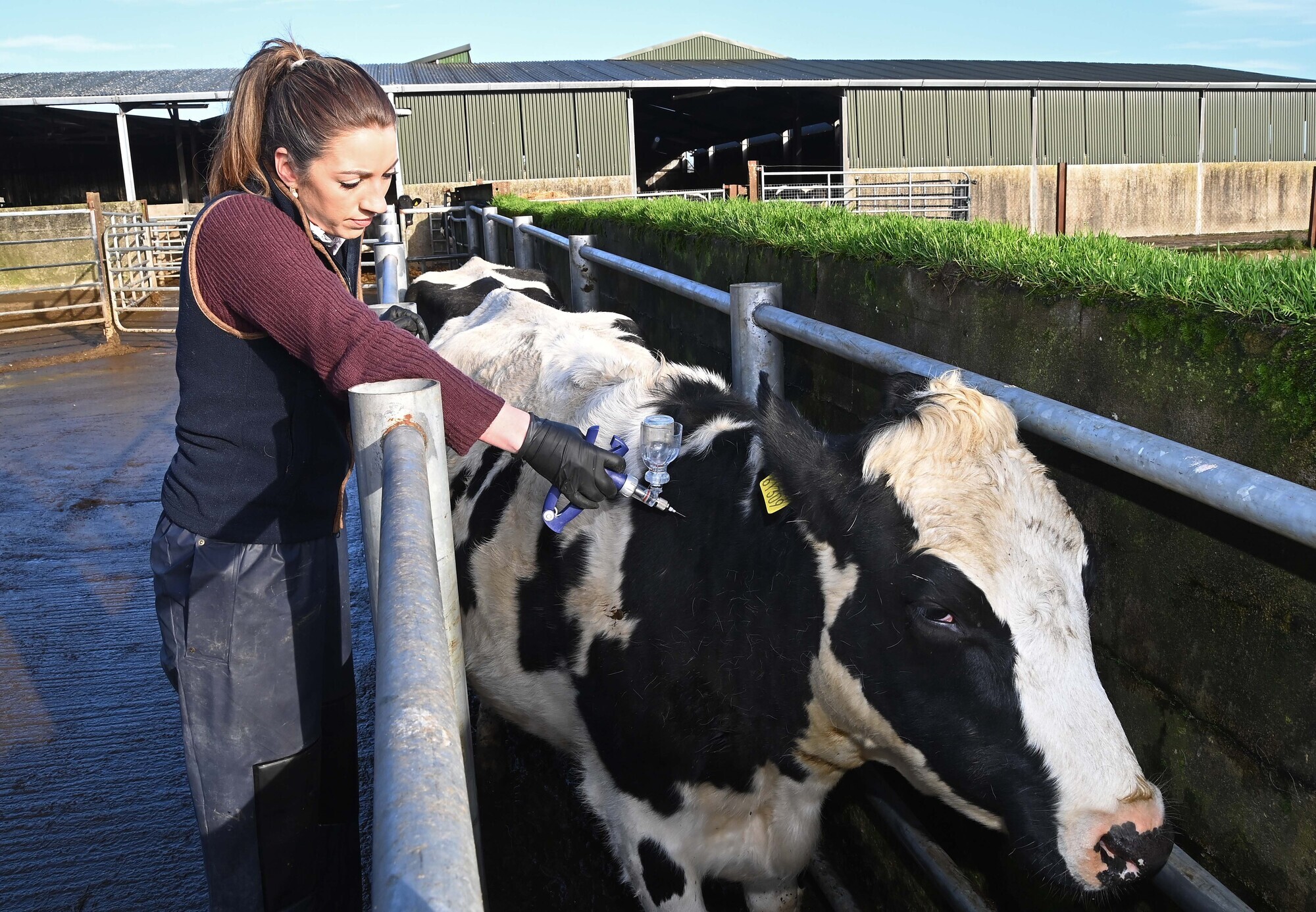
Tyre-wire is when a piece of wire or metal is ingested and it causes damage to the cow internally. Picture: Denis Minihane

Last week, both locuming and on the farm had cows that were causing heartache in more ways than one. At this time of year, you always get the “weird and the wonderful” case thrown at you and last week it came in double trouble.
I was back in the beautiful Killarney again, reliving my new graduate days visiting the farms that laid the foundation for my cow vet career. One particular morning the phone rang and it was a farmer that I still had his number saved, one of the originals.
We had a quick chat on the phone after his surprise that I was the vet on the other side, he told me he had a sick cow that was down in milk for a few days. On arrival at the farm, I was greeted by a dairy cow that at first glance didn’t seem noticeably sick. On examination her temperature was low, she had an enlarged jugular vein and was slightly hunched whilst walking.
Tyre-wire disease, or Traumatic Reticular Pericarditis, was at the top of my differentials for this cow and the farmer had a history of another similar case last year on the farm.
Tyre-wire disease is pretty much what it says on the tin, it is when a piece of wire or metal is ingested and it causes damage to the cow internally. The wire lands in the rumen in a particular pouch-like compartment located by the left shoulder, called the reticulum. Unfortunately, the reticulum is right next door to the diaphragm which lies next to the heart, all separated only by a few millimetres of tissue.
The reticulum has a honeycomb structure and it acts like a filter that traps food particles for further digestion whilst also capturing foreign bodies such as wire. With the contraction of the reticulum, a piece of wire is able to penetrate the wall of the reticulum, the diaphragm and enter the heart. The heart lies in a sac called the pericardium. When the wire migrates from the reticulum and penetrates this sac it can cause a potentially fatal infection and can cause heart failure.
The signs of right-sided heart failure are the most common with tyre-wire disease as the heart is unable to pump blood efficiently around the body. Right-sided heart failure signs include ascites (fluid build-up) in their brisket or under their jaw (bottle jaw) and enlarged jugular veins. A withers test is a help to diagnose, where you pinch firmly either side of their withers, a normal cow will bow her back like a cat-cow yoga pose. However, a cow with a wire will be reluctant to bow and usually grunt with pain.
When I performed the “Withers test” on the cow it was negative so she did bow her back, however, she did have a distended jugular. On auscultation with my stethoscope, I heard a fast heart rate, above 80 BPM. However, they were slightly muffled assumed to be from fluid build-up around the heart disrupting the sounds.
In very advanced cases I have heard the tinkling metal drum-like sounds that the pericardial fluid makes when the heart is beating. Also in my diagnostic toolbox, I have a cow side test called a “Glutavac” test that can tell if the cow has an infection. It is a blood sample that clots on a time scale, assessing the speed of clotting at 5, 10 and 15 minutes which correlates with the amount of infection.
We also had a cow at home on the farm for the past few weeks that was slowly moving, always from the rest of the herd, with weight loss and a glazed appearance. She demonstrated a positive "Withers test" and that characteristic grunt was audible when performed. She had pneumonia signs also which could mean that the infection could have spread to her lungs and she was drooling after walking into the parlour.
Both cows were given a magnet bolus which is used in the hope that the wire attaches to it in the reticulum and the infection can resolve with a long course of antibiotics. Pain relief is very important alongside the antibiotics, you can imagine a wire poking through your diaphragm would not be pleasant.
Surgery via a rumenotomy, retrieving the wire from inside the rumen can be performed, however, results are mixed. Milking once a day and providing a field near the parlour to limit walking can also help with recovery.
Tyre-wire prevention involves keeping a tidy yard as cows are very curious creatures and will eat things they are certainly not designed to digest. Make sure to dispose of any damaged tyres on the silage pit with exposed wires and be mindful to remove them completely before filling a mixer wagon.
A magnet in the mixer wagon can be a great help to capture any potentially dangerous foreign bodies. Some farmers give a magnet bolus to every heifer as a standard to prevent the disease in the future—it's commonplace on farms in the UK with more indoor systems.
Bonfire night was last month, make sure to fence off any bonfire sites to ensure no cow access to debris such as nails.
Sadly, my home cow passed away despite our best efforts. Once the antibiotics stopped she went downhill very quickly and developed a very obvious hunch in her back and grunted when she walked. It was a sad day on the farm as she was a young cow with much future potential in the herd.
Unfortunately, it wasn’t possible for me to do a PM on her which would have given me a definitive diagnosis. The cow in Kerry is improving every day and hopefully will make a full recovery. Make sure to call your vet for an early diagnosis if you suspect any of your animals have tyre-wire disease.