'Use us or lose us', Irish growers warn as shortages sweep shelves
'Use us or lose us', Irish growers warn as shortages sweep shelves

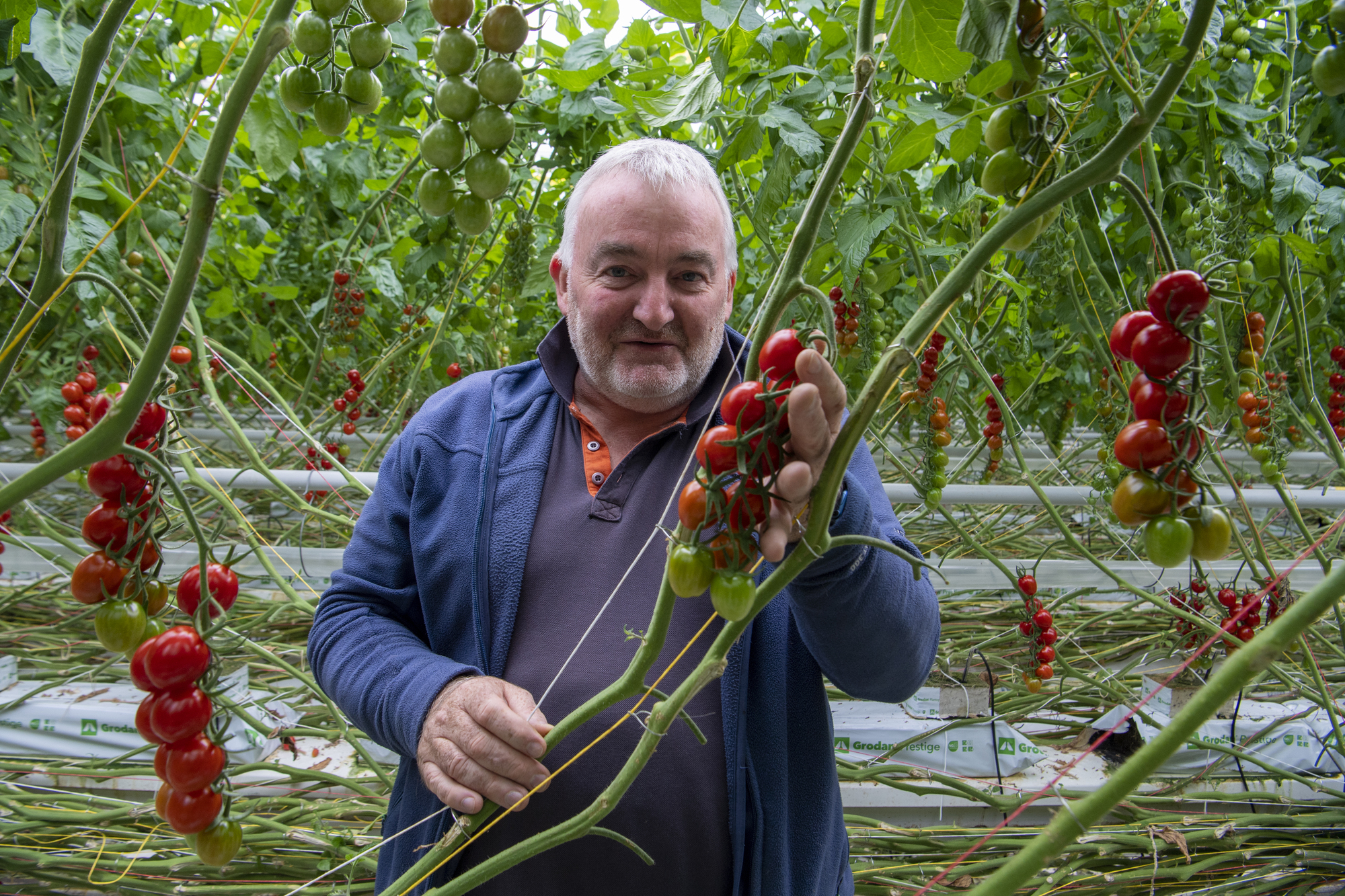
David Currid of Grantstown Nurseries in Ballygunner on the outskirts of Waterford City. His company is one of the biggest Irish growers of tomatoes. Picture: Dan Linehan

Irish growers have warned the public to “use us or lose us” — as veg aisles empty across Ireland as growing issues in Spain and Northern Africa cause disruption to the supply to imported produce.

David Currid, one of just a handful of glasshouse tomato growers in Ireland, is the chairman of the Quality Green Producer Organisation, which represents several of the major commercial glasshouse growers in Ireland.

He warned that the issue of food security for fresh fruit and vegetables could be further exacerbated if local growers aren’t supported and paid more for their produce.

Over the last 12 months, several Irish veg growers — both on a large and smaller scale — have told the Irish Examiner that year would be their last harvest as prices paid failed to keep up with the spiralling cost of inputs. However, it has been a trend seen across Northern Europe.

Major growing countries such as the Netherlands have dramatically scaled back production levels, put off growing through the autumn and winter by high gas and electricity prices.

Horticultural industry reports suggest the area of tomatoes grown under lights in the Netherlands this winter may be just an eighth of the 800 hectares typically grown.

Decisions around the crop currently growing would have been made in the summer when prices were at their highest, prompting many winter growers to keep the lights turned off at the most expensive time of the year, and their glasshouses empty.

Issues with alternative markets have compounded things, causing the empty shelves seen over the last few weeks.

“Generally, in the wintertime, most of the tomatoes coming into Ireland would come in from Spain or Morocco,” Mr Currid explained.

“Morocco has had a lot of problems with tomato brown rugose virus. It’s a very serious virus that affects tomato crops around the world, but thankfully, hasn’t come to Ireland yet, although it has been picked up in almost every other European country.”

The virus causes the leaves of the plant to pucker and mottle, and renders the resulting fruit unsaleable.

“Then add the effects of the cold snap in the South of Spain — that’s created the perfect storm relief from a supply point of view,” Mr Currid said.

Growers in Ireland do have the ability to grow through the winter, and in fact, this year Mr Currid’s own company Grantstown Tomatoes, based in Co Waterford, has started his own crop earlier than normal despite the increased costs because of an issue with his seedling supplier.

‘Prices aren’t justifying year-round glasshouse growing’

Mr Currid’s firm, Grantstown Tomatoes, grows around 250 tonnes of tomatoes under two hectares of glass a year, making him one of the biggest Irish growers of the crop.


However, despite having the facilities to grow year-round, his glasshouses remain empty over the winter, as he explained prices offered to growers are simply not high enough to justify growing at the most expensive time of year.

“It’s pretty startling when you go to continental Europe and see the prices of fresh produce — they don’t have this same obsession with low-cost fruit and veg that we have in the UK and Ireland,” he said.

“The retail prices are significantly higher, and that is where they need to be here too. The days of cheap energy are behind us, and prices need to reflect that.

“Nobody in Ireland has taken the jump yet to grow those because you wouldn’t get the return on it to pay for the investment.

“We need Irish customers to support Irish produce, because that’s our market — we are a net importer of fruit and veg in Ireland.

“We need people to take the opportunity when they are in the supermarket to look at produce and ask where it comes from.

“As long as customers ask for Irish we have a future, but if that reduces, we will really struggle. We are very exposed as an island nation. We can grow the best crop we can, but we are dependent on the retailers and the government, through the Horticultural Emergency Payment Scheme that helped us last year.” 

But this problem hasn’t gone away, he warns.

"Commercial gas prices are down about 25% from this time last year, but they are still almost double what they were before. The waters are still a bit choppy,” he said.

“Can growers keep going and keep taking these risks year after year? Without the prices we need to cover our input costs, that’s the future we are looking at.

“Food is really going to have to increase in price, because we are not going to go back to the days of cheap energy between the impact of wars and climate targets.”

x

More in this section

Farming

Newsletter

Stay ahead of the season. Sign up for insights, expert advice and stories shaping Irish agriculture.

Cookie Policy Privacy Policy Brand Safety FAQ Help Contact Us Terms and Conditions

© Examiner Echo Group Limited