Vertical farming wheat trial projects yields 26 times greater
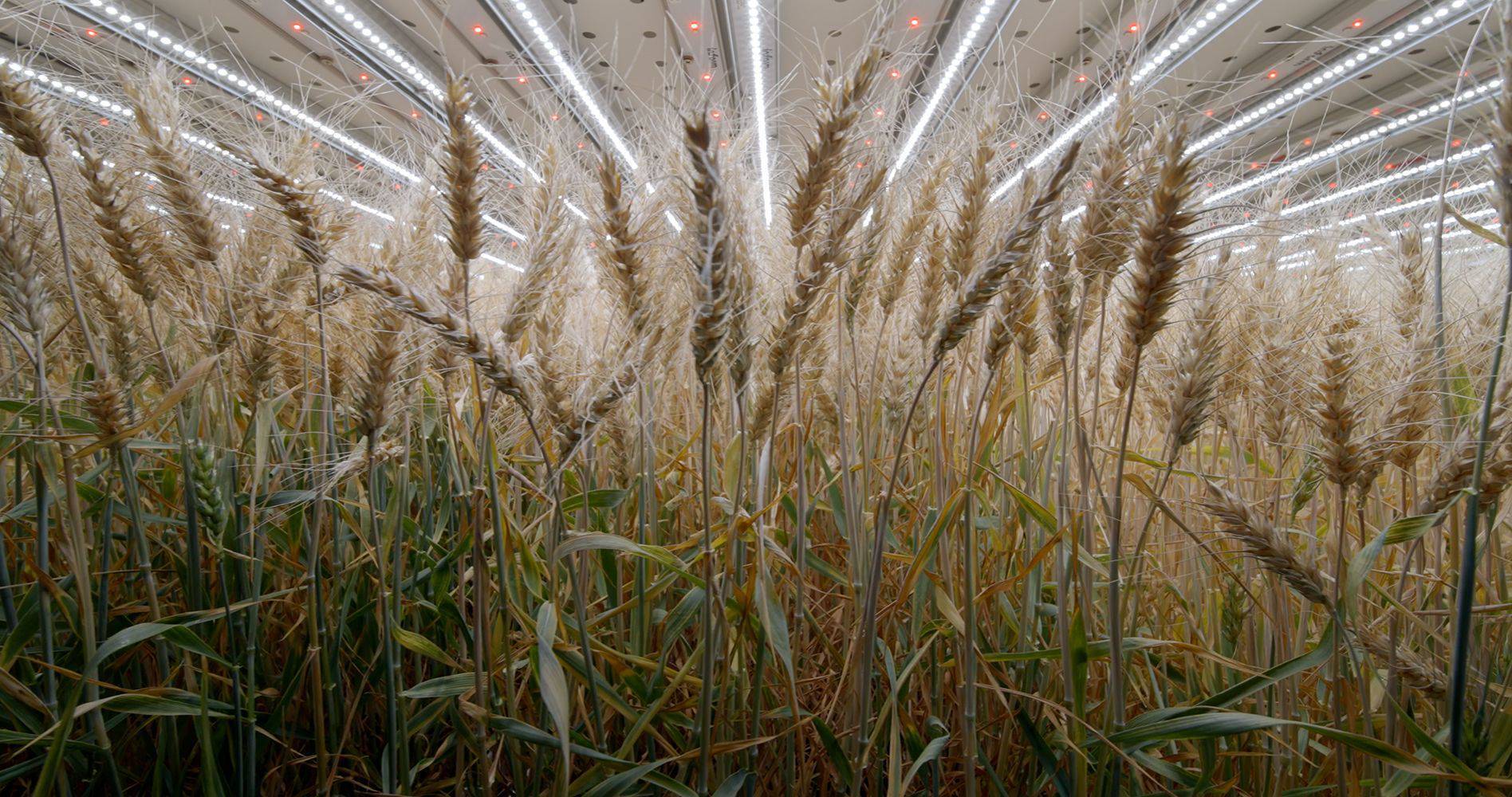
Infarm's indoor wheat trial has a projected yield of 11.7kg per m2 per year.
A German vertical farming company claims to have managed to successfully grow wheat in an indoor farming system - using no soil, no chemical pesticides and much less water than open field farming.
Infarm said its first trials had demonstrated "exceptional results", allowing a projected yield of 11.7kg per m2 per year.
Further projected at scale, this is the equivalent of 117 tonnes per hectare per year - 26 times that of open-field farming yields.
This production is independent of external climatic conditions and is thus genuinely climate resilient. This is an important milestone, as climate impacts worsen, in providing staple food in a controlled environment.
Guy Galonska, CTO and co-founder of Infarm, said: ”To continue to feed the world's growing population, we need to achieve higher crop yields which we have now proven to be possible for wheat through indoor, controlled environment agriculture.
"Our results are significant when compared to the average yield of outdoor wheat production, which is about 4.5 tonnes per hectare per year and heavily dependent on weather and seasons.
"We are confident that wheat can be grown successfully at scale indoors as a climate-resilient alternative. Our record yield could potentially be increased by a further 50% in the coming years using a combination of improved genetics, hardware, and optimised growth environments.”
Erez Galonska, CEO and co-founder of Infarm, added: “Being able to grow wheat indoors is a milestone for Infarm and of significant importance for global food security, as wheat is a calorie-dense but resource-intense crop that is a core component of diets worldwide.
Wheat provides much of the global population with its daily energy requirements and is a significant source of protein, accounting for almost 40% of daily protein intake in some regions.
Wheat is grown over a larger area than any other crop and due to a destabilised environment, the yield per hectare is expected to decline.
Infarm was founded in 2013, with its produce stocked by more than 1,850 stores split across 30 major international retail chains.
Today, it sells produce in 10 counties, however, it plans to double this by 2030.
The grows more than 75 plants, such as herbs, leafy greens, salads, microgreens, and mushrooms, and will soon include strawberries, peppers, cherry tomatoes, and peas in modular farming systems which are capable of growing more than 500,000 plants annually in just 40m2 of floor space.
In addition to using 95% less land, Infarm claims its vertical farming system requires 95% less water than traditional farming methods and uses no chemical pesticides. So far, Infarm has saved more than 130 million litres of water, more than 180,000m2 of land, and nearly 1.6 million food miles with its production methods.