Fodder challenges ahead for dairy herds
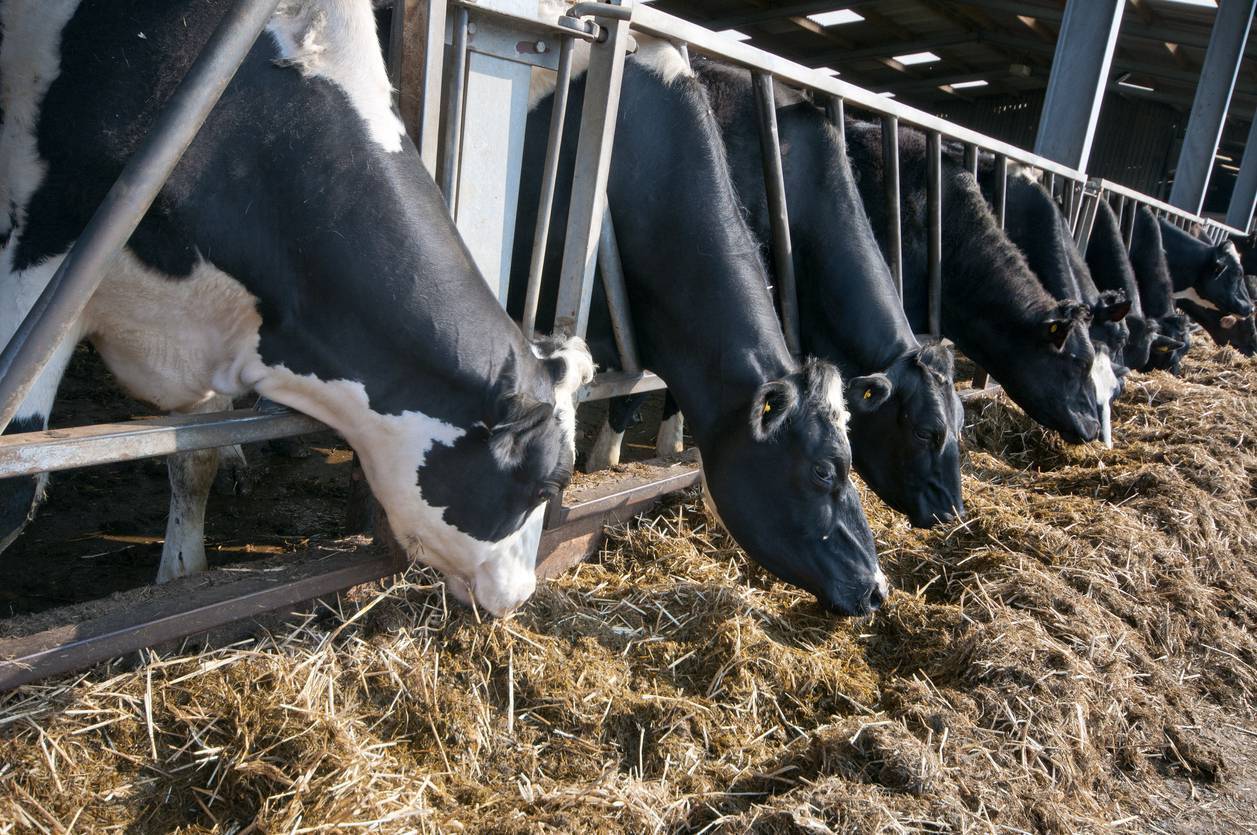
Many dairy farms could be in a position where they need to feed silage right through September and October.
For the vast majority of the south and east of the country, grass growth continues to be very low, and with little rain in the forecast, the situation is very serious for both beef and dairy producers. Regardless of stocking rates, if grass doesn’t grow, you run out of grass.
In a normal year (if such a thing exists!), once late August or early September arrives, we look at increasing supplementation to dairy cows as grass quality begins to deteriorate.
Right now, most have had to introduce a significant volume of forage along with increased concentrates on keeping cows fed, and if they don’t get rain soon, then the winter could come very early from a feeding point of view.
As we head towards September and producers sit down to construct winter feed budgets, with the uncertainty over grass supply for the autumn, we must plan for additional silage requirements in a worst-case scenario - that being that many farms could need to feed silage right through September and October.
Will it be possible to make more silage in the next two months? Nobody knows the answer to that.
If you are currently feeding a lot of silage - or other conserved forage - and won't be stopping anytime soon, will you be tight on fodder for this winter?
How much silage you carried through from last winter will have a big bearing on your situation. If there is the possibility that you won’t produce enough feed from your own resources this year, then you must take action; sitting on your hands and hoping for the best is not an option.
Sit down with someone that knows what they are doing and construct an accurate and realistic feed budget, sooner rather than later.
Obviously, the cost and feed value of any available feed to buy are important, but the number one priority must be to keep animals healthy, productive and capable of performing to achieve profitable milk production for the rest of this year and into 2023.
With the realisation that fodder could be scarce between now and next spring, many herds will look to scan cows a little earlier this year and make decisions on the back of the results. With the current milk price, the decision can then be made based on cow performance, whether it makes sense to buy feed for empty cows or cash them in now.
With most achieving well over 60 cents per litre and the likelihood that an empty cow will be worth as much in November or December as she is now, then continuing to milk them will, for most, be the most profitable approach.
Obviously, low yielders should be moved on and the feed diverted to productive cows.
So, you have empty cows, what are your options?
- Milk them on and cull them at drying off - Sell as feeding cows or fatten yourself or feed them extra while milking to gain weight.
- Sell them straight away to reduce grass/feed demand - consider what they would be worth now.
- Are they in good enough condition to send to the factory, or is the mart or selling directly to a fattening unit a better option?
- Dry them off now and feed them for slaughter. However, this is not a good option at the current milk price. Do you have the feeding available to feed on these cows to fatten them in 40 to 50 days, once dry?
Various routes for re-cycling may also be considered, but why? Are enough in-calf heifers in the system to replace all empties? Do you have a closed herd and want to avoid buying replacements? Keeping less fertile genetics on the farm is not desirable no matter how good the cow is, particularly, if you have committed to a compact calving system.
All of the above need to be considered carefully once you know your empty rate. In my opinion, there is not just one size fits all when it comes to your method of moving on empty/cull cows.
A great way of moving on empty cows is to put an easily identifiable marker or strap etc on them and milk them as normal from now on while feeding them additional concentrates in the parlour with an aim of slaughtering them straight out of the parlour in November or December.
Demand for cattle of all types for slaughter seems like it will remain strong in November and December. The additional meal will also reduce those cows grass demand.
Do your own sums and see which route to market will leave you with more money in your pocket. Obviously, every situation is different, and for some, getting rid of empty stock immediately will be necessary as grass and fodder supplies are and will be tight.