€236m of CAP money fraudulently claimed over five-year period across EU

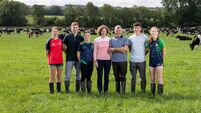
One example included a Polish dairy farmer receiving a €17,000 EU grant to purchase heifers. However, EU investigators discovered he purchased the heifers from his father, also a dairy farmer, who kept his herd in the same cow shed. File picture
Some €236m worth of frauds has been estimated in a study of five years of the Common Agricultural Policy.
One notable example highlighted by a European Court of Auditors (ECA) report included a Polish dairy farmer receiving a €17,000 EU grant to purchase heifers. However, EU investigators discovered he purchased the heifers from his father, also a dairy farmer, who kept his herd in the same cow shed.
And two days earlier, the grant beneficiary had sold a similar number of heifers to his father, who also received support under the same grant measure. There was no physical transfer of animals, and the total number of animals owned by the beneficiary and his father remained unchanged.
It was just one of the frauds highlighted in the ECA report, which warns the EU Commission to take better anti-fraud measures. None of the cases included occurred in Ireland.
In 2014, an agricultural company in Slovakia submitted a claim for permanent grassland under the Single Area Payment Scheme. The farmer claimed to have subcontracted mowing, tilling, and collecting grass on the land parcels.
But falsification of the related contractual documents was suspected, and that no such activity was carried out. The farmer's claim was rejected and a court found the farmer guilty, preventing a €140,000 fraud.
The ECA said gaps in monitoring leave the EU’s farming subsidy programme vulnerable to fraudulent practices such as illegal land grabbing.
A €32m fraud was discovered in Italy in 2017 by the European Anti-fraud Office (OLAF). In collaboration with the national financial police, OLAF investigators found that some agricultural assistance centres, which support farmers in submitting aid applications, had introduced a number of "false farmers", allowing ineligible applicants receive EU subsidies.
OLAF found that applications were based on ineligible declarations of public lands, or supported by false leasing contracts, as the tenants had either died or were not aware of the lease. Some claims were submitted for land under seizure following organised crime offences. Some claims were presented by individuals subject to precautionary anti-mafia measures.
According to data provided by OLAF, reported fraudulent irregularities in the CAP in the 2016 to 2020 period amounted to about €236m, or 0.09% of the total €262 billion CAP expenditure.
The ECA said one of the key fraud risks in the CAP is the long-standing issue of land grabbing, which involves the concentration of agricultural land and CAP subsidies in the hands of large companies and investors, especially in mountainous areas and Eastern European member states.
Another example under the heading of land grabbing was an OLAF investigation finalised in Slovakia, in December 2020. It was found that areas which had been claimed for years by some companies were not covered by valid lease contracts.
National checks on applicants’ legal basis for claiming the land were very limited, and were applied only in the case of overlapping claims.
OLAF also found that verification by a Slovak national authority of agricultural land under State ownership, and land without a known private owner, showed weaknesses of transparency and legal certainty. It estimated related overpayments could total more than €1m.
"Land grabbing" can include falsifying documents, coercion, use of political influence or insider information, manipulation of procedures, or payment of bribes.
"Since CAP control systems make it difficult to overstate the eligible area, fraudsters often target land with no active owner,” the auditors explained, adding that this might be the case for publicly-owned land, or private land with unclear ownership.
CAP legislation does not define “land at the farmer’s disposal”, nor does it require farmers to provide proof of their right over the land when submitting an aid application, the ECA's report said (these issues fall under member state legislation).
Common agricultural subsidies continue to be systematically misused across countries. The ECA observed that the risk of fraud is greater in spending areas subject to more complex eligibility conditions.
It called for new technologies for more effective monitoring of fraud, including fraud-detection tools such as Arachne (a risk-scoring tool developed by the Commission), and sharing best practices on artificial intelligence and machine learning to identify fraud patterns.
A number of examples showed failure to disclose links between companies.
In Poland, a beneficiary, along with other family members, submitted a joint application for support to construct a pigsty. Each applicant applied for the maximum possible support (around €200,000 each).
The eligibility conditions stipulated that applicants’ holdings must be under €250,000 (or 300 hectares), and this was found not to be the case, because the main grant beneficiary and the other family members held shares in a family company operating on the same site. They had claimed to operate independent businesses.
In Bulgaria, OLAF found that established agricultural enterprises, which reached the limit for EU financial support for their holdings or group of holdings, applied and obtained EU funds through other ostensibly independent entities, which were actually under the direct control of the established enterprises. The financial impact of these cases was around €10m.
In 2016, in Italy, OLAF audited a transaction of around €300,000 to promote wine in non-EU countries.
The grant beneficiary submitted a report on actions carried out, including images of promotional activity. OLAF found that, in several cases, the images for a certain event were in fact from a different location or year. Some images had been presented in previous payment claims. For most of the expenditures OLAF checked, there was no evidence that the actions had been carried out for which grant aid was paid.
In 2018 in France, OLAF found claims for several years for areas of mountain which lacked any suitable infrastructure for farming, such as water supply, pens or feeding facilities, or were located on steep cliffs.
OLAF also found claims for non-existent herds and called for the recovery of around €536,000.
In a separate report, the EU Court of Auditors recently said the Commission's agricultural data processing and analysis system is "not fit for the times".
“The Commission’s agriculture department still uses conventional tools such as spreadsheets to manually analyse the data it collects from EU countries and does not use big data techniques for text-mining and automated extraction,” it read.