My Last Crop: Irish grower quits warning the horticulture industry is 'facing extinction'
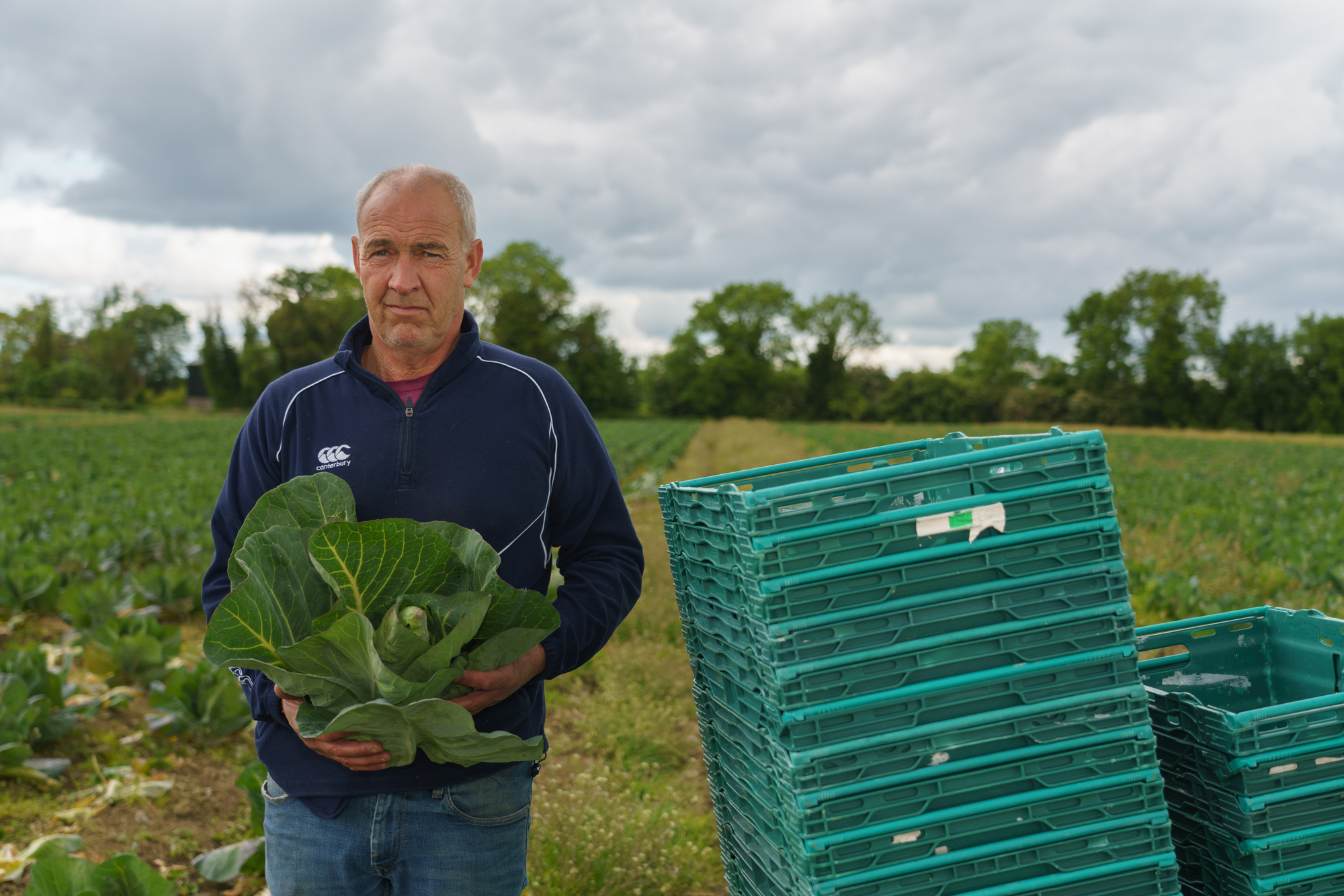
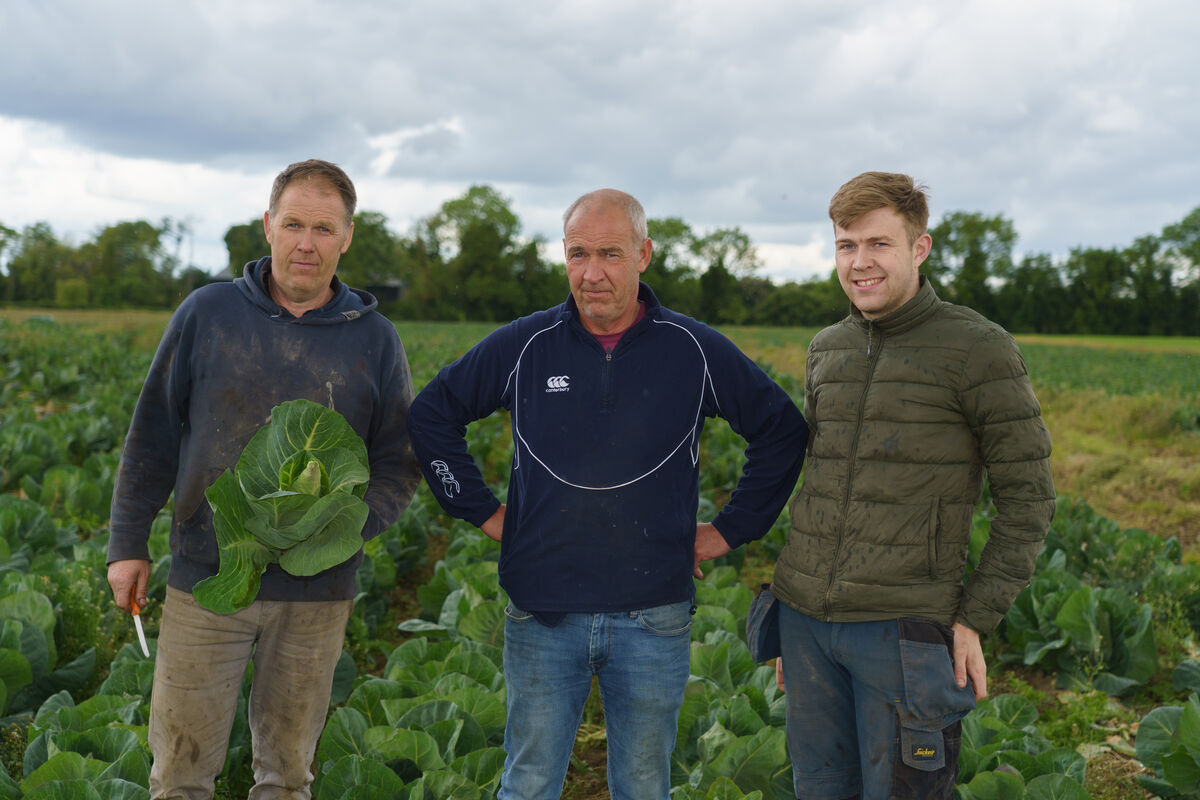
Vegetable grower Cahal Lenehan with some of the remaining cabbage on the farm at Garlow Cross. Picture: Barry Cronin
It's peak season on Irish tillage farms, yet one Co Meath yard is eerily still as Cahal Lenehan finishes his last season as a grower.
Mr Lenehan said he does not think he will be the last Irish grower to quit if input costs continue to spiral, warning that the industry could soon be consigned to history unless farm-gate prices for vegetables increase significantly.
The output of cabbage and sprouts grown at JCR Lenehan’s, a third-generation business, generally varied annually.
On a weekly basis, however, the business aimed to fill between 2,500 and 4,000 boxes - a minimum of 32,000 heads.
Depending on the promotions run by retailers, that could increase to as much as 100,000 cabbages a week.
However, within days now, JCR Lenehan's vegetables will no longer be on shop shelves.
It's an issue affecting many as energy, fertiliser, labour, and packaging costs continue to rise.
Teagasc estimates that total input costs have increased by between 13% and 49% depending on enterprise type.
Co Dublin tomato grower Martin Flynn told the that if input costs don’t come back to “some form of normality”, others may follow in leaving the sector.
“There probably is a number of growers that are just hoping that things will improve and get better and I suppose if it doesn’t, then they will end up having to exit the sector and maybe in the worst scenario; maybe exiting the sector owing money to the banks, losing some of their land, or their assets,” Mr Flynn, who is also the Irish Farmers' Association field vegetable and protected crops vice-chairman, said.
He advised growers to know all their costs “to the last cent that it’s costing to produce, and add on the margin you need”.
“Don’t grow the crop unless you get the margin,” he said.
“Don’t grow the crop if the supermarkets aren’t willing to give you exactly enough to pay your bills and make a profit.”
However, he said that retailers “can only go so far” in terms of supporting growers, with Government help also needed.
“If you take tomatoes for instance, there are eight large-scale growers and if them growers don’t get support, and you lost some of the growers, you could see just foreign stuff on the shelves,” Mr Flynn added.
He said “we’re talking cents” in order to save the industry; depending on the crop, “anything between 10 to 25% of an increase”.
“Many growers have seen around a 10% increase, it may not be enough for some crops,” Mr Flynn said.
“You need to be monitoring it the whole time because when we did our costs back in January or February to grow this year’s crop, they were very different to what they are today due to the war in Ukraine.
“Without the assistance of the Government, and the retailers playing ball, the retailers making sure that growers get a fair margin and are able to even stay afloat this year, more growers could go out of business.”
Mr Lenehan informed his seed supplier earlier this year that he would not be purchasing any seeds this season, and that he, along with his business partner and brother, Rory, have made the decision to stop growing.
As a result, recent days on the farm have looked very different from years gone by; when the Irish Examiner paid a visit this week, Mr Lenehan and his crew had cut 400 crates of cabbage in the morning, followed by staff leaving and the “lights out” in the facilities by 12pm.
This week staff started on the last three acres of cabbage.
“There’s maybe 2,000 boxes of cabbage left. Last year we’d be just gearing ourselves towards starting new season cabbage,” Mr Lenehan continued.
“We’d normally have most of our sprout crop planted.”
But this year, “we haven’t got one plant in the ground”.
“We should be flat out planting the last of our sprout crop,” he said.
“We should be planting cabbage crops and obviously doing ground preparation, possibly spraying. We’d be busy.
“You begin to think: ‘Am I a failure?’,” he said.
“That word stuck in my head for days.
He fears that the horticulture industry in Ireland is disappearing, “facing extinction”, and is “heading for the national museum”.
“I hope it never comes to that," he said.
"But less than 15 years ago there were over 400 veg growers in this industry, and in 15 years we're down to touching 100 or below.
"In five years we might be relying on import produce. Growers can't take this hurt any longer. There’s nobody else to take it over. There’s no incentive there, there’s no encouragement, there’s not enough interest in the industry."
Mr Lenehan said that his business’ margin has gone down by two-thirds in three years.
“Unfortunately, the growers that are remaining that have got their increases [from retailers], some of them may think they’re over the line, but they’re not," he said.
“As your input costs go up throughout the year, you have to make the retailer aware that the price they’re giving is just not sustainable. What was sustainable six weeks ago is not sustainable now.
"We’re gone now, who’s going to be next? Because there will be somebody unless the retailers actually just try and understand how difficult it is for growers."
Only a few months ago, Mr Lenehan estimates that receiving 10c extra per cabbage would have gotten the business over the line.
Since then, the cost of inputs has increased even further, now hovering around an extra 12 and a half-cent per head needed.
“The sprouts are different then, you grow sprout crop for an average of a five-tonne per acre crop, and if you hit a good season, you can hit 10 tonnes, so you can actually make money on sprouts as we have done in the last six, seven years,” Mr Lenehan explained.
"Sprout production wouldn’t start until September, it’d be limited.
“We thought of doing just sprouts on their own, but we couldn’t expect staff to stay with us for a seven-month period and then go away for five months.
“We just said if we couldn’t make it with the cabbage, what was the point in going on?”
The business this week was down to six staff, whereas in previous years, there would be up to 12.
“We’ll be finished up before June 10,” he said.
“Very little machinery has been sold; we have sold small pieces of equipment but all the big equipment is sitting there, we have yet to decide what we’re going to do with that.
“That’ll be a tough thing to watch machines going out of the yard."
But so be it, Mr Lenehan said.
"I love this industry. This would have been my 39th year with the business," he added.
"It just got to a stage where it’s too high risk now and the risk element would be taken out if there was a bit more respect and a bit more value put on Irish healthy produce.
"Until that lorry goes out with the last load of cabbage, that’s when it’s really going to be driven home that we don’t have to get up the next morning to go cut cabbage."
But other opportunities lie ahead for Mr Lenehan and his crew.
He is considering what comes next for him in terms of work; and is also looking forward to having some more time now to walk his golden retriever, fishing more often, along with travelling.
Mr Lenehan’s son, Conor, who “lives for this place” will remain in the horticultural industry after finishing up his agriculture-related degree this year.
And in regards to the others involved with the business, Mr Lenehan said that some staff had decided to leave early and were paid their redundancies.
“The remaining staff here have said they’ll see it out with us,” Mr Lenehan said.
“One guy is with us 14 years, he’s part of the family now, and he said: ‘Cahal, I will stay here until I cut the last head of cabbage.’”