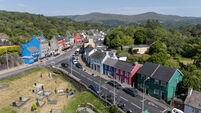
In Beal, Co Kerry, overlooking the water, Kate Carmody shares life with her daughters, pets, an organic farm that has a “mixture of everything”, and her business — Beal Organic Cheese.
And alongside that, having set it up in 2018 with other farmers and interested parties, Ms Carmody will step down as chairwoman of Hemp Cooperative Ireland next month, but she certainly won’t be idle.
She will remain on the board — but feels that “any organisation needs a turnover in the offices, it’s healthy”.
A “sixth-generation chemist”, Ms Carmody worked as a biochemist in locations in Munster after leaving England in 1980 and married a dairy farmer, Patrick Carmody, in 1984. She fell in love with both him, and the farm.
In 1997 she took over the farm when her husband became very unwell. She went into organic conversion and the farm became fully organic in 2000, and became a supplier of organic milk.
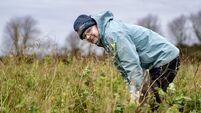
It was in 2016 when Ms Carmody accelerated her research on hemp; and decided to grow some that year, and it ended up “growing very well”.
She lives in a drained peatland area — and said that the “whole region is ideal” for hemp growing.
She started off growing four hectares of the USO 31 hemp strain, which had been recommended to her by those in the industry.
“They got me to sow it very dense and it was like a forest. I thought it would fail because I didn’t set it until May 21, which is late, but it’s not late for peatland-type soils though because they’re full of water anyway,” Ms Carmody said.
“This is part of my argument — that these drained peatlands that are emitting so much carbon dioxide, rather than putting forestry and wind turbines in them, my idea for hemp is that it could be planted and you can create all these other products too.”
The beauty of it, according to Ms Carmody, is that once the seed is in, “you can shut the gate and ignore it for three months”, as long as you get the right weather.
The first year she grew it, there was no rain for 10 days, leading to some panic; but when the rain and the seaside mist came, the hemp suddenly shot up — and “it just grew and grew” and ended up growing “10ft tall”.
Her first year growing was for research and experience, she said, and for the fibre and shiv.
“Like any farmer, you get the bread and butter stuff done first. You get the agronomy right,” she said.
“To me, the agronomy was the most important thing. What variety suits the farm best? How do you harvest it? How do you bale it?
“These are all agronomy things we are still trying to tease out.”
This year, Ms Carmody is to grow two acres of two different varieties of hemp to compare them — USO 31 and Futura 75.
“A year in the life of farming begins in January when you decide you want to grow hemp,” she explained.
“In February, you apply for your licence, I haven’t gotten mine yet, it takes a while.
“I’ve ordered my seed from the Hemp Co-op, which is getting the seed from Germany and Eastern Europe, it has to be a seed on the EU approved list.
“I plough and power harrow, another method I use is just power harrow and then I put the seed in with another part of the power harrow with the seed around the back, and roll it.
“Last year I put some in with a corn drill, which is what they do in the good land, but it doesn’t work so well in peaty heavy ground.”
The seed goes into the ground towards the end of May generally, ideal for drained peatland soils, as Ms Carmody noted – “peatland soils by their nature hold a lot of water and its critical for hemp to have the water”.
When it is rolled, shut the gate, and keep an eye on it for 90 days.
“Once it germinates, it germinates quickly in about three days; it needs a good supply of water to get going,” Ms Carmody continued.
“In 2018, we had that drought, so there was no fibre; it takes a lot of water to grow up that fibre. The flower was still there, probably the most profitable part was still there; but there was no fibre.
“I gave away the whole crop to someone to use it for horticulture.”
At the end of August, open the gate back up. If you’re growing a fibre variety, “you’re not too interested in the flower and leaf at the top”.
“My interest initially was just in the fibre, so I ignored the leaf and the flower, and I let it go to seed. In Ireland, you can grow it for the seed, it’s an ideal seed in that it’s high in omega 3 and 6.”
“So we harvested the seed, the seed is valuable in its own right to extract the oil from it, and the resulting hemp seed cake is ideal for the animal feed industry, they use it as an enhancer for pig feed in some countries.
She advises for a farmer to initially go for the fibre, to get used to the agronomy side of the business, and harvest it with a finger bar mower.
Ms Carmody emphasised that growing hemp “suits every farm”.
“I promote it as a rotational crop because it’s only in the ground 90 days, so it makes an ideal break crop in tillage, it improves the ground after.”
Last year, the hemp crop failed due to May being so cold; across the world, a lot of people had to reset hemp because the frost killed it, Ms Carmody said.
In a typical year, she uses the crop for bedding – “it makes the best bedding ever for cattle, because it regulates its moisture, and for comfort I put a bit of straw on top”.
“I bring it out in the spring and we compost it for three months and it makes a horticultural compost, anything that loves water, hemp is ideal for because it will hold the water.”
With many benefits for people and planet, one of the most urgent needs to unleash hemp’s potential highlighted by Ms Carmody and Hemp Cooperative Ireland is for “proper decortication plants” in Ireland.
“If we could get the aid we could do a call to our members, ask them to invest to put in a decortication plant, you can buy one off the shelf you might say from France for €1m,” Ms Carmody added.
“It would do more climate change than most industries.”
Ms Carmody feels Ireland is on “the real cusp of change” and that with policy change and infrastructure put in place, she can see every farm in Ireland growing hemp within the next 10 years.
“Hemp has the making of creating a rural renaissance,” she added.