Meet the growers working hard to produce Ireland's Christmas spreads
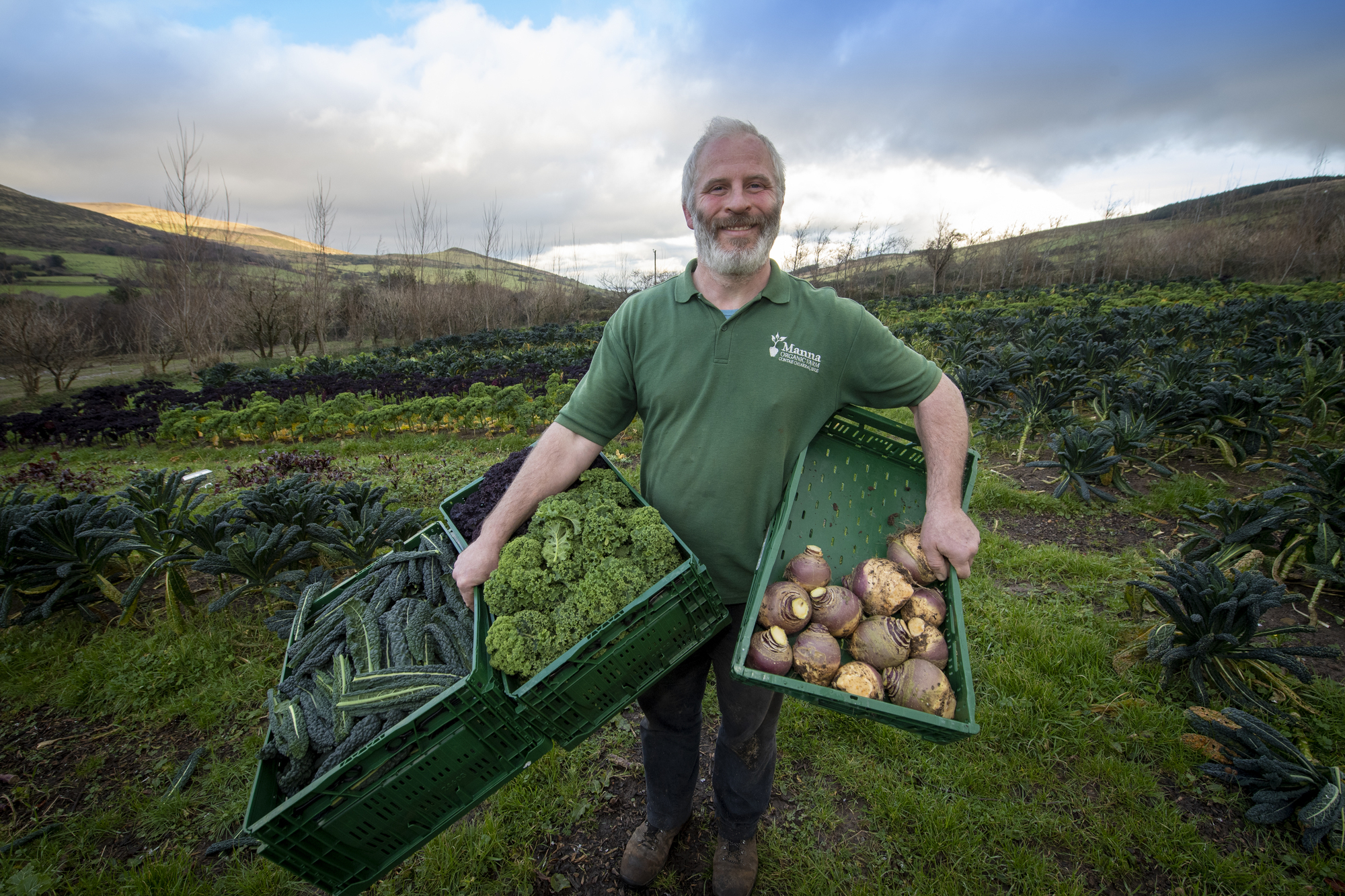
Thomas O'Connor of Manna Organic Farm in Camp, Co Kerry with his winter produce. Picture: Domnick Walsh
It might be known as the most wonderful time of year, but it is most certainly the busiest time of year for many farmers and agri-food suppliers.
Ireland’s farmers commit the hours and labour 365 days a year to ensure the components of our meals are ready and available on the shop shelves, and Christmas Day is no different.
Irish food producers are urging people this year to consider the positive impact that supporting locally-produced food has on the rural economy, along with the environment.
With the value of fruit and vegetable imports to Ireland from January to October of this year worth €1 billion according to the latest figures from the Central Statistics Office, Dermot Callaghan, head of the Horticulture Development Department at Teagasc said that technically, we can domestically grow a larger proportion of the fresh produce we consume.
Despite Irish producers providing local, fresh and top-quality produce to the retail market, consumers need to be mindful that the availability of cheaper imports from lower-cost economies means that supermarkets "are happy to source product abroad and keep Irish product prices subdued".
“Irish fresh produce benefits from being fresher, by days in many cases; it has lower carbon footprint in terms of transport; and it has the added benefit of supporting the local economy in Ireland," Mr Callaghan told the Irish Examiner.
He said that recent experiences - such as Brexit or Covid-19 - have shown us that supply chains “are not so linear”.
“When you’re importing a lot of product, there are complexities in the supply chain which can lead to risk in the supply of food. The UK has had particular problems but we too have been affected,” Mr Callaghan continued.
“To mitigate supply chain risks, bringing more production closer to consumption makes sense and would act to underpin our supply of this highly valuable produce.
“When consumers clearly link the environmental benefits of choosing local fresh produce, and really value the inherent health attributes of fresh local produce, they will want more of it.”
He added that demand for fresh Irish produce “has never been higher, but price has never been lower, relative to cost of production”.
Talamh Beo, a member-led organisation of farmers, growers and land-based workers, is calling for a system that ensures everyone in Ireland has access to high quality and locally-produced food, with farmers earning a fair living from providing food for their communities.
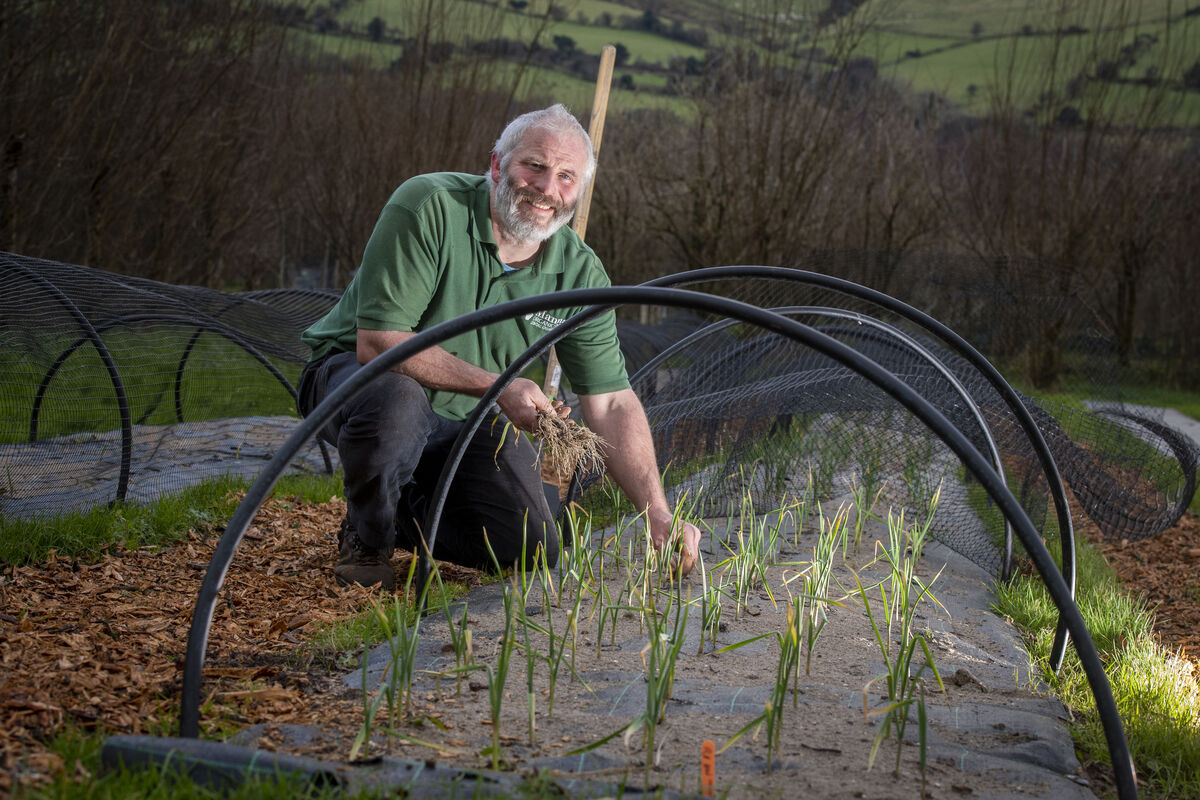
Thomas O’Connor, who helped to put together Talamh Beo’s Local Food Policy Framework this year, told the Irish Examiner that environmentally, local food is a “no-brainer”.
“We need new policy because the true price of food isn’t reflected at the counter for the customer,” he said.
“In supporting local food, you’re supporting local livelihoods.
“There is a cheap food policy and we need to support the farmers who are supporting local food.”
Thomas and his wife Claire have a 25-acre organic farm in Gleann na nGealt, Camp, Co Kerry. Neither of them were farmers before 2007.
“I used to spend three months a year on my grandfather’s farm growing up - he had 14-15 acres and a couple of cows and he grew his own veg. It was the way farming used to be,” Mr O’Connor said.
“You had farmers like that around the country - self-sufficient. They sold milk to the creamery, for example, but the vast majority of what they produced they used to feed themselves with.
“I got that bit of experience with nature but I had no idea of ever getting into farming.”
Food has always been very important to the couple, and even more so following a stint of travelling.
"In other countries in Europe, the experience of local food is way different to here. In any town, any market, there is so much fresh produce available," Mr O'Connor said.
When the couple returned to Ireland, they pursued studies in the Organic College in Co Limerick. This was soon followed by Thomas selling the pub he ran and the couple then bought their 25-acre farm.
"One of the reasons I wanted to become a farmer is because I'm a Kerryman - and I realised that your body is based off of what you consume and to be a proper Kerryman, I needed to be eating from the ground in Kerry!" Mr O'Connor said.
"If we want to be connected to the space we’re living in, well then we need to be eating the food that’s coming from it."
On the organic farm at the moment, there is kale, turnips and beetroot, along with two small tunnels where they grow lettuce and scallions, and during the summer some tomatoes and cucumbers.
They supply a portion of their produce to their Tralee-based shop - Manna Organic Store.
The rest of the produce sold there, from fresh chickens to skincare, is supplied by other local and organic producers.
"Consumer demand for organic is growing every single year," Mrs O'Connor said.
"In 2020, with the horrible year that was had, a lot of people couldn't go out to eat, a lot of people changed their lifestyle. A lot of people were that bit more cautious too of going into the larger supermarkets so our business really saw an increase."
Mr O'Connor is passionate about the fact that being a farmer, especially organic, is "hard work - but it's not a burden, it's a privilege".
"The problem is because people are economically stretched, it’s really hard for farming to be just a privilege," he added.
On the 25-acre farm, the couple has 13 acres of native woodland planted, and four acres of permaculture field, full of native Irish apple trees.
"On our farm, a thing that's a waste product from one of our systems is actually a feed point into one of our next systems; so you keep an awful lot of your nutrients on the farm and things are just rotating," Mr O'Connor continued.
"The resilience of mixed farms is amazing."
Mrs O'Connor urges people to shop local this Christmas, and to read the labels on food items.
"If you're buying something from your local shop, you're helping put kids through college. It's money going into your community. They're your friends, your family. By buying from your local farmer, you're helping those people stay in your community."
Mr O'Connor added that consumers should shop for their future - "shop for their children", and consider the fragility and lack of resilience of long supply chains.
"Look at what you're buying now, and don't buy it just because it's a few cents cheaper. Think about the producer, think about the fact they might be there next year to feed you again when you're hungry," he said.
"Unless you support your farmers and your local food producers, then you're totally dependant on stuff coming in from abroad.
"Your local farmer is for life."
Meanwhile, just outside Mallow, Co Cork, Ned English and his family - wife Mary, and children Edward and Niamh - along with the team at Castlecor Potatoes have been working day and night to supply some key Christmas dinner ingredients.
Mr English estimates that the business will pack close to 1,000 tonnes of potatoes and onions in the run-up to Christmas. The business has come a long way from its humble roots.
Having qualified with an agriculture-related degree in the late 1960s, Mr English had "all the ideas in the world of working in the advisory service".
In the years that followed, however, he went teaching and ended up inheriting a family farm in Kilbrin.
"I wanted to have a dairy herd in Kilbrin. But the cattle went against us, we lost a fortune and there was only one way to get it back in my mind, and that was to go into tillage. So that started me into the crops - that was about 1976."
He decided to then start growing onions for about three years.
"We did well, we did badly, and we got out without making inroads; so we stopped growing them," Mr English explained.
"Then I said we’d start to grow potatoes. For the three years before that, while I was growing onions, potatoes had been about £360 a tonne.
"And the first year I grew potatoes, the price fell to £15 a tonne. We persevered and believe it or not, we broke even on potatoes at £15 a tonne.
"We worked away from there and gradually expanded our acreage and our facilities. The first year I grew potatoes, I only grew 13 acres; we now are growing close to 500 acres."
Mr English and his team are now a major supplier for Lidl, a business relationship that has been built up over approximately 15 years.
The potatoes are planted somewhere around the month of March, Mr English explained.
They're harvested around the third week of September onwards, and they go into onsite cold storage to stop them from sprouting.
"We will be selling this year's potatoes right up to the middle of August [2022]," he said.
"In between that, there will come other early potatoes like British Queens and other varieties which will be sold as specialties side by side with the main crop varieties, which are sold right through the year.
"For example, Roosters and Golden Wonders are main crop varieties.
"Potatoes like British Queens will be ready from late June onwards, maybe July.
"It's a constant battle with the weather of course, but that's outside of your control."
In addition to the potatoes, around four years ago, the business decided to try onions again. It now produces around 3,500 tonnes of onions a year, Mr English estimates.
He is most passionate about the effect that local food production has on the rural economy in Munster.
"We've created in the region of 50 jobs, both directly in the onsite pack house and in the farming end of it, and every year, we put a million's quid worth into the local economy - that's really what we're proudest about," he said.
"I'm very big on the fact that rural Ireland needs the population, but it needs a population that can get work, be paid properly, and can live and work in their own area in something they enjoy doing.
"We have a very small turnover of staff, I have people working for me who have been working with me for the last 30 years."
Mr English said the Irish consumer is a "tough cookie" and while generally, he thinks they will support Irish and local, his concerns still remain that "they won't support if it's dearer than what they can buy from somewhere else".
"We work on a policy of an uncomfortable margin, and I would be very strong on that," he explained.
"We don't work on the policy of a comfortable margin, because if you're working on a comfortable margin, then that means there is plenty leeway for people to come in and undercut you.
"It also means that you're not giving the best price to your customer. That also means they can't similarly give the best price to their customers.
"There's a chain of logic to the whole thing and when you're working on that basis, you don't have a problem with your business model."
He reckons that "Irishness" will get you to the door - "but you've got to be competitive".
He said that there will always be a certain amount of people who will buy and use fresh produce, but that "we've got to promote these things in order to keep fresh on the table".
And very importantly: how will Mr English eat his potatoes as part of his Christmas dinner?
“Boiled, and roasted - with butter,” he said.
Back in Co Kerry on Ballygarron Farm based in the Spa, Tralee, the harvest of another festive favourite was in full swing this week.
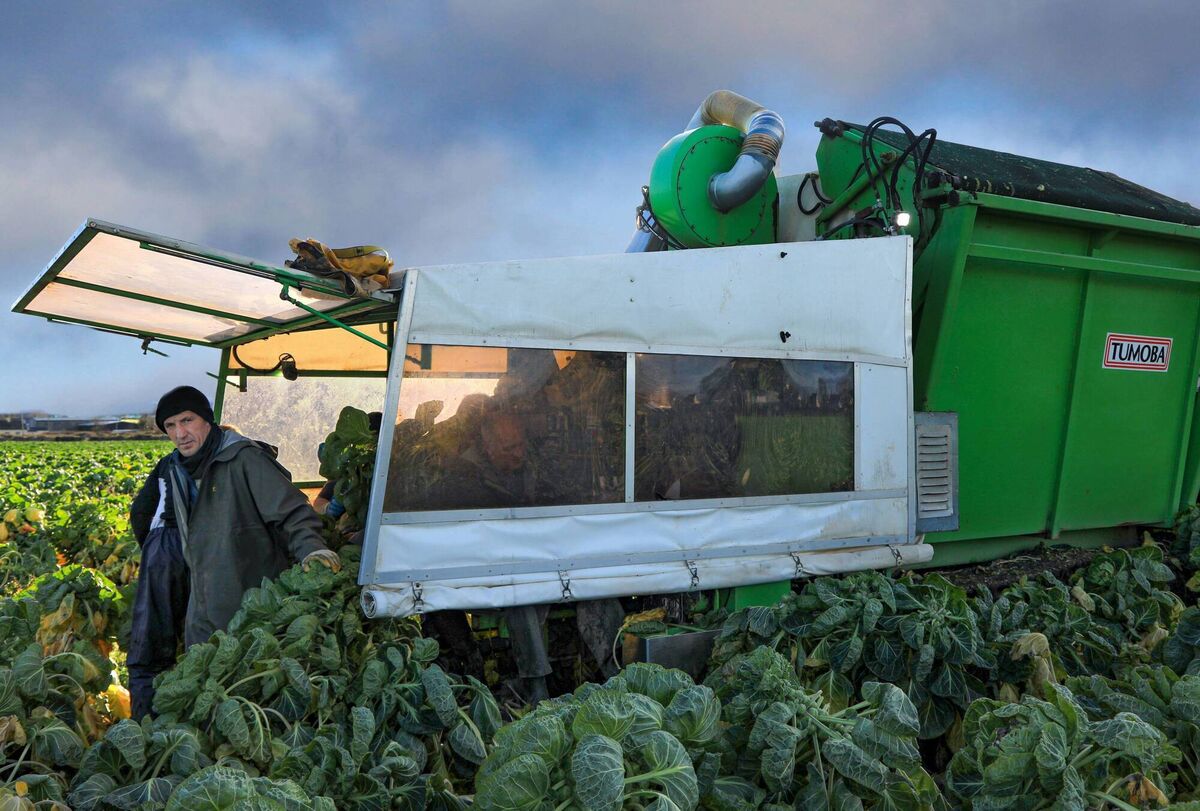
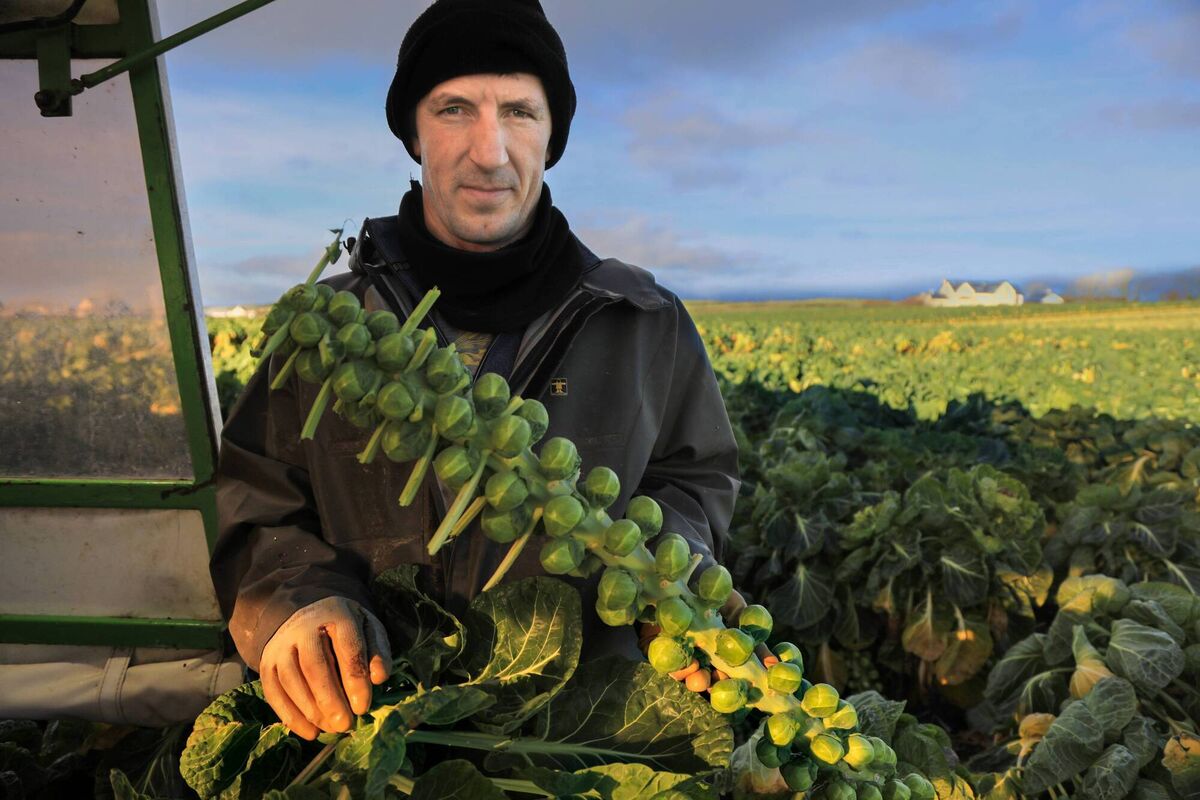
In the run-up to Christmas, the Hanafins and their team are packing Brussels sprouts to supply approximately between 135 to 145 tonnes, around 95 tonnes of which will be supplied to Musgrave Group.
According to Bord Bia, the main business of fresh vegetable production revolves around large-scale grading and packing of vegetables for supermarkets and foodservice channels.
Valued at €477 million (farm gate value), horticulture is the fourth largest sector after dairy, beef and pigs in terms of gross agricultural commodity output value.
The Teagasc Horticulture Development Department has expressed concern that in recent months, growers have seen "unparalleled increases" in costs of key inputs to the horticulture sector.
Dermot Callaghan said that given growers' costs have increased substantially, producers are "potentially facing significant decreases in margins".
Paudie Hanafin of Ballygarron Farm and his team have been working around the clock to ensure they meet their supply requirements of sprouts, cauliflower, and other vegetables for the Christmas period.
In light of this, Mr Hanafin, who is the third generation to work on the family farm, is calling for an increase in the prices that growers receive.
"I love what I do and it's all I've ever done," he said.
"But we're harvesting 24 hours a day. My father was getting more 40 years ago for cabbage than we are getting today.
"My sprouts go from being harvested to being in the shops all within 24 hours. Veg growers have to find their own market, package it, best-before date it, transport it and collect the money then for it.
"It's a no-brainer to buy Irish but in fairness, our veg has to be worth a lot more than it is in the shops."