'Underlying vulnerability' of farm incomes highlighted in Teagasc National Farm Survey

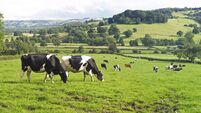
Despite the challenges of 2020, farm output prices held firm overall. Picture: iStock.
“The overall increase in farm incomes is positive but does not take from the ongoing vulnerability of the majority of Irish farmers.”
This is according to the Irish Farmers Association (IFA) which was responding to the Teagasc National Farm Survey published on Monday.
It revealed an increase in average farm income from €23,600 in 2019 to €25,663 in 2020 - a rise of 9% - and highlighted how, in spite of the Covid-19 pandemic, incomes across the various farm systems in Ireland either held, or improved in 2020.
The survey said that in the spring of 2020 there was some significant, but ultimately short-term, disruption to the beef supply chain which saw Irish finished cattle prices decline sharply.
As a result, it added, supplementary support was provided by the national exchequer under the Covid-19 State Aid Temporary Framework to beef farmers who delivered cattle for slaughter between February 1 and June 12 2020.
“In spite of these challenges, farm output prices held firm overall in 2020 and a feared fall in farm incomes did not materialise, although some farm systems fared better than others,” a spokesperson said.
“Weather conditions in Ireland were generally favourable for grass production in 2020, but difficult planting conditions had a negative impact on Irish cereal crop production, leading to a decline in yields.”
IFA president, Tim Cullinan, meanwhile, pointed to the sectoral level of income, and added, “average farm incomes remained static or decreased for many sectors in 2020”.
“Tillage incomes fell by 1%, while cattle rearing remained unchanged,” he continued.
“Sheep income grew by 24%, cattle other grew by 8%, and dairy experienced growth of 13%.
“It’s important to remember that the average income of suckler farmers, for instance, remains at just over €9,000 while average annual earnings per employee across the entire economy is closer to €40,000, according to the Central Statistics Office (CSO).”
“Only 34% of the sample farms in the survey remain economically viable - 33% are sustainable, and the final 33% are financially vulnerable.
“52% of farms are relying on off-farm employment as an income stream, and the reality is, without this income, there would be no farming taking place on most of those farms.
“Direct payments account for 157%, 115%, 103% and 79% of average farm incomes in the cattle rearing, cattle other, sheep and tillage systems, respectively.
“This emphasises the importance of the ongoing CAP discussions for all of the sectors.
"The sheep system also benefited from lower production costs in 2020 and also experienced a strong increase in the value of farm output, which was driven by higher lamb prices.
In common with other drystock systems, on average the level of direct payments for sheep farm was down slightly.
The Survey highlighted how the average income on sheep farms increased by 24% to €18,383 while the average income on tillage farms fell by 1% to €32,525.