Opportunity for organic growers as demand for breakfast cereal increases
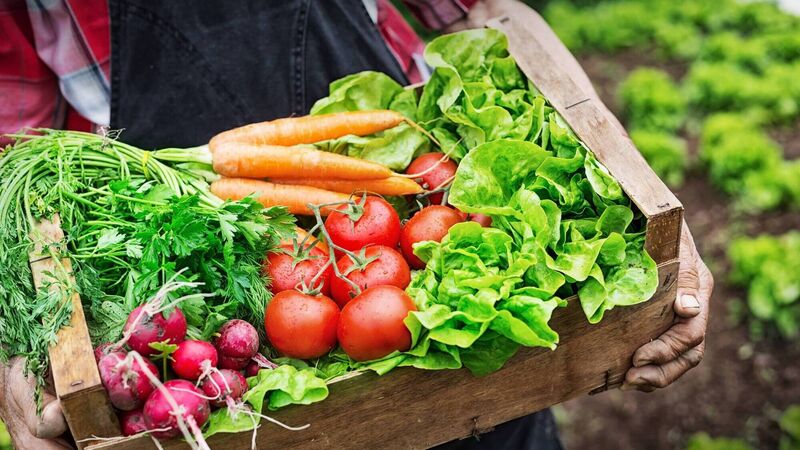
There is a growing demand in Ireland for organic produce, according to Bord Bia. Picture: iStock.
Irish organic oats only meets 50% of existing breakfast cereal demand, according to Bord Bia.
The food board says this is one of the challenges ahead, as the government moves to increase the land area dedicated to organic farming to 7.5% by 2030.
In the case of oats, and some other products, raw material availability challenges efforts to create a consistent market for Irish organic produce, because it leads to reliance on imported raw materials and products, to meet demand levels.
The fragmented supply base for a number of product categories is another challenge, for example in sheepmeat, with about three out of four organically produced lambs being lost to the conventionally produced sheepmeat sector.
Bord Bia attributes this to the distance of many producers from organic approved processing facilities, the smaller flock sizes, and many being store lamb producers.
Bord Bia has worked with the organic bodies on these challenges, including a survey of producers, with results expected shortly.
Also, seasonal output is challenging for the organic sector, because most retail customers want products that can be supplied as close to all-year-round as possible.
Bord Bia says labour availability is another challenge for growers trying to expand output to meet consumer demand.
However, there are also opportunities, with organic well positioned to meet consumer needs for sustainable food solutions such as healthier, natural, better-for-you, and better-for-the-planet.
There is also demand within the organic sector for plant-based food ingredients such as vegetables, fruit, and herbs.
Overall, with a prevalence of imports for about seven out of 10 organic fresh product lines on the Irish market ( in particular, cereals), there are potential opportunities for Irish alternatives, if they can be competitively produced.
Retail sales of organic food in Ireland jumped to €189 million in 2020, after year-on-year growth of 16.2%.
This outpaced the growth in total grocery by 6%. Seafood was the only category that fell back, attributed to the Covid-19 pandemic.
Two of the largest export retail markets in Europe are the UK, valued in 2020 at respectively £1.2 billion and €12bn.
Bord Bia Meat, Food and Beverages Director Padraig Brennan recently told the Oireachtas Committee on Agriculture the food board is reviewing how it can best support the sector.
All organic producers can avail of existing Bord Bia supports and activities for Irish food, drink and horticulture producers and companies. Bord Bia also delivers tailored initiatives to support the organic sector, and is currently working with 15 organic companies to identify opportunities in Germany.
In 2019 and 2020, Bord Bia supported the launch of organic Quality Assured Irish Angus Beef in the Dutch supermarket chain, Vomar.
Bord Bia has also worked with a lamb supplier and a major retailer in Ireland to promote organic lamb, and is exploring potential market opportunities for organic and hill lamb in key export markets.
Organic seafood promotion continues, focused on key export markets.
An organic horticulture grower market tour to Germany is planned for later this year.
Bord Bia has been utilising social media to reach target consumers in Ireland.
Later this year, Bord Bia will roll out an organic school gardening DVD and worksheets for primary school teachers.
Bord Bia remains committed to providing regular market data to industry stakeholders.
Four demo farm sites are being used to help vegetable producers raise young organic plants and grow the scale of their operations.