Renewed effort to protect the environment and its rich natural heritage
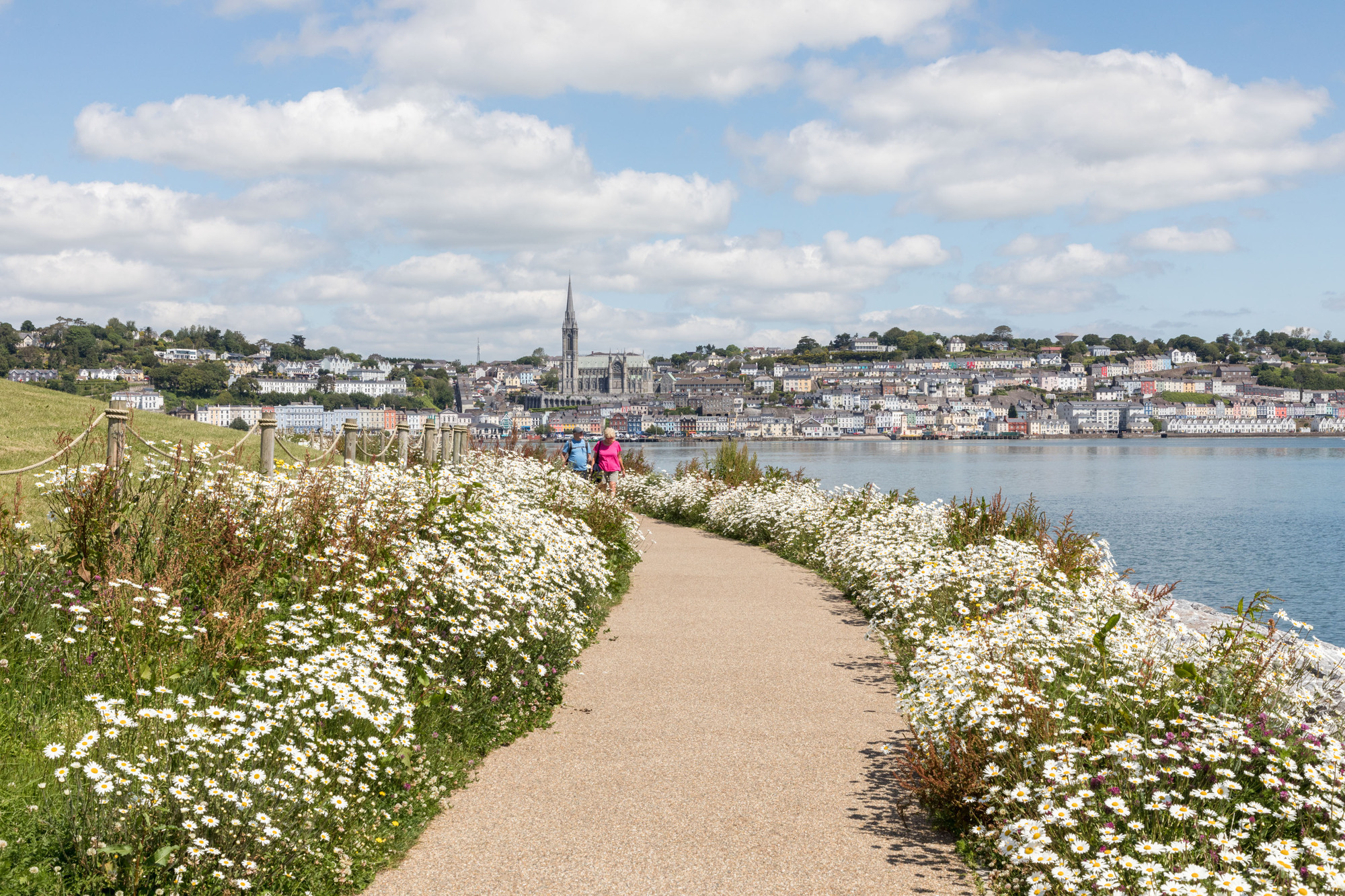
Wild daisies bloom at the new public park in Haulbowline, Co Cork. Picture: David Creedon/Anzenberger.
Town and country are being linked in a national effort to promote biodiversity against a backdrop of growing threats to nature.
Minister of State Malcolm Noonan recently announced that the State’s 31 local authorities have received €1.35m in funding under the National Biodiversity Local Authority Grant Scheme to promote the effort.
Farmers, the traditional custodians of the countryside, and society in general, are being asked to do even more to protect the environment.
Local authorities are urging groups to implement pollinator-friendly actions in their towns and villages as part of Tidy Towns.
And a prize fund of €10,000, sponsored by their biodiversity offices in partnership with the National Biodiversity Data Centre, is on offer in a competition.
All the efforts are geared towards protecting Ireland’s environment, and its rich natural heritage, which is home to 815 flowering plants, 80 native ferns, more than 700 mosses and liverworts, 3,500 fungi, over 1,000 lichens and 1,400 algae.
It also includes 32 terrestrial mammals, 10 bat species, two species of seals and about 24 whales and dolphins. About 425 species of birds have been recorded in the country. Half of them breed here.
BirdWatch Ireland and the Royal Society for the Protection of Birds in Northern Ireland, warned in a recent report that one-third of our native bee species are now threatened with extinction.
Pollinators need adequate supplies of food, provided by a range of flowering plants, nesting places in long grass, burrows in the ground and crevices in old walls or wood.
But, as landscapes become more intensively managed and tidied up, there is less food and fewer sheltering opportunities for many species.
Intensive agricultural and forestry practices, overfishing, invasive species, changes in land use, water pollution and the over-exploitation of resources such as peatland are seen as the main causes of biodiversity loss in Ireland.
Padraig Fogarty, Irish Wildlife Trust, told the Oireachtas Climate Action Committee in May that farmland has been utterly transformed in recent decades.
Most fields are practically devoid of life while even the ancient system of hedgerows is vanishing due to neglect and outright destruction.
“Our waterways are mostly polluted by farm run-off and under-treated human sewage. In fact, we continue to pour completely untreated sewage into our surroundings from 35 towns and villages in Ireland.
At sea, Ireland has a lamentable reputation for overfishing marine life while we continue to lose biodiversity in the mere 2% of our seas that currently fall within protected areas,” he said.
Mr Fogarty said Ireland should sign up to protect 30% of its land by 2030 and to strictly protect 10% of it, which is another goal that must be done differently.
“We have to use public land to achieve many of these aims. We have to incentivise local communities to create their own nature reserves.
“We have to recognise that a lot of farmers feel dispossessed by the current system, and we have to try to rebuild trust with those farming communities,” he said.
Irish Farmers Association Environment and Rural Affairs chairman Paul O’Brien recently claimed farmers do not get enough recognition for their role in protecting the quality of nature found in the countryside.
“Irish farmland is filled with a broad range of habitats from hedgerows, field margins, ponds, streams, native woodland, bogs and species-rich meadows and pastures. There are habitats in every farm corner that contribute to biodiversity,” he said.
Mr O’Brien said Ireland has the third-largest total hedgerow area in the European Union.
Along with individual trees and non-forest woodland and scrub, the cover is an estimated 450,000 hectares.
Hedgerows provide habitats for wildlife and play a role in carbon sequestration, potentially storing an estimated 70 tonnes of carbon per hectare.
Mr O’Brien said appropriately designed wildlife measures could play an important role in halting the decline of biodiversity and achieving the goals of sustainable expansion.
The Signpost Programme, a Teagasc-led partnership of almost 40 companies and organisations from the agri-food sector, along with 100 farmers, was recently launched to meet the challenge of climate change.
Taoiseach Micheál Martin said the agriculture sector has a crucial role to play in meeting the challenge of climate change, while creating resilient farms for generations to come.
Minister of State Martin Heydon said all sectors of the economy, including agriculture have a role to play on the journey to carbon neutrality by 2050.
Teagasc Director, Professor Gerry Boyle said the programme was a significant milestone for Irish agriculture.
With all parties working together, it can guide Irish agriculture through the changes over the next decade and support farmers as they adapt their farming practices.
IFA President Tim Cullinan said farmers and rural Ireland understand the need for climate action. With the right support and measures, farmers will step up and respond.
Cork County Council, having developed a successful pollinator plan for Midleton, has started the roll-out of similar projects for Carrigaline, Kinsale, Bantry, Macroom, Kanturk and Fermoy.
Tim Lucey, chief executive, said the Council, with partners from Tidy Towns and other community groups, will manage public spaces in these towns to provide more food and better sheltering opportunities for wild pollinator species.
“We look forward to expanding the project even further, with plans to include additional county towns and villages in the near future and to provide training to our staff and support to interested community groups,” he said.
The plans were prepared in accordance with All-Ireland Pollinator Plan guidelines and the project has been funded through the National Biodiversity Action Plan fund with co-funding provided by the Council.
Meanwhile, 23 white-tailed eagle chicks, flown from Norway to Kerry last month, as part of a long-term wildlife project, are now being monitored by the National Parks and Wildlife Service.
They will be released into the wild next month at four Munster sites in Killarney National Park, along the River Shannon, the lower Shannon estuary, and in Waterford.