McConalogue says UK free trade deal with Australia is a matter of concern for Irish beef producers
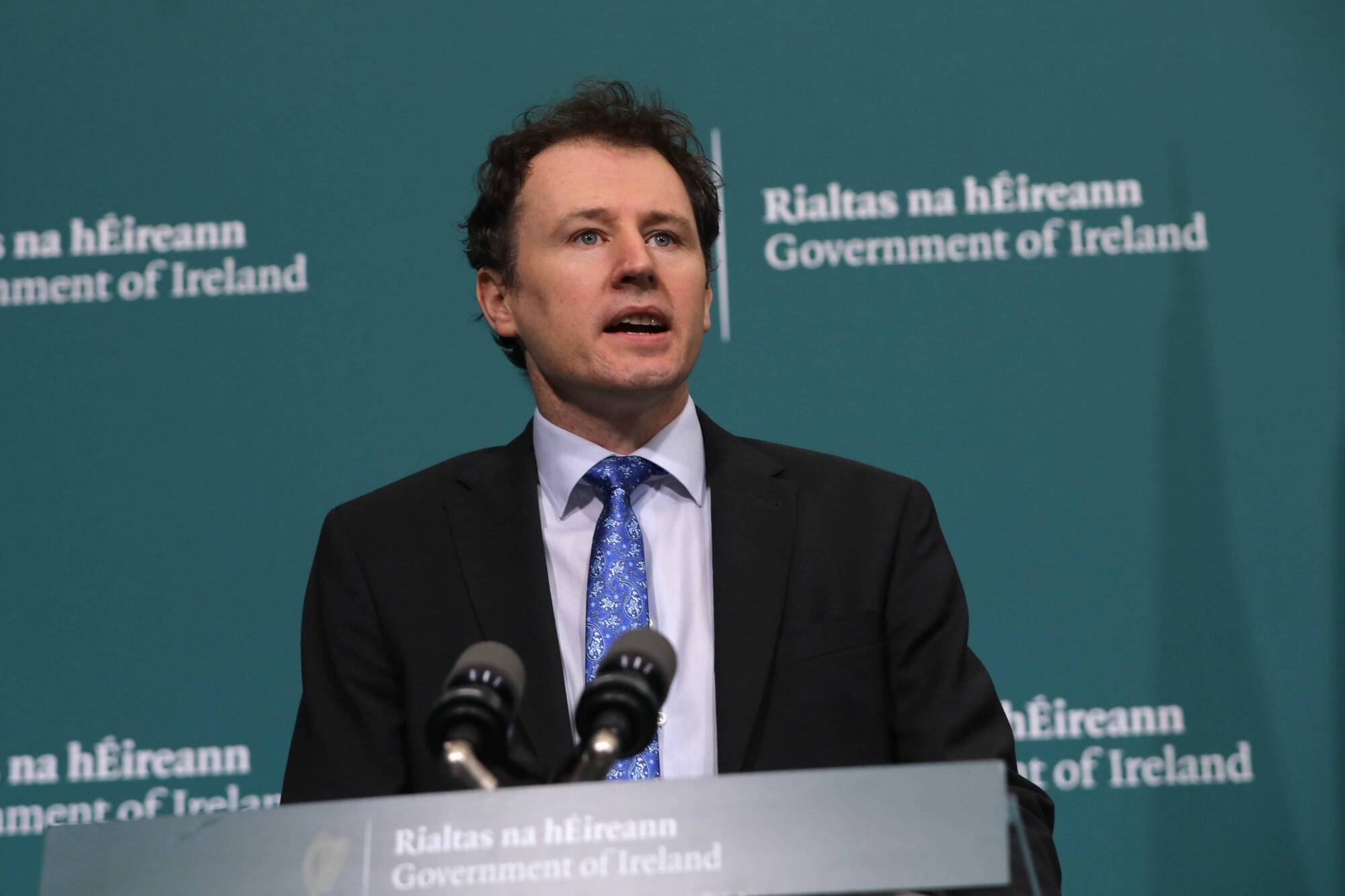
Minister for Agriculture, Charlie McConalogue, says there are concerns around the new UK/Australia Free Trade Deal while IFA says it threatens the entire Irish/UK beef market. Picture: Chris Bellew/Fennell Photography.
Minister for Agriculture, Charlie McConalogue has said increased competition from Australia as a result of the new Deal with the UK is something he is concerned about while the Irish Farmers’ Association (IFA) regards it as a “dangerous scenario” that will undermine Irish beef exports to the UK.
The Irish Creamery Milk Suppliers Association (ICMSA) said the most immediate challenge posed to the domestic agriculture industry would most likely come from Australian lamb but warned that New Zealand dairy exporters would have Ireland’s UK customers in their sights too.
In a statement to the Irish Examiner, the Minister said that Irish beef worth over €2.3bn and just short of 518,000 tonnes was exported in 2020 and the UK, with 45% in both volume and value, was by far the biggest export market.
"The proposed Australian Tariff Rate Quota (TRQ), of 35,000 tonnes increasing to 110,000 tonnes in year 10, does present opportunities for increased competition for Irish beef exports on UK market," he continued.
"Given the importance of the UK market to the sector, this is a matter of concern."
The Minister went on to say there was potential for market disruption to trade patterns by Brexit and his department has been focused on market diversification as a result.
"In the period since 2017 new or improved market access to several third countries has been gained," he continued.
"Despite the welcome development of additional markets, it is likely that the UK will remain a key market for Irish beef.
"Bord Bia research has shown that British consumers have high regard for Irish beef, and Bord Bia is continuing its intensive marketing in the UK.
"The Department of Agriculture, Food and the Marine has submitted an application for a PGI for grass-fed Irish beef to the Commission.
"If approved, this could help significantly in all our premium beef markets – including in the UK."
The deal, meanwhile, centres almost entirely on goods and eliminates tariffs on exports to both countries over 15 years.
- British farmers will be protected by a cap on tariff-free imports for 15 years using tariff rate quotas and other safeguards;
- The UK Government has insisted that hormone-fed beef will not be allowed into domestic supermarkets as a result of the deal but the National Farmers’ Union (NFU), however, is concerned there was no mention of safeguards for animal welfare when a press release was issued on Tuesday;
- There are also animal welfare practices allowed in Australia but banned in the UK that have raised concerns;
- And, antibiotics are permitted for use as a growth promoter in Australia but banned in the UK since 2006.
IFA President Tim Cullinan said the proposed trade deal sets a “perilous precedent” and is very concerning for Irish beef farmers.
“The threat to our markets is the biggest fallout and this is precisely the dangerous scenario that we have signaled following the Brexit vote in June 2016,” he added.
“Trade deals between the UK and third countries have the potential to undermine what is a very important market for our beef exports.” IFA and NFU are expected to hold a bilateral meeting on the implications of the deal today (Thursday, June 17).
ICMSA President Pat McCormack, meanwhile, focused on what he described as the Irish Government's “preoccupation” with agri-related emissions which were going to be put into perspective by the new deal.
“There is the prospect now of consignments of beef, lamb and dairy products being shipped literally from the other side of the planet to Britain with all the massive transportation-related emissions involved in that,” he added.
“The idea that it makes more environmental and economic sense to ship beef, lamb, or dairy from Australia to Britain than it does to produce and sell it from Ireland just shows how bizarre and illogical the whole debate has become.
“There has to be some overarching logic and plan to this or we have to accept that Ireland’s policy - sadly typified by the Climate Action Bill - will actually do nothing but severely damage our own farming and food production sectors with no gain whatsoever towards global emissions reduction.
“ICMSA has been repeating this for years: there’s no point in Ireland reducing its carbon-efficient farming and food production if we are replaced in our markets by competitors with less carbon-efficient farming.
“That’s not even neutral; the situation is actually made worse.”