'Young bulls need to gain substantially every day' 
There are mixed messages about the right way to finish bulls 
'Young bulls need to gain substantially every day' 

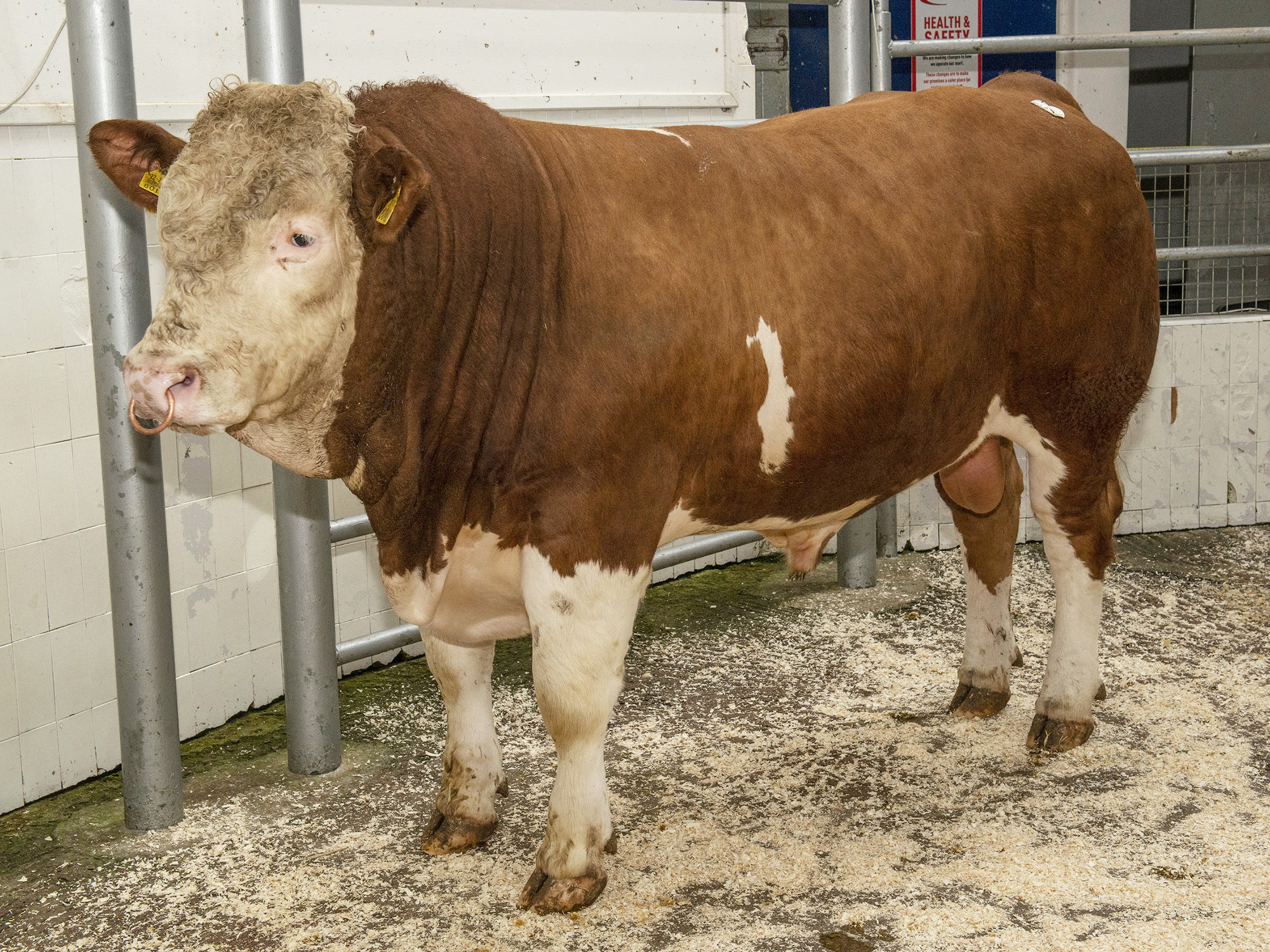
In the Simmental section at last week’s premier pedigree bull sale in Bandon Mart, Pinetree Leroy, owned by John Martin Foley, Farnanes, Co Cork, sold for €2,000. Picture: O’Gorman Photography

Many dairy bred bulls are on heavy finishing diets at present, with the aim of slaughter under 16 months.

There are many mixed messages out there regarding the right way to finish these bulls.

If you want these cattle to finish at target weight, target age, and target grade, then they must gain substantial weight every day of their lives.

Setbacks in thrive should be avoided at all costs.

You must take maximum advantage of the hormonal effect in young bulls, to optimise profit through optimum feed efficiency.

It’s also worth remembering that bull calves born this spring are just commencing their journey for a 2022 finish, and growing them well over the next 10-11 months must be well managed.

Much of the following advice applies to continental breed bulls also.

Indoor feeding

Feeding bulls meal at grass is a sport best avoided, in reality.

For many, the best option will in fact be to keep them inside all the way to finish.

Young bulls for slaughter under 16 months have no business grazing in the final finishing period, if you want to achieve the target performance, weight and grade.

Finishing decisions

n Are they grown well enough to start finishing?

Grow bulls properly before increasing energy and dropping protein in the diet.

n What is your target market (weight, age, grade)?

n What feeds are available to you and what will they cost? Some ingredients represent bad value this spring relative to others.

Native cereals are much better value than any imports right now.

n What is the quality of the forage available?

Most Irish grass silages are not appropriate for high performing young bulls to be finished efficiently.

Carcase grade

Increasing the daily weight gain in the final months of finish has been well proven to increase the conformation of the animal, and the lean meat yield of the carcase.

Optimising performance and margin per head

A young dairy bred bull finishing period should be 100 to 120 days.

Less than that and you will not achieve acceptable fat covers. When deciding on a diet to achieve target weights in bulls, ensure the total diet has a high-energy density and sufficient but not excessive protein per kg of dry matter.

Ensure that the ration contains sufficient fibre to maintain rumen function and that there is clean fresh feed in front of the bulls for 22 to 23 hours per day.

Ideally, fresh feed should be provided every day to encourage intakes.

Good quality forage has a role

The forage used to finish bulls needs to be top quality.

Low quality forages have no role in getting the final cover on bulls.

Good quality forage can play a major role in reducing overall finishing costs, and can also provide an essential source of structural fibre.

Good quality maize silage, wholecrop cereals, beet or moist feeds are excellent forage energy sources for bulls, in conjunction with a balanced concentrate.

Ad-lib feeding

Ad-lib feeding of meal may be the best option for bull finishers, if only poor to average silages are available.

Ad-lib means the cattle must have access to meal all of the time. They must also have access to good quality clean straw at all times.

Hay is a poor substitute for straw, as it does not promote optimum rumen function, thus depressing intakes and ultimate weight gains in bulls.

Concentrate quality

The best concentrates for finishing bulls need to include high levels of cereals such as native barley, wheat, oats and rye along with maize meal to get final cover.

Digestible fibre sources such as soya hulls and beet pulp are useful to maintain rumen function in these intensively fed animals, however as they are expensive right now, keep their inclusion at a minimal level and consider oats as your fibre source.

Protein, while not required in large amounts for finishing bulls, is required to encourage intakes and balance the energy provided, for optimum weight gain.

Look closely at the UFL or ME value of the concentrate you are considering for your bulls.

A good quality mineral spec is also important.

Avoiding acidosis with intensive feeding

Managing the acidosis risk is very important in intensively fed stock.

For the past few years, many intensive finishers have moved to feeding alkaline-treated cereals which have a high pH and prevent acidosis while improving energy and starch intakes safely.

If this is not an option, then consider inclusion of buffers such as calcified seaweeds and yeast to aid digestive function and health.

Good quality straw will also help with intakes of fibre to keep the rumen in good shape.

Importance of water

A plentiful supply of clean water is a very important part of managing bulls when you step up feeding.

Shed space and feed access

Make sure that your cattle have enough space in the shed to achieve optimum performance.

They must all be able to lie down and get to their feed without having to walk all over their pen mates.

Ensure adequate ventilation.

If on slats, consider mats and/or access to a straw lie- back area.

Bull calves for finishing in 2022

Bull calves born this spring that are to be finished in 2022 need to be pushed on every day to achieve targets.

If they are weaned, they should ideally remain on 2kg of meal per day at grass until housing later this year.

Some will remain indoors on a straw and meal-based diet which can be very effective from a performance point of view, if managed well.

x

More in this section

Farming

Newsletter

Keep up-to-date with all the latest developments in Farming with our weekly newsletter.

Cookie Policy Privacy Policy Brand Safety FAQ Help Contact Us Terms and Conditions

© Examiner Echo Group Limited