The farm transfer dilemma: Through your will or while you are still alive
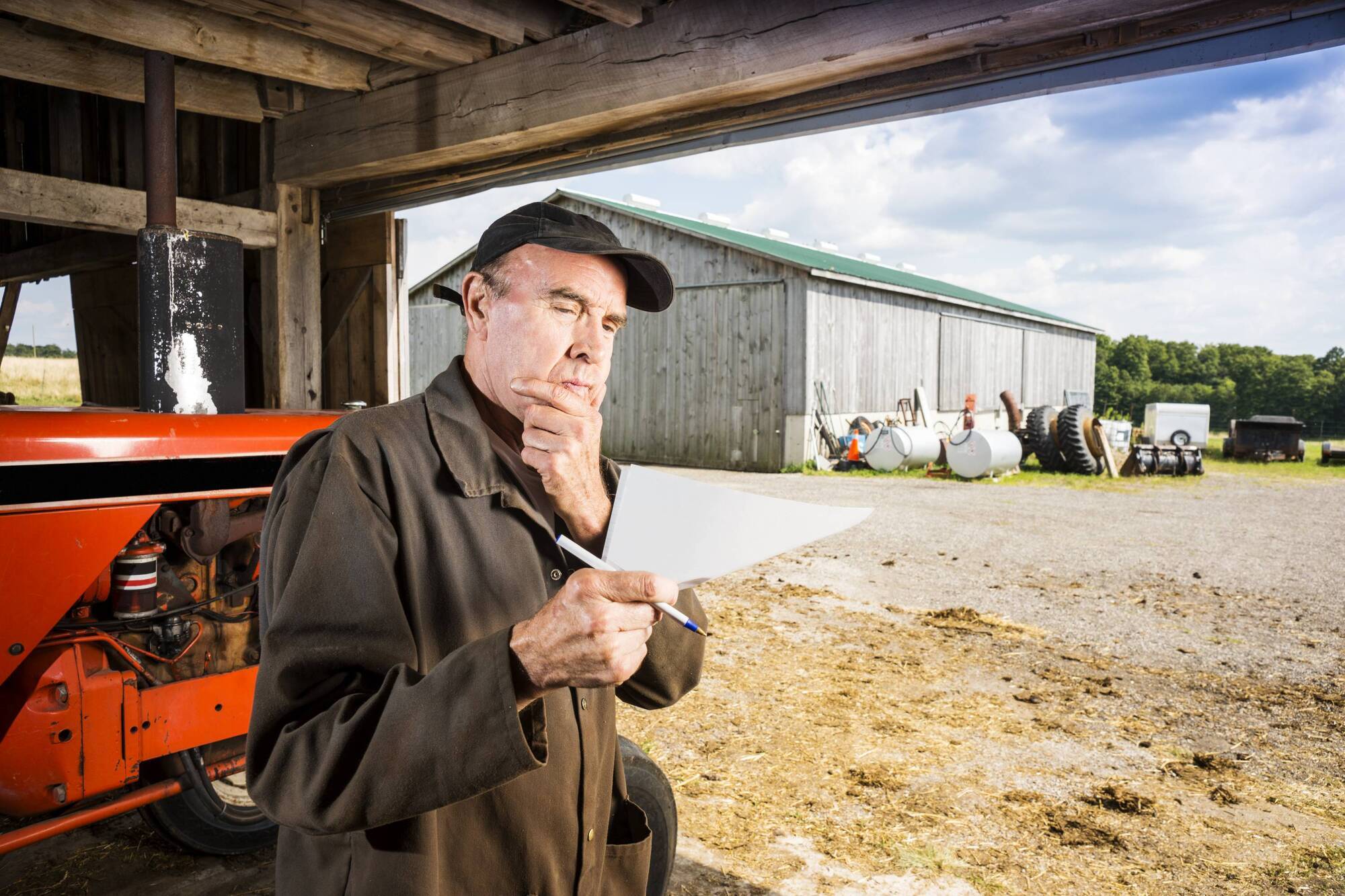
Discussing your intentions allows others to give feedback which you can take on board in arriving at your decision
The farm transfer dilemma: Through your will or while you are still alive

Deciding on farm transfer options, and deciphering the personal and financial implications of each, including tax pitfalls for the unwary, can be like a game of snakes of ladders. It is particularly important that farmers do early tax planning well before a proposed transfer.


Transferring the farm to the next generation is a once-in-a-lifetime, monumental decision.

When is the right time?

Ultimately, the choice is either to hold onto the farm until you die, and pass it on through your will or to transfer it when you are alive.

Transferring it after your passing is a default option but not necessarily the best one.

Transferring the farm while you are alive has some advantages.

Anecdotal evidence points to an earlier lifetime transfer resulting in a more successful transition of the business.

Young farmers not endowed with a farm might lose some of their exuberance if the farm is transferred much later in life.

Would you like to see the farm business transition successfully to the next generation?

Giving over a farm while alive might mean that you can act in a supportive role while your successor gets to grips with their newfound responsibility.

Transferring early is more likely to protect the assets of the farm being exposed to the Fair Deal scheme, should the transferor or their spouse need nursing care.

A lifetime transfer might prevent a disputed will, or a falling out of siblings who may have had different
expectations from your will.

Discussing your intentions allows others to give feedback which you can take on board in arriving at your decision, and equally will allow you to explain your reasoning and position.

There are advantages also to holding onto the farm until the end of your days.

Deciding on farm transfer options, and deciphering the personal and financial implications of each, including tax pitfalls for the unwary, can be like a game of snakes of ladders. It is particularly important that farmers do early tax planning well before a proposed transfer.

You retain ultimate financial security for yourself, but also perhaps better protect the integrity of the farm holding in the event of a marital breakdown of a potential successor.

From a tax perspective, retaining ownership until the end of your days takes away two tax hurdles.

Looking closer at the tax side of farm transfer, three major taxes apply, these being capital gains tax,
capital acquisitions tax, and stamp duty.

As mentioned, a transfer of farming assets via your will avoids capital gains tax for you and stamp duty for your successor, leaving only capital acquisitions tax to be dealt with.

Looking at a succession plan solely through the prism of taxes, there is an inherent advantage in delaying a transfer until after your passing, if two taxes are eliminated, leaving only one hurdle to jump, but delaying a farm transfer for the sake of avoiding tax may not be the best outcome for either the business or the successor.

Fortunately, there are reliefs and exemptions to reduce or eliminate capital gains tax and stamp duty, which somewhat level the playing field, albeit that each relief or exemption has its own specific criteria which must be met.

Let's look at the taxes and reliefs in more detail.

Capital gains tax

Capital gains tax applies on profit, being the positive difference between the proceeds from the sale of an asset and the cost of an asset.

Most of us will accept the logic that an investor buying shares in the year 1980 for £30,000 and selling the same shares 40 years later for €400,000 will have a substantial capital gains tax liability (In fact, the approximate capital gains tax liability would be about €85,000).

From a farming perspective, a farmer who bought 30 acres in 1980 for £30,000, and sold the land in 2020 for €400,000 is equally exposed to capital gains tax, however, a number of reliefs may be available to reduce the capital gains tax that would apply on such a sale.

If you transfer your farming assets, for either no consideration or below market value, to your children or certain other relatives, you are equally exposed to capital gains tax. Tax rules require that market value is used as the deemed proceeds in the case of connected party disposals.

It seems counter-intuitive that capital gains tax should apply if you are giving away the assets for nothing when passing on your business, but the rationale behind the legislation is that, as transferor, you had the choice to sell the assets to a third party, therefore transferring to your relatives at a low or nil price should not go untaxed.

Fortunately, a variety of reliefs may be available to mitigate the tax that would otherwise apply where the disposal is deemed to occur at market value. These
reliefs include retirement
relief, revised entrepreneur relief, or farm restructuring relief. The principal relief most commonly availed of in the case of lifetime transfers is retirement relief.

Retirement relief

Farmers may be able to claim relief from capital gains tax (CGT) on the sale or transfer of assets which are usually liable for CGT. Such assets include farmland and EU payment entitlements.

To qualify for the relief a farmer must:

(i) Be over 55 at the time of the transfer;

(ii) Must have owned the asset for the previous 10 years;

(iii) And must have used the farm assets within their farm business for 10 years up to the date of transfer.

In transfers or sales to children, a cap of €3 million applies, if the transfer occurs after the farmer reaches 66 years of age.

In the case of payment entitlements, relief from CGT is dependent on the criteria mentioned above.

However, relief is only available to the extent that payment entitlements are disposed of at the same time as the underlying land.

Excess payment entitlements established and activated on rented ground would not appear to qualify for relief from CGT.

A farmer can avail of a CGT exemption of up to €750,000 from the disposal of farm assets to a third party other than a child or person considered equivalent to a child, where the farmer is over 55 years of age, has owned the assets for the previous 10 years, and has used the farm assets within the farm business for 10 years to the date of sale.

The cap on the tax exemption is reduced to €500,000 for disposals by persons over 66 years of age.

Marginal rates of 50% CGT apply on proceeds over the relevant limits.

Farmers can continue to avail of the relief where the land had been owned and farmed for the relevant time periods (10 years owned and farmed) prior to being leased, and where the disposal is within 25 years from the date leasing began.

However, in the case of land let where the farmer intends on selling or transferring to third parties, the land can only avail of retirement relief where the land has been let by way of a formal lease since December 31, 2016 (or since the date of first letting if later), with each lease being for at least five years.

Given the quantity of criteria that need to be satisfied here, it is hugely important that farmers do early tax planning well before a proposed transfer, in order that their situation is well lined up prior to a transfer.

Awkward situations can exist where the relief is denied, such as land owned by a non-farming spouse, or land which has been let by conacre rather than a formal lease, in the case of a proposed transfer to a non-child.

Failure to meet the criteria can mean that the capital gains tax cost of making a lifetime transfer is simply too high, and would-be transferors will instead opt to transfer assets via their will, albeit such action also carries negative risks.

Favourite niece/nephew relief with retirement relief

Retirement relief is also applicable to transfers to a niece/nephew who has worked full-time (at least 15 hours per week or 24 hours per week in the case of multiple employees) for the five years prior to transfer.

In both instances, the recipient must continue to retain ownership for the six years post-transfer in order to avoid a clawback of the CGT relief obtained.

In the case that the relief applies, the niece or nephew is treated for tax purposes as falling into the same category as a child, meaning an enhanced tax-free threshold of potentially €3m, in the case of a transferor over 66, rather than €500,000 which would otherwise apply.

Stamp duty

The standard rate of stamp duty in the lifetime transfer of commercial property including farmland is now 7.5%. Similar to the capital gains tax rules, the stamp duty rules insist that market values must be used where transfers of property occur between connected parties, even if the assets are being transferred by way of a gift.

Take, for instance, a farmer wishing to gift farmland to their child worth €1m, the child would be exposed to stamp duty of €75,000, but for two reliefs which may otherwise apply, these being consanguinity relief (or blood relative relief), and young trained farmer stamp duty relief.

Consanguinity relief 

In the case of land, a reduced rate of stamp duty of 1% applies on the transfer of property between certain blood relatives including lineal descendants, civil partners, the civil partner of a parent, and adopted children.

In addition, it is a requirement that the transferee or purchaser must either farm the land for at least six years or lease it for at least six years to someone who will farm it.

If the transferee or purchaser is farming the land, you must hold a specified qualification or obtain it within a period of four years from the date you get the land, or spend at least 50% of your time farming.

In the case of land which is let, the tenant must satisfy the aforementioned criteria. This current relief is due to expire on December 31, 2020.

Exemption from stamp duty (young trained farmers)

This exemption from stamp duty is to encourage the transfer of farmland to a new generation of farmers with relevant qualifications.

The transfer may be by way of gift or sale.

The young trained farmer must be under 35 years of age on the date of execution of the deed of transfer, and must also have attained one of the necessary qualifications.

The young trained farmer must also, for a period of five years from the date of transfer, spend at least 50% of his/her normal working time farming the land, and retain ownership of the land throughout the period.

Where land is transferred into joint names, both parties must satisfy the young trained farmer conditions in order for the relief to apply.

Where the land is being transferred jointly to spouses or civil partners, only one of the spouses or civil partners must be a young trained farmer and meet the conditions set out above.

For persons who do not meet the relevant educational standards, Revenue will refund the stamp duty charges if the individual obtains relevant qualifications within four years of the transfer. This relief is set to expire on December 31, 2021.

Capital acquisitions tax

Usually, a child can receive gifts or inheritances of up to €335,000 from their parents throughout their lifetime, aggregated since December 5, 1991.

Given that the average Irish farm (which is around 80 acres) has a value considerably more than this threshold, gift or inheritance tax will apply on the transfer of most farms, unless the beneficiary either qualifies for agricultural relief or business relief.

Successors to agricultural property can claim relief resulting in a 90% reduction in the taxable value of their gift/inheritance, where that successor has at least 80% of their assets in agricultural property at the valuation date. Successors must retain ownership for a period of six years post-transfer.

The 2014 Finance Act insists that, with effect from January 1, 2015, successors must either be:

n (i) A trained farmer who farms the land for a six-year period post transfer on a commercial basis with a view to realising profits;

n (ii) Or, in the case of a non-trained farmer, farming the land for on a full-time basis (an average of 20 hours per week or equivalent) for the six years post-transfer, again on a commercial basis with a view to realising profits.

(iii) Alternatively, the individual may lease their land for at least six years to either a trained farmer or a full-time farmer who satisfies the above criteria.

Special rules cater for farm dwellings and changes of use within the six-year period (transitions from letting to farming, and vice versa).

Business relief

Where an individual does not qualify for agricultural relief, they may alternatively claim business relief, where relevant criteria are satisfied.

Business relief facilitates the transfer of family businesses (including farming businesses) with a 90% reduction in the taxable value for gift/inheritance tax purposes. The relief applies to gifts and inheritances of relevant business property. This applies to property owned and used in the trade for a period of five years prior to transfer, in the case of a gift, or two years, in the case of an inheritance.

Any relief given may be wholly or partly clawed back if, within six years of the gift or inheritance, the business ceases to qualify.

The relief can also apply in respect of shares of a trading company. Business relief will not apply to farmhouses.

Lifetime transfer incentive

As an added incentive to lifetime transfers, would-be transferors and transferees who commit to a succession plan and succession farm partnership can be rewarded with a tax credit worth up to €5,000 per annum.

The credit is available for a maximum of five years, meaning the maximum total tax savings available to partners is €25,000.

To register, a partnership must submit a business plan and outline details of the farm assets of the partnership, any conditions to which the transfer or sale will be subject, the year in which the transfer or sale will take place, and any other terms which the successor and farmer agree to, including any terms in relation to the farm assets, the conduct of the farming trade, or the creation of any rights of residence in dwellings on the farm.

This is a succession planning initiative to encourage farmers to form partnerships with young trained farmers and to transfer ownership of the farm, within a specified period of between three and 10 years from the commencement of the plan. At least 80% of the farm assets must be transferred to one or more successors.

No partner in a succession farm partnership can claim the succession tax credit once a successor has reached the age of 40.

This provision applies only to individuals, a company cannot enter a succession partnership.

Where the succession plan is dissolved, or the transfer does not take place, a clawback of the tax relief given will occur.

The succession tax credit is allocated to the partners in their profit-sharing ratios.

The succession farm partnership must exist for a minimum period of five years and must submit accounts and copies of tax returns to the Department of Agriculture each year.

The partnership must renew its approval after each period of five years.

The foregoing information details some of the tax implications that should be considered as part of developing a succession plan.

Other tax implications, such as the PRSI status of all parties, income averaging, stock relief, and potential clawback of capital allowances, should also be factored in.

Professional tax advice specific to each person’s individual circumstances should be sought.

More in this section

Farming

Newsletter

Keep up-to-date with all the latest developments in Farming with our weekly newsletter.

Cookie Policy Privacy Policy Brand Safety FAQ Help Contact Us Terms and Conditions

© Examiner Echo Group Limited