CAP proposals risk hitting productive family farms, say processors
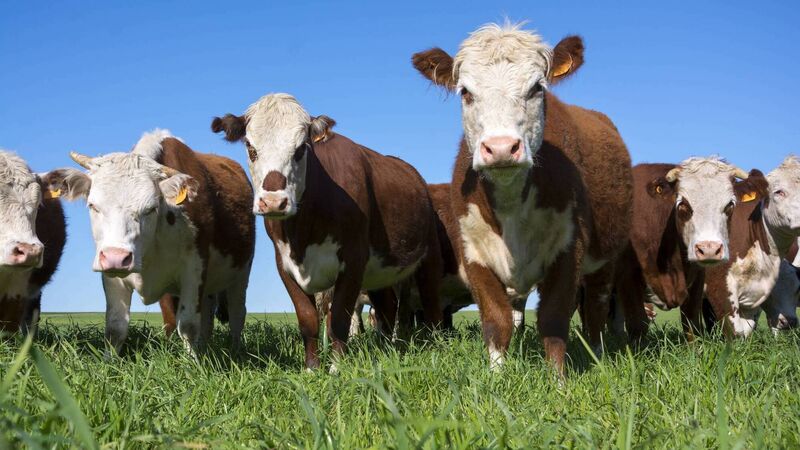
Meat Industry Ireland said CAP payments form a critical part of total income for farmers supplying the Irish beef and lamb processing sectors. However, these payments have been reduced for commercial and active farmers who had worked to build payment entitlements, with funding redistributed to less commercial operators.
Irish meat processors have warned the EU may further damage the already reduced supply of livestock to the industry, which generates €4.4bn a year in exports and employs thousands in rural Ireland.
According to Meat Industry Ireland (MII), 2025 was one of the most difficult years in recent times for processors. The prime cattle kill was down by 150,000 head, while sheep throughput was reduced by about 500,000 head.

“There must be a rebalancing of finances to support productive farmers in the next CAP [Common Agricultural Policy], otherwise we risk losing a generation of farmers, with very serious consequences in the context of EU food security,” the processors’ group said in a submission to the Joint Oireachtas Committee on Agriculture and Food.
The submission detailed how EU and national policies have already greatly reduced the supply of Irish livestock for processing. Ireland’s suckler beef herd now stands at 767,000 animals, having declined from a peak of 1.1 million animals in 2013.
MII said the decline had accelerated in recent years, with annual drops of 5% recorded.
The organisation said CAP payments form a critical part of total income for farmers supplying the Irish beef and lamb processing sectors. However, these payments have been reduced for commercial and active farmers who had worked to build payment entitlements, with funding redistributed to less commercial operators.
“The impact of this policy decision on output is starting to materialise,” MII said, highlighting how dependent beef and sheep farmers are on direct payments.
According to the Teagasc National Farm Survey 2023, the average income on suckler beef farms was just €12,456, with direct payments accounting for 156% of that income. On sheep farms, the average income was €16,613, with direct payments making up 126%.
Looking ahead to proposals for the 2028–2034 CAP period, processors warned further redistribution of CAP payments away from commercial and active farmers threatens the viability of their industry.
Under the proposals, CAP payments would be reduced by 25% on amounts between €20,000 and €50,000, rising to a 75% reduction on payments above €75,000, with a hard cap of €100,000 per farmer.
“While the objective of targeting support is sound, a 25% reduction kicking in at just €20,000 will disproportionately impact Ireland’s most productive full-time family farms, including larger suckler-to-beef operations and larger-scale sheep farms,” MII said.
The organisation warned this would undermine the secure, sustainable and competitive supply of livestock that is fundamental to the viability of meat processing.
Processors said the Government must immediately conduct a full economic impact assessment of the proposed degressivity and capping model, focusing in particular on the €20,000 threshold and its implications for the viability of full-time beef, sheep, dairy and tillage farms, and the knock-on effects for supply to the processing sector.
MII said CAP proposals on simplification, enhancing farmer resilience and fostering generational renewal were welcome. In particular, proposed coupled supports are viewed as critical to stemming the ongoing exit from the livestock sector.
“Coupled support is the most effective tool for maintaining our national suckler beef and ewe flocks. These flocks are the foundation of our high-value grass-fed brand that we market globally,” the submission said.
Under current proposals, EU member states could allocate up to 25% of the EU contribution as a coupled payment on a per-animal basis. MII said it would like to see maximum flexibility retained and would advocate for even higher thresholds, urging the Government to make this a priority.
On environmental and climate action proposals for the next CAP period, MII said consumers would continue to demand sustainably produced animal-based protein, along with strong protection of water quality and biodiversity.
The organisation noted while organic production had increased significantly in Ireland, it delivered very little from a greenhouse gas reduction perspective. It cited recent EU Joint Research Centre analysis (Scenar 2040), which acknowledged a greater focus on productive agriculture would reduce overall global food emissions.
MII also welcomed proposals for a mandatory strategy on generational renewal.
“The future of our sector requires new people coming into the industry,” it said, calling on the Government to strongly endorse the proposed generational renewal strategy and starter pack, and to commit to making it a funding priority in the next CAP national plan.
Finally, MII said the CAP framework for investment and environmental action was equally relevant to the pig meat sector, which remains highly exposed to market volatility and regulatory costs.