Storms and up to three and a half inches of rain pose three-way threat to grain growers
Storms and up to three and a half inches of rain pose three-way threat to grain growers

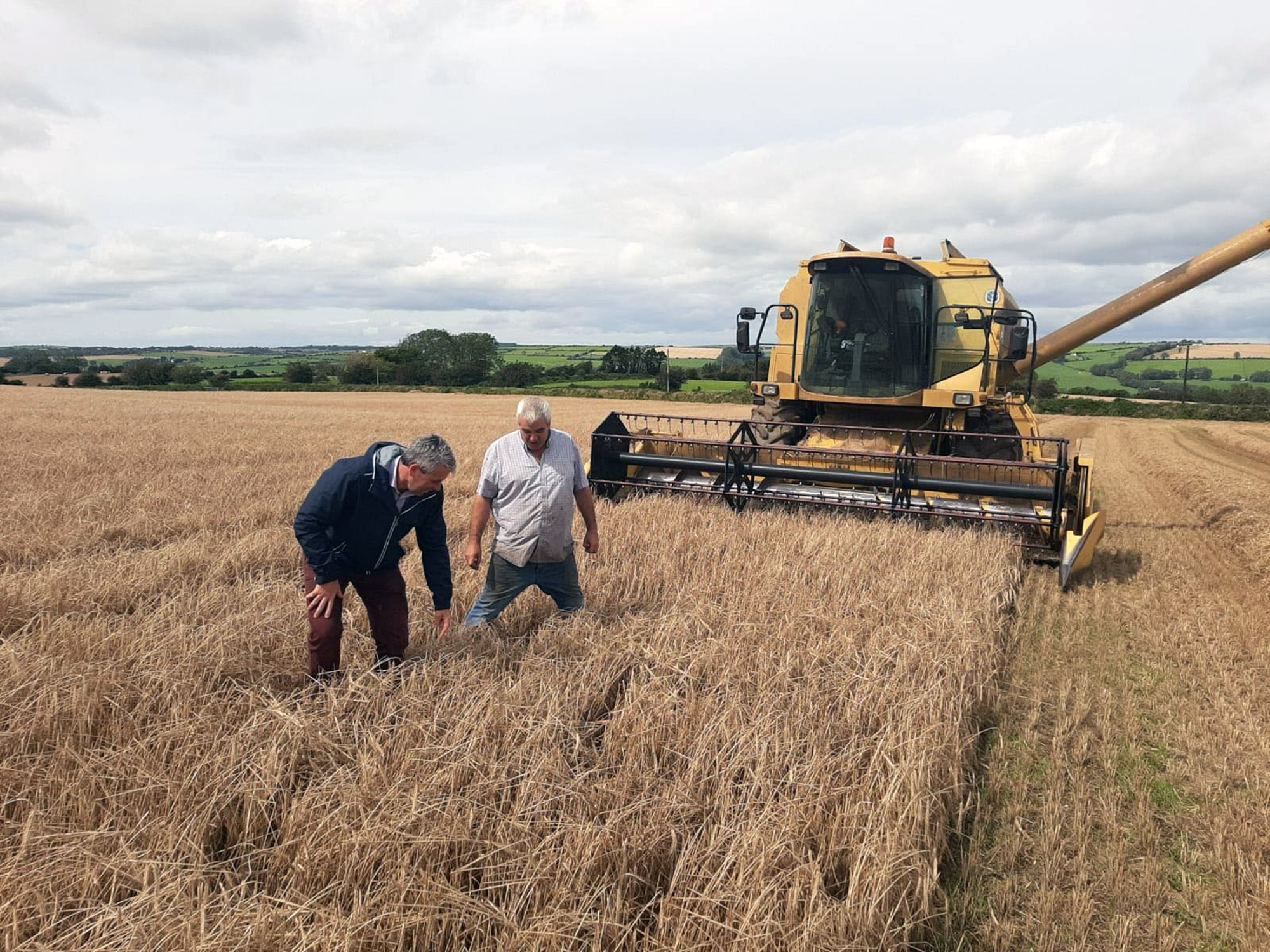
Pictured on the farm of Val Dempsey at Minane Bridge, Co Cork was Senator Tim Lombard with agricultural contractor Ray Quinn from Nohoval where he was trying the harvest the spring barley crop after Storm Ellen. Picture Denis Boyle

Storms and rain have left grain growers temporarily stranded with about half of the harvest still to complete nationally.

With the harvest later than usual due to increased growing of spring crops, the storms and up to three and a half inches of rain in a week (recorded at the Met Éireann weather station at Cork Airport) could not have come at a worse time.

The bad weather poses a three-way threat to grain growers, says Teagasc tillage specialist Ciaran Collins.

Yields will fall due to delayed harvesting; higher moisture content will increase drying costs; and rejection of premium crops such as seed and malting grain is increasing due to quality deterioration.

But ground conditions for harvest machinery and transport are the big concern, said Mr Collins, with even well drained soils at saturation point, and poor field conditions likely across much of the country for poorly and moderately drained soils.

Drying conditions are far from ideal, with scattered showers tomorrow, mostly dry weather on Saturday and Sunday, but more rain expected Monday.

Up to the past week, it had been a promising harvest for growers in Cork and other southern counties, with winter barley yields in excess of 10 tonnes per hectare, mainly from six row varieties.

Grain quality had been excellent.

In contrast, in areas affected by the April and May drought, some crops of winter barley struggled to surpass 7.5t/ha.

With the winter barley and winter oilseed rape harvests finished, winter wheat and spring barley yields were following a similar trend of better yields coming from southern counties where the effect of the drought was least evident.

However, it was southern counties that bore the brunt of rain and wind over the past week.

Crops of wheat in East Cork and West Waterford were hit hard, said Mr Collins, with ear loss and grain shedding due to storm conditions, and straw breakdown in barley crops making them harder to harvest.

In malting barley, quality problems are more likely due to protein failure in northern counties, or “skinning” in southern counties, and with low KPHs likely from now on.

With straw yields back by nearly 50% in many areas of the country, extra losses due to bad weather will further damage the straw supply for feeding, bedding and other uses.

Rain last week ranged from 1½ to four times the normal weekly totals for the time of year, including rainfall associated with Storm Ellen.

At Met Éireann’s weather stations, in Valentia, West Kerry, rain was 416% of the average.

At Cork Airport and Roches Point in Co Cork, rainfalls were respectively 360% and 346% of the average for the time of year.

However, growth has not been affected, with soil temperatures above average across the country, by one to 2.2 degrees celsius.

For livestock farmers, the storms brought localised power outages, and grazing conditions worsened.

Farmers in some parts of the country, or on heavy soils, are running out of dry ground to graze, and some have had to temporarily house animals, because paddocks were flooded or just too wet to graze.

In bad weather, farmers are advised to adopt spring time grazing rules.

Strip graze 12-hour allocations, and back fence, with on–off grazing for three-hour blocks morning and evening, in order to minimise damage.

Graze medium covers of 1,200 to 1,500kg/DM/Ha (or 10–12 cm on drystock farms).

Use spur roadways and paddocks with good access in order to get grass in the diet while minimising pasture damage.

Continue to walk the farm to monitor pastures.

“Grazing conditions are extremely difficult at the minute”, said Grassland Farmer of the Year disadvantaged land category winner Paudie O’Brien, in the Teagasc Grass10 bulletin. The dairy farmer in Firies, Co Kerry, said his pasture management is on target, but cows are getting grass for only three or four hours per day, and are housed at night on high-quality bale silage, and 6kg of meal feeding.

  • It may not offer much consolation to Irish farmers struggling with the effects of bad weather, but the state of Iowa in the US is one of the areas around the world suffering even worse misfortunes, after a hurricane with 140 miles per hour winds flattened millions of acres of crops last week, and left huge areas without power or phones.
The storm swept across Nebraska, Iowa, Illinois, Indiana, Wisconsin and Michigan, causing three deaths in Iowa, and one in Indiana. Hospitals in the Iowa city of Cedar Rapids were overwhelmed with emergency room visits by those injured or in need of other medical treatment.

State governor Kim Reynolds declared 23 counties disaster areas, making them eligible for state aid.

Many farm buildings and machines were so badly damaged that some farmers are left without trailers and silos for grain transportation and storage.

Iowa secretary of agriculture, Mike Naig, said over five million acres of crop was severely damaged.

Crop insurance will cover some losses, but many insurance agencies ask farmers to attempt to harvest the crop.

x

More in this section

Farming

Newsletter

Keep up-to-date with all the latest developments in Farming with our weekly newsletter.

Cookie Policy Privacy Policy Brand Safety FAQ Help Contact Us Terms and Conditions

© Examiner Echo Group Limited