Fisheries sector is teetering on the brink
As the Covid-19 pandemic continues to ravage our planet and we assess the ongoing impact in terms of health, employment, lifestyle, and so much more, we do so without knowing what the world will look like six months from now.
It’s a frightening prospect, and the only certainty is the uncertainty. Amid the suffering and darkness, many heroes have emerged, none greater than our frontline workers who have risked their own safety to play key roles in saving others.
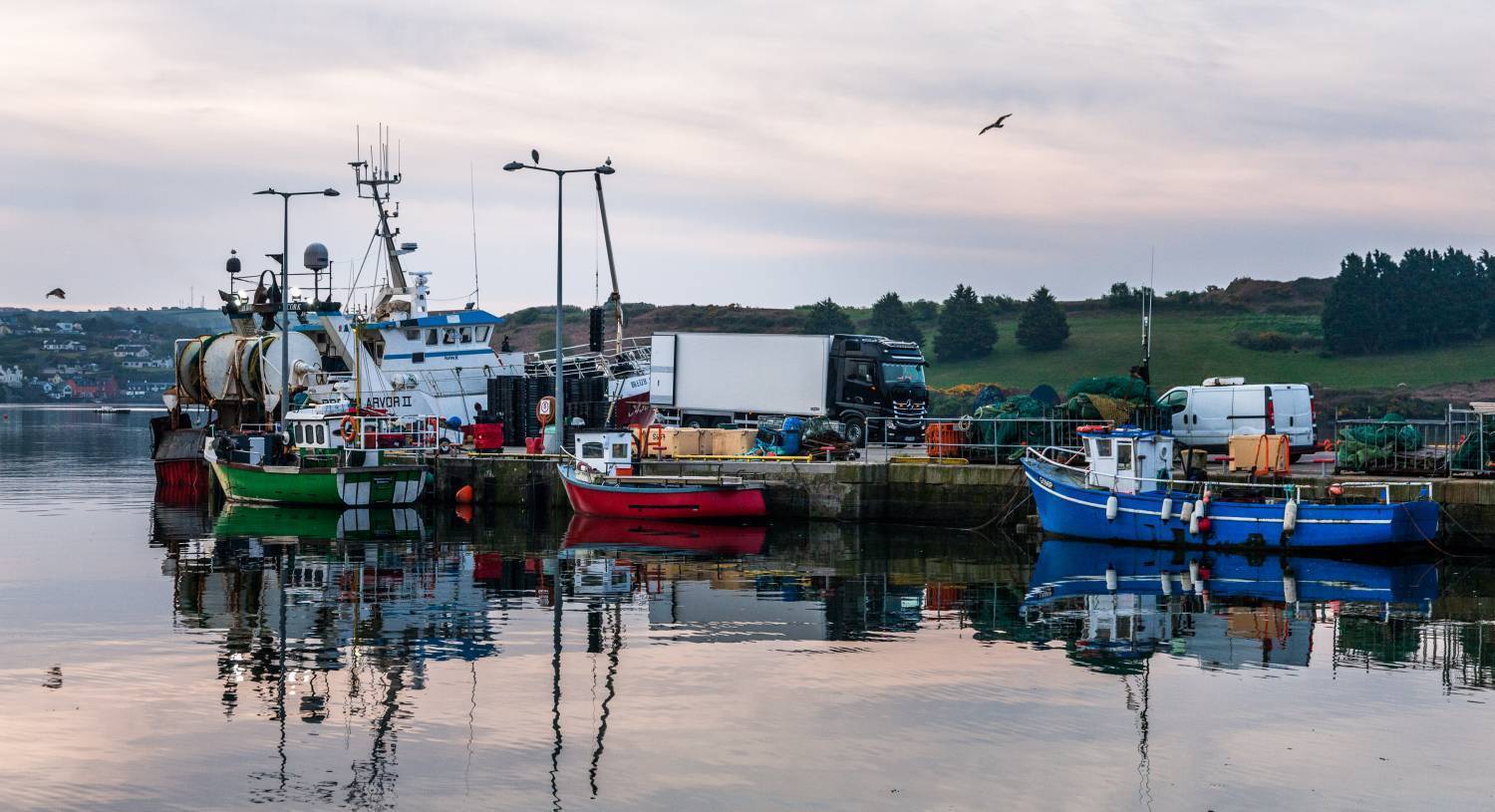
Neither should we forget those who produce and supply food, be it on land or at sea. In the case of the latter, it has been hugely challenging.
The simultaneous demands of operating safely in the most hostile environment on Earth, seeing markets collapse and traditional routes to market obliterated, and an unease around trawlers landing catch in ports have all combined to create the perfect storm.
We in the fishing industry are doing everything possible to ensure consumers continue to have access to essential nutrition in the form of high-quality seafood.
However, much to our dismay, our Minister Michael Creed has essentially rejected the fisheries sector’s plea for Covid-19 support, and in so doing, has failed to recognise the gravity of this unprecedented crisis.
In snubbing our appeals for specific supports for a beleaguered industry which is fighting for its very survival, the minister and his officials have effectively turned their back on the sector.
The four Irish fish producer organisations (the IFPO, ISEFPO, ISWFPO, and KFO) form the backbone of a €1.22bn industry which support more than 16,150 jobs in this country and are endeavouring to continue providing seafood to a market which has crashed on a multitude of levels.
Earlier this month, the minister did announce a Covid-19 Voluntary Fleet Tie-up Scheme which is completely unfit for purpose.
Instead of achieving the key objective of matching current supply and demand, the scheme will do the reverse, with very little voluntary uptake as almost all vessels will continue to fish, thus making an already over-supplied market worse.
Crucially, not one single cent of new financial support is being made available to the industry.
We have met with the minister and his officials and set out clearly what we need to survive this pandemic. Moreover, we have already successfully lobbied at EU level to have amendments to the European Maritime and Fisheries Fund provided for under EU Regulation 2020/560 to mitigate the impact of the Covid-19 outbreak.
Fishermen are struggling desperately in the ‘new normal’ we find ourselves in.
Demand has fallen to such an extent that some fishermen are actually receiving no bids for their fish. The closure of sales venues such as restaurants, markets, and other outlets has seen prices for all fish plummet.
Over the last few weeks, the price drop across many popular species has been in the region of 50% to 70%.
This has created a serious and unprecedented crisis for Irish fishermen. As an industry, we have never faced anything like it.
The capitulation in demand and prices, combined with the vulnerability and complexity of the supply chain has made the operations of fishing fleets and seafood production a loss-making enterprise.
Desperate fishermen are caught between two options — stay in the harbour and forego their only source of income, or continue to fish for produce that there is no real demand for, causing prices to collapse even further.
The four producer organisations have already put forward an agreed position on what they consider necessary to achieve a workable and effective temporary tie-up scheme that would try to match supply to demand.
The two key elements of their proposal were an initial three months scheme starting on April 1, 2020, with a review at the end of May, and that the financial support for a temporary tie-up would be based on 30% of the full grossings of the vessel in the same period last year (force majeure to be taken into account in relation to this period) with an appropriate tie-up period of seven to 10 days to be further discussed.
Unfortunately, the minister’s scheme does not take these two key elements into account and, as a consequence, the firm collective view of the four POs and their members is that the scheme is doomed to failure, with very little uptake.
The industry is, nonetheless, doing everything in its power to ensure consumers continue to have access to high-quality sustainable seafood. It has stepped up also to protect fishermen through increased health and safety measures, as well as extensive surveillance and monitoring of crew.
The entire industry is united in our unequivocal rejection of a botched and ultimately useless scheme which does nothing to provide reassurance to fishermen.
We’ve been trying to manage a safe passage through Brexit and its consequences, and now this.
I’ve never witnessed anger like it in the sector, and I’d implore the minister to review the scheme, deliver the very basic support that we need to survive.
We are more than willing to meet him halfway and continue to operate, thereby providing a sustainable and very important food supply.