Our good name as the green food island will be valuable in an ever more volatile market
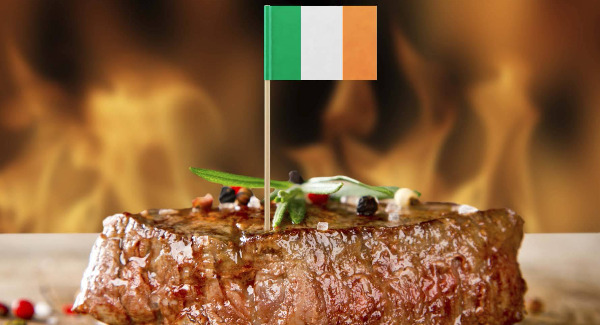
Food production from farm to fork is rightly being treated as an essential service, and is therefore spared the worst of the Covid-19 restrictions.
But it seems inevitable that the industry in Ireland will be significantly affected by the pandemic.
Somewhat predictably, beef and lamb processors were first to blink, cutting prices this week, which were already low in the case of beef.
Dairy co-ops showed more consideration for their members, largely maintaining unchanged prices for February milk.
However, with 300-400 deaths per day in Italy this week due to Covid-19, and fears that the pandemic could trigger severe recessions (some experts have even warned of unraveling of the eurozone), it may be advisable to go into survival mode.
The pandemic outcome could arguably be worse than the Great Recession of 2008. That was caused by a financial shock in the US and European economies.
Now, the entire world faces a downturn across all sectors of the economy, with “social distancing” meaning less economic activity for nearly everybody in the world, working less, investing less, and spending less.
As an essential service, food production will not be the worst hit sector.
Member states have been asked by EU leaders to facilitate transport across borders, including transport of food and live animals, as well as medical equipment.
This is important for a big food exporter like Ireland, because border restrictions by many member states had slowed up logistics.
At home, the SBCI Covid-19 Working Capital Loan Scheme is in place, co-funded by the Department of Agriculture, Food and the Marine (DAFM), to make working capital available to impacted firms, including food businesses.
Agriculture Minister Michael Creed has asked EU Agriculture Commissioner Wojciechowski to ensure that the full range of market supports available under the Common Market Organisation Regulation is available in response to any emerging market disturbance.
The DAFM is taking necessary steps to ensure producers and processors can continue to operate effectively and keep supply lines open.
Keeping food and other processing facilities operational, ensuring that payments and commercial activities that protect farm incomes can continue, and that fishermen can land fish and place them on the market, are among DAFM priorities.
It is also committed to ensuring animal related matters such as payment processing, TB testing, animal welfare inspections, animal identification and passport issuing, BVD testing, controls at livestock marts, and animal export certification can continue, to enable farming to operate.
The DAFM is also committed to providing necessary services, for meat and milk plants, marts, breeding establishments, feed manufacturers and suppliers, egg suppliers, suppliers of animal medicines and other agri-products, and in fisheries harbours.
Michael Creed urged Irish consumers to be sensible in the shops, and to remember that Ireland is one of the most food secure countries in the world, feeding multiple times our population, across the globe, with strong supply chains.
So Ireland is spared the worry about having enough food, a real enough threat in countries heavily dependent on food imports.
Our food industry’s task now is to continue as a reliable supplier to such countries.
Our good name as the green food island will be valuable in a consumer market which is even more volatile than ever as pandemic worries increase.
Already, some Italian agri-food companies had received cancellations in export orders, since the start of the country’s devastating Covid-19 outbreak.
Google Trends data has revealed interest in cuisines from China and Italy, the two countries hardest hit by Covid-19, has plummeted.