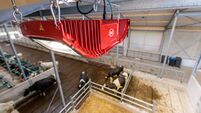
Cow urinal expected to reduce ammonia problem
With ammonia emissions from farming in Ireland near the upper limit allowed by the EU, a cow toilet being developed in the Netherlands which considerably reduces ammonia could become a vital piece of farm equipment.
If successful, it could also become a big seller in the Netherlands, Belgium and Germany, which have the highest ammonia emissions per hectare.
By mid-2020, Hanskamp, a company based in the Netherlands, expects to have on sale cow toilets which separate cow urine from cow dung from, thus reducing ammonia.
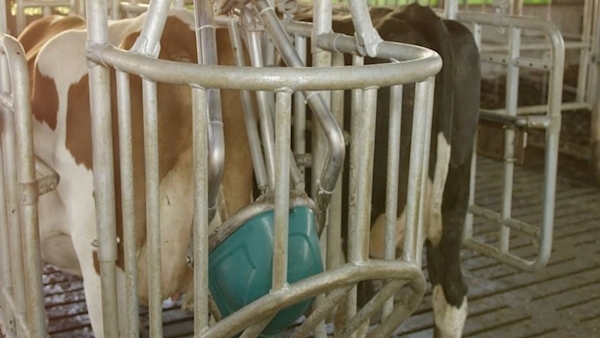
The CowToilet deals with the ammonia problem at the source.
It is an automatic urinal that cows use voluntarily, designed to collect the urine before it hits the floor.
When a cow enters a feeding station, its suspensory ligament comes in contact with the CowToilet.
In this way, a nerve reflex is triggered which causes cows to immediately urinate.
The urine is collected in the CowToilet container and is extracted through a suction line into a separate storage tank.
By ensuring that the urine stays separated from the manure, there is considerably less ammonia emission.
This innovation is already under trial on Dutch dairy farms. One of the trial results emerging is that cows voluntarily visit the CowToilet, to get their daily portion of feed.
Hanskamp has been developing the CowToilet since 2016.
Reducing ammonia is good for both animal welfare and the environment.
It is good for animal welfare because it improves the air in animal sheds. The farmer could also benefit if the CowToilet reduces manure disposal costs, and offers opportunities to use cow urine as a high-quality raw material.
Ammonia released to the atmosphere increases air pollution which is linked to effects on human health.
It also adds nitrogen to soils and waters.
About 90% of ammonia in the EU comes from agriculture.
In some member states, dairy farmers have to pay high fees to meet requirements for ammonia emission and manure disposal.
National limits have been set by the EU, and EU measures have helped to cut emissions of ammonia from agriculture sector by 24% compared with 1990.
In that period, only Spain (plus 12%) and Ireland (plus 1.6%) reported increased ammonia emissions.
In Ireland, farmers are grant-aided to switch to low-emission slurry spreading methods.
This can reduce ammonia emissions by about 30%.