“We need to think outside the box, and look at hemp”: Farmer
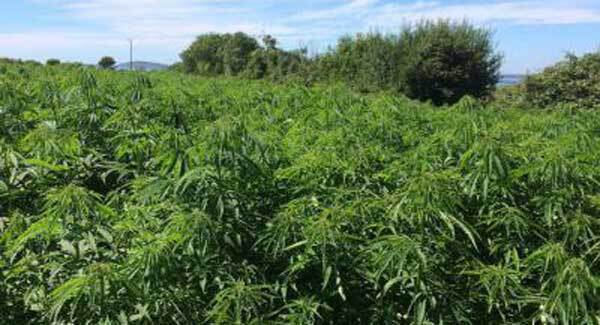
An Irish hemp grower is being helped to grow the market in Ireland for this ancient crop by EIT Climate-KIC, the European knowledge and innovation community which is working to accelerate the transition to a zero-carbon economy.
Four years ago, Edward Hanbidge, a young farmer in Co Wicklow, was running a traditional cattle and sheep farm, and was frustrated that prices had not increased for 30 years.
“The price of everything has gone up, but the price of produce has stayed the same,” he said. “Farmers are really looking for alternatives, because wheat and barley are not as lucrative as they once were, the beef industry is on its knees, and sheep numbers are reducing because the money isn’t in them.
“We need to think outside the box, and look at hemp.”
Hemp is one of the earliest plants to be cultivated, dating as far back as 8,000 BC, but it generally isn’t what comes to mind when people think of farming.
Interested in this old plant with new potential, Edward decided to give it a go.
After a few years of looking for different markets for his crop, he found a growing number of people were turning to him for information.
“I’ve got an unreal amount of interest. Farmers, engineers, everyone is coming to me,” he said.
“People come to me asking all sorts of questions, from how to grow hemp and what it can be used for to whether they can buy it from me. The biggest ask is about licensing to grow the crop. How to get it, who to apply to and what red tape is involved.”
With an expanding business on his hands, Edward turned to EIT Climate-KIC’s Greenhouse incubator for help to develop his business plans, how to write contracts to suit the farmer and the processor, non-disclosure agreements to protect his IP, and putting a value on his time and how to to charge for it.
Edward estimates that growing one tonne of hemp takes in one and a half tonnes of carbon dioxide, which is a significant carbon sink potential. He can grow 5-6 tonnes per acre on average, but this can be higher with certain cultivars, which can take harvests to 10 to 12 tonnes.
The use of hemp in new industries also means that other, more carbon-intensive materials don’t need to be used.
By growing the hemp market in Ireland, he says most things that use fossil oil can be replaced with hemp. Anything timber or oil is used for, hemp can be used for.
Edward sees potential growth in juicing, breweries, health oils, seeds for food, creams and tinctures, pharmaceutical research, biodegradable plastics (cheaper than petrochemicals), home heating, ethanol fuel (hempanol), building materials (hempcrete and fibreboards) and in paper making.
“Not only is hemp going to be carbon-neutral, and possibly even carbon-negative, it’s also going to provide a lot of jobs,” he said.
“The hemp industry is waiting to flourish, and it will bring employment, sustainable products, reduce carbon footprint and will be very profitable.”
With demand for his hemp crop already three times the amount that he’s grown in 2018, EIT Climate-KIC’s Greenhouse incubator is poised to help him boost his impact of capturing and locking-in carbon.