Comment: Deal with EU could be the end for Brazil’s Cerrado
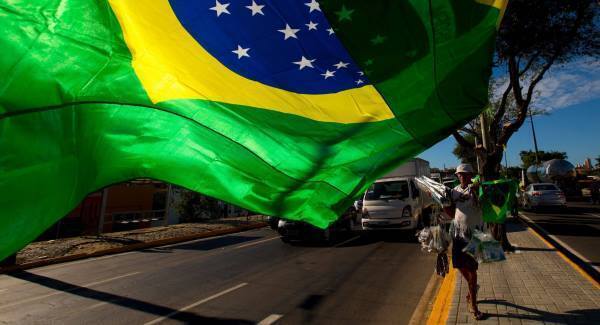
A land investment in Brazil’s Cerrado might be a good move for French and Irish farmers who fear they could be put out of business by a free trade deal between the EU and the South American Mercosur trade bloc.
A Reuters news report says virgin plots in the state of Tocantins can be had for $248 an acre on average.
Buyers from Europe may have to move fast, with Argentina, Brazil, Uruguay and Paraguay hoping to agree a trade deal with the European Commission by September. As things stand, that deal would include the EU taking 99,000 tonnes a year of tariff-free Mercosur beef, and 150,000 tonnes per year of Mercosur sugar, also free of tariffs. EU farmers say these imports would put many of them out of business. But Brazilian foreign minister Aloysio Nunes recently said both are “red-line” Mercosur demands.
It could be the EU’s most lucrative trade deal to-date, with the savings potentially three times greater than for deals with Canada and Japan combined. The EU could gain €21-29 billion through increased exports of industrial goods, adding €15-21bn to the EU’s GDP.
Exporting more cars, and protection of food and drink names (for example, “feta” can only apply to cheese from Greece, made mostly with sheep’s milk) seem to be the EU’s central requirements in the trade talks.
But agreement will require Europe to turn somewhat of a blind eye to the effects on the global environment of Brazil’s rampant agriculture sector.
The EU seems to be covered in that regard by its rule that it will sign trade deals only with Paris climate change accord signatories.
All four Mercosur members have that qualification.
Presumably, the EU can accept continued development of the Cerrado, South America’s largest savannah, which Brazil opened up for agricultural development, when global pressure forced it to make exploitation of the Amazon rainforest harder.
Over the past decade, farmers have deforested an area of the Cerrado larger than South Korea. It continues, and if you Google “Cerrado Farms for Sale”, you might find a bargain — for example, 7,477.25 acres in the state of Tocantins for €233 per acre.
Brazilian farmers see the Cerrado’s development as critical to global food security and the prosperity of their nation and agriculture sector (which grew 13% in 2017).
They won’t listen to the environmentalists who say destruction of surface vegetation in the Cerrado released 248 million tonnes of greenhouse gas into the atmosphere in 2016 alone, roughly two-and-a-half times the annual tailpipe emissions from all cars in Brazil.
The region has lost 40,541 square miles of native cover since 2008 to agriculture, according to Brazilian government figures.
That means the Cerrado is disappearing nearly four times faster than the Amazon rainforest, in an agricultural frenzy which is removing a vital storehouse for carbon dioxide, the greenhouse gas whose rising emissions from fossil fuels and deforestation are warming the world’s atmosphere.
It is no surprise to find this is endorsed by Brazil Agriculture Minister Blairo Maggi, because he and his family own one of the world’s largest private soyabean businesses, with much of its operations in the Cerrado.
“Agriculture in the Cerrado is what took Brazil to the next level,” Minister Maggi told Reuters.
A trade deal with the EU will accelerate exploitation of the Cerrado, which was roughly the size of Mexico until half of its native forests and grasslands were converted to farms, pastures and urban areas over the past 50 years.
Cerrado farmers are required to preserve as little as 20% of the natural cover, and up to 35% in areas neighbouring the Amazon.
More than 60 companies, including McDonalds, Unilever and Walmart, have agreed to support measures to save the Cerrado’s native vegetation. The Louis Dreyfus Company is the first major commodity trader to pledge not to buy soya from newly deforested Cerrado land.
But is it enough, especially if demand increases from the EU after a trade deal?