Farm Focus With FBD ... Succession has a critical role for future of farming
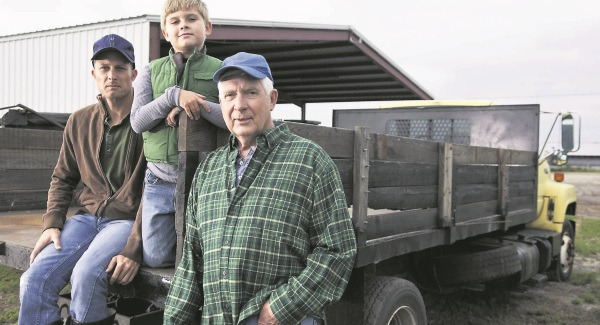
For succession to succeed, the most important part of the process is about getting the conversation started between the different generations
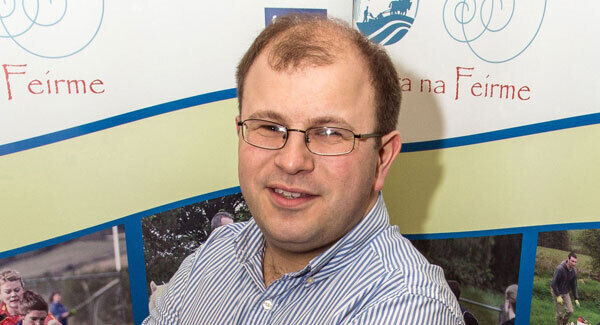
James Healy, president of Macra na Feirme, did not beat around the bush at a recent Joint Oireachtas Agriculture Committee meeting on the subject of farm succession.
He said it was “absolutely vital” that young people get involved in the responsibility for and the management of the farm as quickly as possible once they have completed their agricultural education.
Otherwise, James said: “Why would young people take up farming out in the rain, the cold, and the muck when they could be making much better money working in a factory for less hours?
Macra, young farmers and progressing land mobility
The issue of farm succession and land mobility is a hardy perennial, and yet the statistics don’t lie — the number of younger farmers is low and the most recent National Farm Survey showed that 27% of farmers are receiving the pension.
Habits and trends in society are also shifting and, says James, it is vital that farmers — and farming in general — do not get left behind.
“We believe that the best time at which to get a young farmer involved in the running of the farm is as soon as possible after they have completed their education,” he said.
At this point they are full of enthusiasm and belief and to make the most of it, they must be given the opportunity to utilise these skills. However, we want to see these young farmers have the opportunity to work with the older farmer so that they can benefit from the life experience of the older farmer and to allow both generations the opportunity, where possible to have a living from the farm.
“We believe that the Land Mobility Service, which is a Macra-led initiative supported by a number of co-ops and the FBD trust can play a huge part in putting together these partnerships and ensuring that both parties get a benefit. The service has been hugely successful during its pilot period and as we roll it out nationwide, we believe this will only increase.
“The most important part of the process is about getting the conversation started between the different generations and we hope that by highlighting the issue we will encourage the discussion around the breakfast table. Where young farmers wait for an extended period to take responsibility in running the farm, in general, it has a negative impact on the productivity and development of that farm.”
Solicitor Karen Walsh agrees. Based in Cork City and a regular contributor to these pages, she believes the key aspect of farm succession is communication and having a plan, rather than being led by events at a later stage when a farmer gets ill or elderly and matters come to a head. It’s a view shared by the Irish Farmers Association.
Farm succession strategy
IFA spokesperson Bridget Fitzgerald said: “Planning the transfer of the family farm to the next generation can be a difficult task.
“From the perspective of the successor, the lack of a coherent succession plan and not having a meaningful role in the decision-making process of the family farm can lead to frustration and a potential movement away from farming as a career option. From the perspective of the current farm owner, uncertainty exists with regard to their ability to cover income, housing, and healthcare needs post-transfer.
“A major disincentive to the transfer of the farm is that farming remains a very low-income activity, with average earnings well below the average industrial wage. This not only makes farming a less attractive career option for those to whom the farm might be transferred, but makes it very difficult to provide the level of income required to support the two parties involved during and after a transfer.
Farm incomes are heavily dependent on direct payments. Many farmers have to rely on off-farm income as well as farm income to provide a living. While farm families have traditionally shown a huge commitment to farming and to maintaining their farm within the family, this cannot be guaranteed to continue, given the perennial income difficulties being experienced on farms.
According to James Healy: “There has been a lot of positive steps taken to try and address the issue of succession and generational renewal within agriculture in both the current CAP, and according to the current information, the next CAP. This, along with the tax reliefs in place through domestic policy, there has been some limited progress. Unfortunately, however, they have limited success due to a number of factors.
"Firstly, for many of us when we are young, we are told to do anything but farming, whether that is by our parents or our teachers. This has a major impact in driving young people away from taking agriculture as a possible career and changing this attitude will be a key part to changing the status quo," he said.
"Another part of this is the limited income that can be derived from many of the different sectors for the work-life balance involved. There have been many technological advancements in recent years which will help to address this and which will hopefully address the work-life balance issue.”
Managing work-life balance
One other factor that has developed — and in particular in recent years — hinges on what seems to be a two-tier farming sector. On the one hand there is the dairy sector, offering a full-time job with a full-time income, versus virtually every other type of small to medium-sized agricultural enterprise, where there can still be plenty of work, but the income derived from it pales in comparison with dairy.
According to Healy: “There is certainly a clear disparity between the different farming sectors and this is causing issues when it comes to generational renewal, however we would believe that through the new CAP, the supports should be put in place to allow these other sectors to remain viable as they are providing huge public goods in looking after the countryside as well as keeping rural Ireland alive and well.
“We also believe that through the personal and technical development opportunities Macra offers that we can make these sectors more profitable and while this may not take you to the point where it will sustain a full-time income, it may take the dependency of the farm off that off-farm income.”
Pat McCormack, president of the Irish Creamery Milk Suppliers Association, has his own view on that.
“People’s priorities and views on life vary and there is no point in imaging that there is a set plan for everyone, a ‘one-size-fits-all’ blueprint that applies to everyone in every circumstance,” he said.
“Some people will want a full-time career in farming while other people will want an off-farm source of income along with the farm.
“Depending on those ideas and ambitions, you’ll decide on the type of farming enterprise to be pursued on the farm. Each farmer and farm family will make their own decision on their future and there are so many factors feeding into that decision that it’s pointless to speculate. But, quite clearly, dairy is a different type of enterprise to beef and sucklers and is much more labour, capital, and planning intensive. That reality makes dairy not suitable for part-time farming [and] really does dictate full-time labour input.
There are genuine concerns in relation to farm succession that principally relate to the next generation and whether they can earn an income from farming that is comparable with other sectors in the economy,” he said.
“We think that this is a national issue; agriculture and food production is a key sector in terms of our overall economy but that fact on its own conceals the make-or-break role that farming plays in rural Ireland where it is the commercial basis for whole towns and communities.
“If you doubt that, just talk to business people in rural areas, they will say ‘When farmers are doing well, we all do well’ and that truism reflects the multiplier effect as farm incomes go out into their communities.
“To ensure that agriculture continues to play a key role in rural areas, we need a constant stream of young people entering farming and the ability to earn a good income with a good lifestyle is the key determinant here. The availability of replacement labour is also a very important aspect.
Need for an overlap period between generations
“There very often will be an overlap period with two generations having to earn an income from the farm so providing viable options to the older generation and providing assurances regarding their rights is an important aspect.”
Given the emotional ties to land within a farming family, the possibility of future marriage break-up having the same impact on the holding has come to colour some people’s thoughts on succession planning.
The ICMSA believes pre-nuptial agreements should be recognised and given the power of the law, with Pat McCormack claiming “there is a degree of resentment and frustration about how the courts deal with breakups or separation where the principle family asset is a farm”.
For its part, the IFA believes the main recommendations of the Study Group on Pre-nuptial agreements (2007) should be implemented by the Government as this would require the courts to have regard to existing pre-nuptial agreements when making judgments in judicial separation and divorce proceedings.
Healy takes a slightly different view: “Marriage breakup has become a factor in people’s decision-making process, and as you say, given Irish people’s emotional ties to the land, I can understand why it would make people more cautious about passing on the family farm; however, as you say you can’t take it with you and we should be looking to have faith in our young people. If they are concerned about marriage breakup, it’s as likely to happen after you pass on as it is while you’re alive.”
It seems while some cases might be straightforward, increasingly, many are not.
According to McCormack: “It’s important to remember what the central issue is here: A young person has to get on with their life while the older farmer will need to ensure his or her future into a retirement.
"There’s also the question of how the interests of other family members are to be protected. These can be difficult situations and we would always advise that open communication is important so that both parties understand each other’s concerns and needs.
"ICMSA would advise people to get outside professional help because, in our experience and in many cases, what appears to be a very difficult issue can be addressed and resolved to everyone’s satisfaction. People with experience and expertise in this area know the challenges and the options and solutions available and this can be very helpful in many cases,” he added.
FIND OUT MORE
Transferring farm ownership down the generations requires significant planning and advice. Noel Baker talks to Alan Jagoe, former Macra President and farmer, Karen Walsh, solicitor, and Austin Finn of the FBD-backed Land Mobility Service about this complex issue. The is presented in association with FBD.