IFA reveals pay packages of leaders and top 18 staff members

The number of fully paid-up members eligible to vote in the 2016 IFA elections was 75,501.
And figures from 2013 showed 88,000 farmers contributing to the association, which is 22% more than the current membership.
Operational income for April to September 2016 is down 17% on the corresponding period last year, and operational expenditure is down 7% for the same period.
Taking exceptional items into account, this has created a deficit of €830,000, members of the IFA executive council were told last week by IFA national treasurer Jer Bergin.
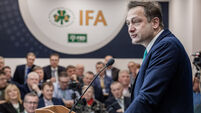
IFA president Joe Healy said he was pleased to announce that the recommendations of the IFA implementation committee have been discussed at national and local level within the organisation, and accepted in full as part of the rebuilding of trust and transparency within the association, following the controversies of 12 months ago, when general secretary Pat Smith resigned after the IFA came under pressure to reveal his salary.
It was later disclosed he was paid more than €540,000 in 2013, and more than €450,000 in 2014 and 2015.
The controversy also led to the resignation of IFA president Eddie Downey.
“We will now move forward to ensure the association is adequately resourced and equipped to continue to deliver the best possible results for farm families,” said Mr Healy last week.
Draft accounts for the year ended March 31, 2016, showed income of €18.9m and a deficit for the year of €1.4m. The operating result was a positive €127,000, but new accounting rules altered this to a deficit.
IFA went ahead last week with its decision to publish remuneration figures for key management personnel.
It revealed the general secretary’s salary to the year ending March 31, 2016 was €197,292 (plus an employer pension contribution of €109,628), which compared to €295,000 for the previous year (plus an employer pension contribution of €145,197).
Announcing the appointment of Damien McDonald last week to the new post of IFA chief executive, the IFA said his basic salary will be €185,350, when he takes up the job in the new year.
IFA revealed the president’s salary for the year ending March 31 last was €98,333, compared to the previous year’s €147,500.
The deputy president’s salary was unchanged year-on-year, at €35,000.
The combined salary figure for the general secretary, director of organisation, and financial controller for the year ending March 31 last was €481,290, plus employer pension contributions totalling €110,361.
This compared with €540,217 and €103,363 in the previous year.
IFA has also published the average remuneration (pay and pension) of the 15 next highest paid staff positions.
Including employer pension contribution, this was €127,685 and €127,226, respectively, in the past two years.
The IFA implementation committee retained Mercer Consultants to benchmark salaries below the general secretary level.
A detailed benchmarking exercise with both the private and public sectors for executive staff and development officers concluded that the remuneration levels for IFA employees were in the lower half when compared to similar positions.
Mercer noted: “However, there did seem to be a wider range of salaries than we would have expected at the executive secretary level, which we understand reflects the value of the sector an individual represents and the experience this requires. “
The combined figure for labour replacement allowances to executive council members for all IFA activity during the financial year decreased from €354,032 in 2014-15 to €238,805 in 2015-16.