Kilbeggan’s recipe for organic success
From its earliest inception, organic farming has always focused on re-circulating resources back into the farm. 

Kilbeggan’s recipe for organic success

Farm yard manure and crop rotations are two examples, while the use of legumes and clover, companion planting and even biological controls harness what’s available as knowledge and nature, rather than relying on completely external inputs.

Of course, before mineral fertiliser and the other newly developed agri-industrial inputs of the 20th century — herbicides, pesticides and so on — all farming did too. However it did so with much lower yields than modern organic farming, which combines the latest apt technical innovations with ancient farming wisdom.


There is much to be said for this approach to both farming and business: it’s a waste-not-want-not, savvy, careful way to operate. It’s a permanent agriculture, one not dependent on the petro-chemical industry.

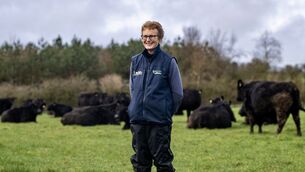
In the persona, farming and business of Kilbeggan’s Pat Lalor, these traits come through. His farm is a model of management, with healthy soil full of bacteria and fungi, built carefully through oat and clover rotations over many years.

His persona and business are notewothy too. These days, there is a ‘speculate to accumulate’ approach to food start-ups, with experts to help you at every stage. Borrow big and pay back later, utilise thought leaders and brand consultants.

And, to help you build the business once it’s operational, you of course need community curation for your maturing customer base.

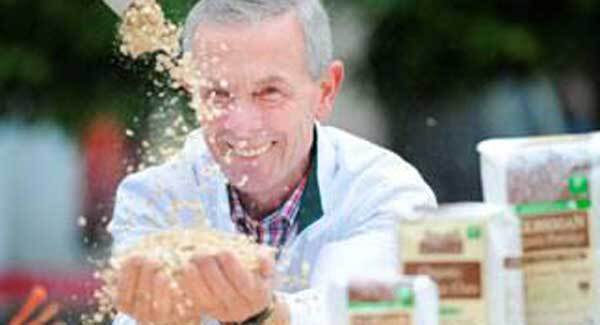
Well, Pat Lalor’s Kilbeggan Organic Foods has developed a hugely successful product — his Kilbeggan porridge oats, as well as two two new products, a bread mix and also cookies — with none of this palaver.

Like his farm, his business has built slowly and steadily. He designed his own porridge oats packaging.

“Well, the lad in the local print shop helped a bit with layout of the sides, but the basic design was our own. I designed the bag, and we discussed it as a family,” he told me recently.

“Plenty of experts criticise our packaging — but myself and Lilly (his wife) ignored the advice and went ahead. We change the odd small thing from time to time.”

Despite this non-expert approved packaging, they can’t keep up with demand for this porridge. However, they don’t want to expand just for the sake of it.

For these products, “we didn’t borrow, or spend much at all really. We bought in no new machinery and just rented — rather than purchased — a premises.

“We haven’t spent anything on advertising either. A bank would have told me to do a business plan, a marketing strategy, tasting panels and so on.

“The biscuits are Lilly’s recipe. She’s been making them here for 20 years. We have an artisan bakery making them for us now — it’s too big for us to do anymore”

The most time consuming aspect is making the labelling compliant.

“The labels have to be accepted by the Environmental Health Officer, and the Organic Trust. We use an expert on labelling legislation in Cork. Developing this packaging takes a lot of time. And getting it printed is also awkward — the true print out shade isn’t always what you expect. The whole process can take months.”

How does he manage, with a single farm, to develop these businesses?

“We’re guaranteeing our porridge oats are from our farm. After that, for the other products, we’ll use Irish certified organic oats if we need to supplement. But we won’t leave our porridge short. The biscuits don’t take a lot of oats anyway, whereas the bread mix does.”

“Sure if it doesn’t work, I’m still a farmer. I can fall back on that” he concludes.

He’s lucky that way.

But it’s not simply luck. It’s an approach to life and farming. Just like his farm has a few elements, all carefully worked out to work together, his family business does too.

And that’s genuine sustainability.

More in this section

Farming

Newsletter

Stay ahead of the season. Sign up for insights, expert advice and stories shaping Irish agriculture.

Cookie Policy Privacy Policy Brand Safety FAQ Help Contact Us Terms and Conditions

© Examiner Echo Group Limited