Veterinary advice: Extra milk later repays sexed semen and calf care expenses
The talk was on “Early life management and long term productivity of calves”.
I was astounded by some of his revelations.
Through analysing the milk recordings from 2.39 million lactations (1.4 million Holstein cows), he showed that heifers carrying a heifer calf produced 450kg of milk (in their first two lactations) more than those carrying bull calves.
This lends a lot of weight to the argument for using sexed semen.
The sums are easy to do.
The benefit of 450 kg of milk at current value against the cost of sexed semen.
Is it worth it to you?
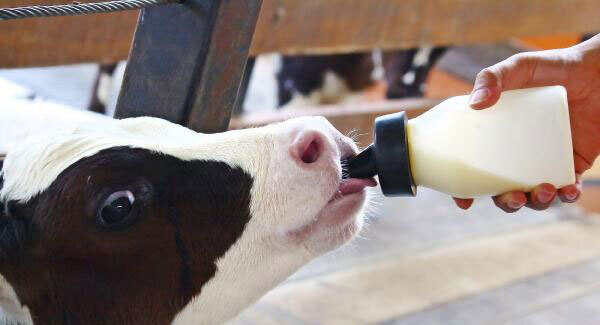
The calf in early life is the most efficient converter of food into liveweight gain, so why not make use of this and give the calf more food (milk) to convert?
Pre-weaning calf nutrition can yield four to eight times more milk than genetic selection per lactation.
When we feed for more nutrient supply, above maintenance requirements, we are setting the calf up to be a better lifetime milk producer.
They have shown that colostrum has an anabolic effect on calves, as it contains higher levels of hormones.
These enhance gut function and enzyme activity, leading to increased absorption of nutrients from the milk.
Calves that are fed colostrum for the first three days of life end up developing more absorption sites in the gut, thus absorbing more nutrients afterwards.
Increasing the nutrient intake from milk resulted in increased milk yield during first lactation of these calves, ranging from 450 to 1,300 kg compared with the milk yield of restricted-fed calves during the same period.
So really, the message was to prime the new-born calf with colostrum, and then give her as much milk as you can.
She will pay you back in spades when she calves down herself.
I know that feeding colostrum flies in the face of Johnes disease management programmes; so to fit in with these, the colostrum needs to be pasteurised.
Simple on-farm pasteurisers can be bought to do this, and apparently, the pasteurisation process also increases the absorption of antibodies from the colostrum.
It’s not all plain sailing though, as lots of factors can interfere with these results.
Calves that get scour will have a reduced daily liveweight gain, and those that get respiratory disease will have a bigger loss.
This is all reflected in their subsequent milk productivity, with research showing that calves that suffer a respiratory disease will produce up to 493 kg less than the unaffected calf in their first lactation.
Again, cost–benefit analysis shows vaccination programmes against scour and respiratory disease to be well worth it, when put against such increased milk production.
Housing also plays a major part in disease prevention.
Correct falls in floors are needed for proper drainage, while ventilation is the single biggest factor in disease control in houses.
Through correct design, you can have a warm dry calf house, with proper ventilation and no draughts.
Another American researcher, Jim Drackley, has shown that the correct ambient temperature for calves under three weeks is between 15 and 25 degrees Centigrade.
Once they are over three weeks old, they can withstand temperatures down to five degrees Centigrade.
High roofed houses with wet floors reduce the ambient temperature of the house, resulting in the calf using all its feeding just to keep warm.
This means little or no daily live weight gain, which has the knock-on effects of not meeting the breeding weight in time, and reduced milk production during her lactating life.
These are all potential profits down the drain.
Reduced growth, for any reason, results in an unrealised increase in profitability, due to unrealised milk production.
To finish up, some common goals are:
- To double the birth weight by day 56.
- To keep calf mortality to less than 5%.
- . To keep sick calf treatments to less than 10%.